
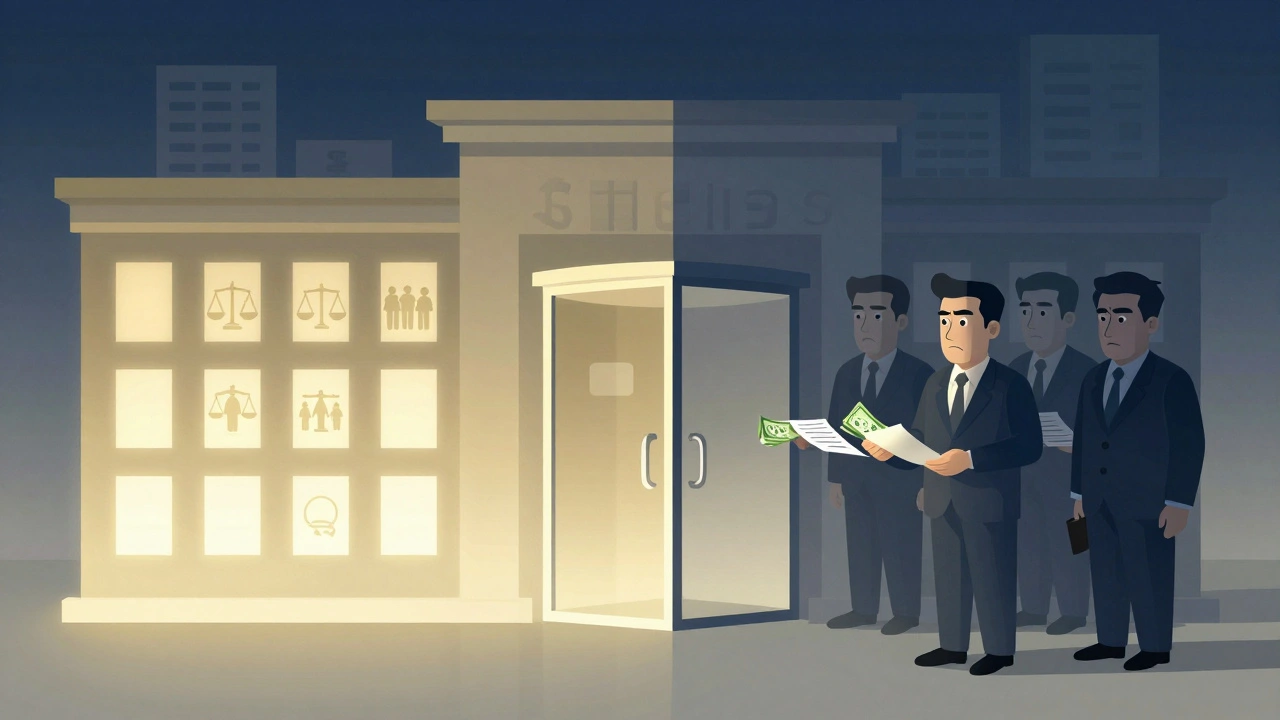
What Is Regulatory Capture?
Regulatory capture happens when the agencies meant to protect the public end up serving the industries they’re supposed to regulate. It’s not always corruption. Often, it’s quiet, slow, and invisible-like a regulator who starts thinking like a corporate executive, or a policymaker who takes a job with the very company they once oversaw. The result? Rules that favor profits over safety, convenience over fairness, and lobbying power over public interest.
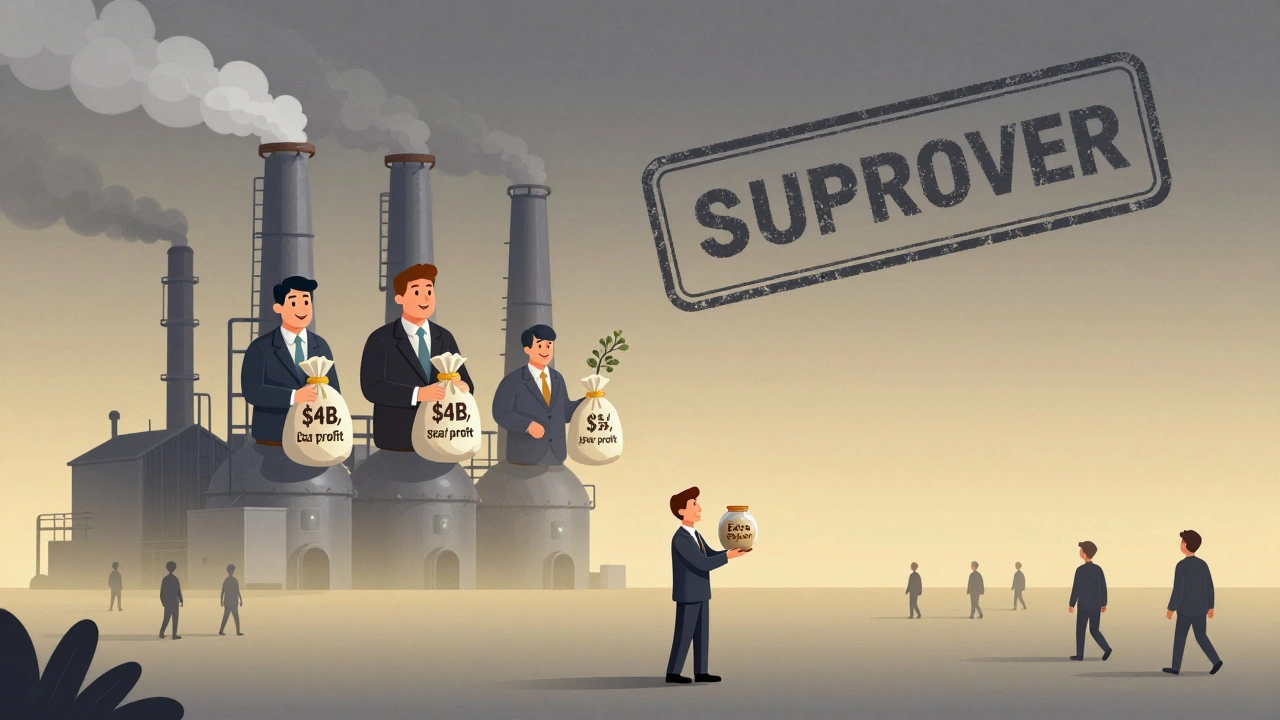
It’s not a conspiracy. It’s a system that rewards closeness. Industries spend billions to shape regulations because the payoff is huge. A single change in environmental rules can save a company billions. Meanwhile, the average consumer barely notices the cost-maybe a few extra dollars on their utility bill. But when millions of people pay a little extra, the total adds up to billions in profits for a handful of firms.
The Two Main Ways Capture Happens
There are two primary paths to regulatory capture: materialist and cultural.
Materialist capture is the obvious kind. It’s when regulators are bribed, pressured, or tempted with money or jobs. The most common form? The revolving door. Officials leave their government posts and take high-paying jobs with the companies they used to regulate. Between 2008 and 2018, 53% of senior U.S. Department of Defense officials joined defense contractors within a year of leaving government. The SEC, which oversees Wall Street, saw 92% of its former commissioners take jobs with regulated firms within 18 months. These aren’t coincidences-they’re incentives built into the system.
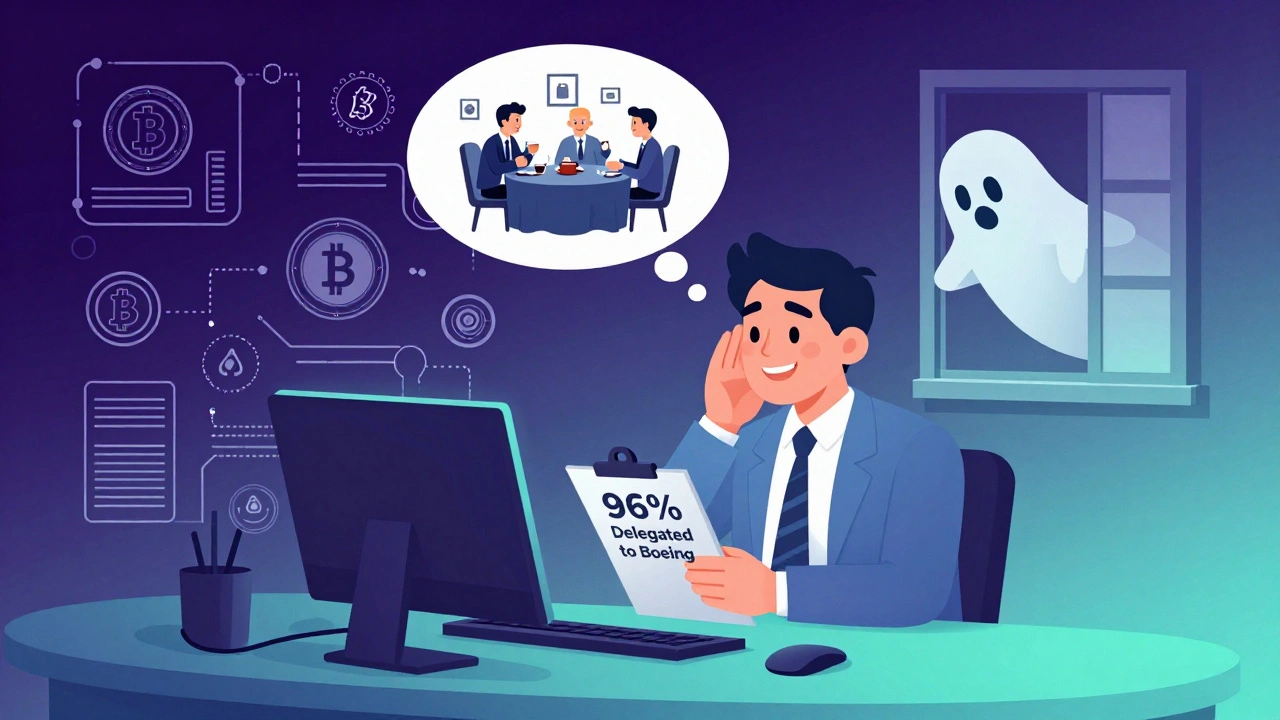
Cultural capture is subtler. It’s when regulators start to see the world through the eyes of the industry. They attend the same conferences, drink coffee with the same lobbyists, and rely on industry data because they don’t have the staff or expertise to do their own analysis. Over time, they stop seeing the industry as a threat and start seeing them as partners. This happened at the FAA during the Boeing 737 MAX certification. Regulators delegated 96% of safety reviews to Boeing employees because they trusted them. That trust cost lives.
Real Examples, Real Consequences
History is full of cases where regulatory capture had real, damaging outcomes.
The Interstate Commerce Commission was created in 1887 to stop railroads from exploiting farmers and small businesses. By 1900, it was raising freight rates at the railroads’ request. The agency meant to protect the public became a tool for the powerful.
In 2008, the Securities and Exchange Commission failed to stop the financial collapse. Why? Staff had close ties to 87% of the biggest Wall Street firms. They didn’t investigate risky derivatives because they didn’t want to upset their future employers.
The U.S. sugar industry gets away with paying consumers three times the global market price. How? Lobbying. Just 4,318 sugar producers benefit to the tune of $4 billion a year. Meanwhile, every American household pays about $33 extra annually-small enough that no one notices, but massive when added up. That’s the classic capture setup: concentrated benefits for a few, hidden costs for millions.
Even in the UK, HM Revenue and Customs secretly gave 1,842 multinational corporations tax deals worth an average of £427 million each-while publicly claiming they collected a 19% corporate tax rate. The public never knew.
Why Doesn’t the Public Fight Back?
There’s a reason industries win. They’re organized. The public is not.
Industry groups spend 17.3 times more per person on lobbying than consumer advocates. They hire ex-regulators, fund think tanks, and sponsor research that paints regulation as harmful. Meanwhile, the average person doesn’t have time to track every rule change. They don’t know that their electricity bill is rising because regulators approved $17.8 billion in network upgrades for energy companies-while those same companies kept profit margins at 11.2%, far above the 6.8% limit.
And when people do speak up, they’re ignored. A 2023 Pew survey found 78% of Americans are deeply concerned about industry influence on regulators. But concern doesn’t equal power. Without organization, without funding, without lobbyists, public voices get drowned out.
The Role of Complexity and Information Asymmetry
Regulators don’t always have the tools to do their job. Modern industries-like crypto, AI, or biotech-are insanely complex. A single cryptocurrency protocol has over 1,800 technical specifications. Regulators can’t possibly understand them all.
So they rely on the industry to explain it. That’s information asymmetry. The industry controls the data, the language, the narrative. Regulators end up adopting industry-friendly rules simply because they don’t have the capacity to challenge them. This happened with the FDA and pharmaceutical companies. A Reddit user claiming to be a former FDA employee said their company got drugs approved with 60% weaker clinical evidence than what the EU required. No scandal. No headlines. Just a quiet shift in standards.
And when regulators do try to act, they’re slow. Captured agencies take 62% fewer enforcement actions and 47% longer to respond to violations. That’s not incompetence. That’s design.
Who’s Fighting Back?
Some places are trying to fix this.
New Zealand introduced an independent process for reviewing regulations. Between 2016 and 2022, the number of industry-preferred rules dropped from 68% to 31%. How? By forcing regulators to consult consumer groups, academics, and public advocates-not just corporate lobbyists.
Canada trained its regulators in ethical boundaries. After the program, industry meetings got 27% shorter, and consultations with non-industry stakeholders jumped 43%.
The U.S. Federal Trade Commission launched a new Office of Regulatory Integrity in 2023 with a $23 million budget. It now requires full disclosure of every industry contact and bans former regulators from working with their old agency’s clients for five years.
The European Union now requires that at least 40% of people on advisory panels be consumer advocates-not industry reps. It’s a start.
Why Reform Is So Hard
Reforming regulation sounds simple. But it’s not.
First, the people who benefit from capture are powerful. They have money, lawyers, lobbyists, and political connections. The people who pay the cost? They’re scattered, unaware, and overwhelmed.
Second, lawmakers don’t want to upset donors. Between 2015 and 2022, 78% of proposed anti-capture laws failed in Congress.
Third, complexity grows faster than oversight. Regulators can’t keep up with AI, blockchain, or gene editing. The tools they have were built for a different era.
And finally, there’s the myth that regulation is always bad. Industry-funded studies push the idea that rules stifle innovation. But the data shows the opposite: captured industries earn 14.7% higher profits than unregulated ones. That’s not innovation. That’s rent-seeking.
What Can You Do?
You might feel powerless. But you’re not.
Support watchdog groups like Public Citizen, OpenSecrets, or the Center for Responsive Politics. They track the revolving door and expose hidden deals.
Ask your representatives: “How many former regulators currently work for the industries they used to oversee?” Demand transparency. Push for public disclosure of all industry meetings.
Vote for candidates who promise to break the revolving door-not just talk about it.
And if you see something strange-a drug approved too quickly, an energy bill that spikes without explanation, a bank fined for the same violation year after year-speak up. The system only works if people care enough to watch it.
Is This Fixable?
Yes-but not easily. Regulatory capture isn’t a bug. It’s a feature of a system that lets money talk louder than democracy.
The good news? We know how to fight it. Independent oversight. Mandatory cooling-off periods. Public representation on advisory panels. Transparency in lobbying. Training for regulators to recognize bias.
The bad news? These fixes require political will. And that’s in short supply.
For now, the best defense is awareness. Know that regulation isn’t neutral. It’s shaped by who shows up, who pays, and who’s listened to. If you don’t see the public in the room, you’re probably seeing regulatory capture in action.






James Kerr
December 3, 2025 AT 09:52