
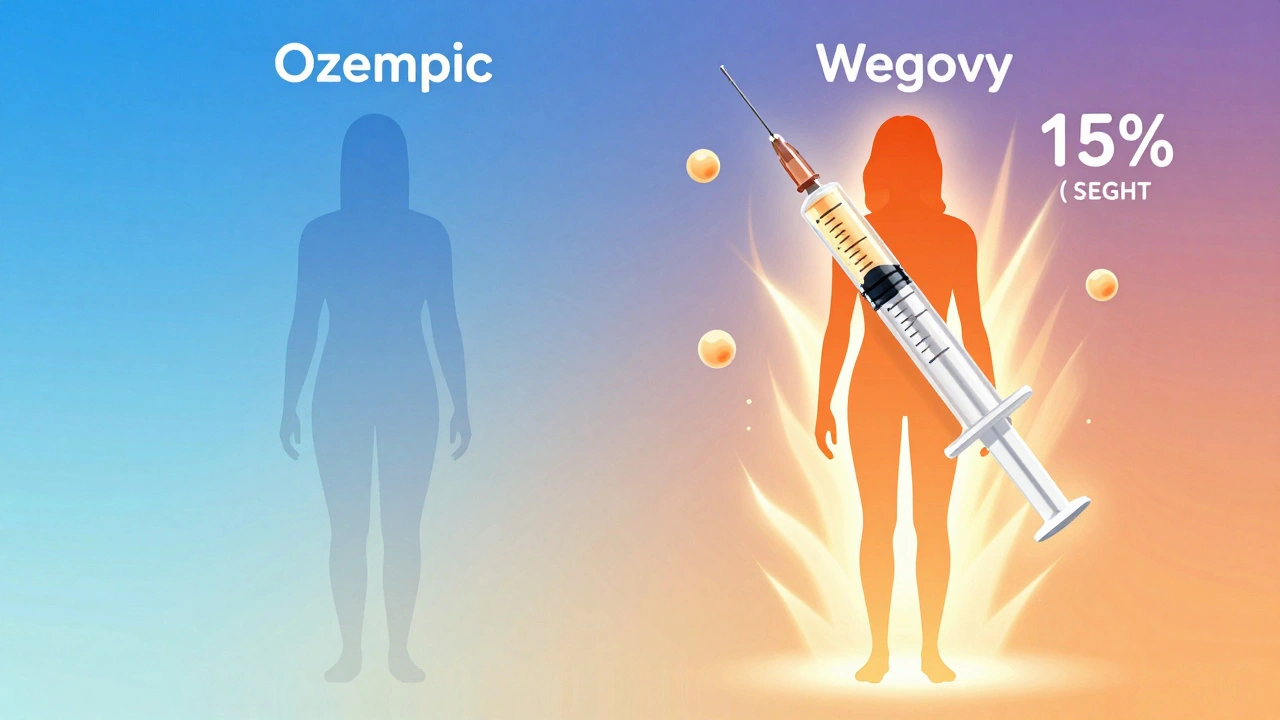
When you hear about semaglutide for weight loss, you’re not just hearing about a new drug-you’re hearing about a shift in how medicine treats obesity. Two brand names, Ozempic and Wegovy, have become household terms, but they’re not the same thing. Both contain semaglutide, the same active ingredient, but they’re designed for different purposes, with different doses, different results, and very different realities for people using them.
What Exactly Is Semaglutide?
Semaglutide is a synthetic version of the GLP-1 hormone your body naturally makes after eating. This hormone tells your brain you’re full, slows down how fast your stomach empties, and helps your pancreas release insulin only when needed. That’s why it works for both type 2 diabetes and weight loss-it’s not just suppressing hunger. It’s rewiring how your body handles food, energy, and fat storage. The key difference between Ozempic and Wegovy is the dose. Ozempic is approved for type 2 diabetes at doses up to 1 mg per week. Wegovy is the same molecule, but at a higher dose: 2.4 mg per week. That higher dose is what makes Wegovy the first FDA-approved weight loss medication in over a decade that can actually move the needle on body weight the way bariatric surgery does-without the surgery.How Much Weight Can You Really Lose?
In the landmark STEP 1 trial, people using Wegovy lost an average of 14.9% of their body weight over 68 weeks. That’s not a small number. For someone weighing 250 pounds, that’s nearly 37 pounds gone. Compare that to the placebo group, who lost just 2.4%-about 6 pounds. The difference? More than 30 pounds on average. Even more striking: 69% to 79% of people on Wegovy lost at least 10% of their body weight. That’s the threshold doctors use to say a weight loss treatment is “clinically meaningful.” Only 12% to 17% of people on placebo hit that mark. And 48% of Wegovy users lost over 20% of their starting weight. That’s the kind of result you’d expect from gastric bypass-not a weekly injection. Ozempic, at its standard diabetes dose, leads to about 6% to 8% weight loss. That’s still helpful, especially for people with diabetes who need to lose weight to improve blood sugar. But it’s not the same as Wegovy’s 15% drop. If your goal is serious weight loss, Ozempic isn’t the right tool.Why Does It Work So Well?
It’s not just one mechanism. Semaglutide hits multiple targets:- It activates neurons in the hypothalamus that tell your brain you’re full-shutting down cravings.
- It slows gastric emptying, so food stays in your stomach longer, keeping you satisfied.
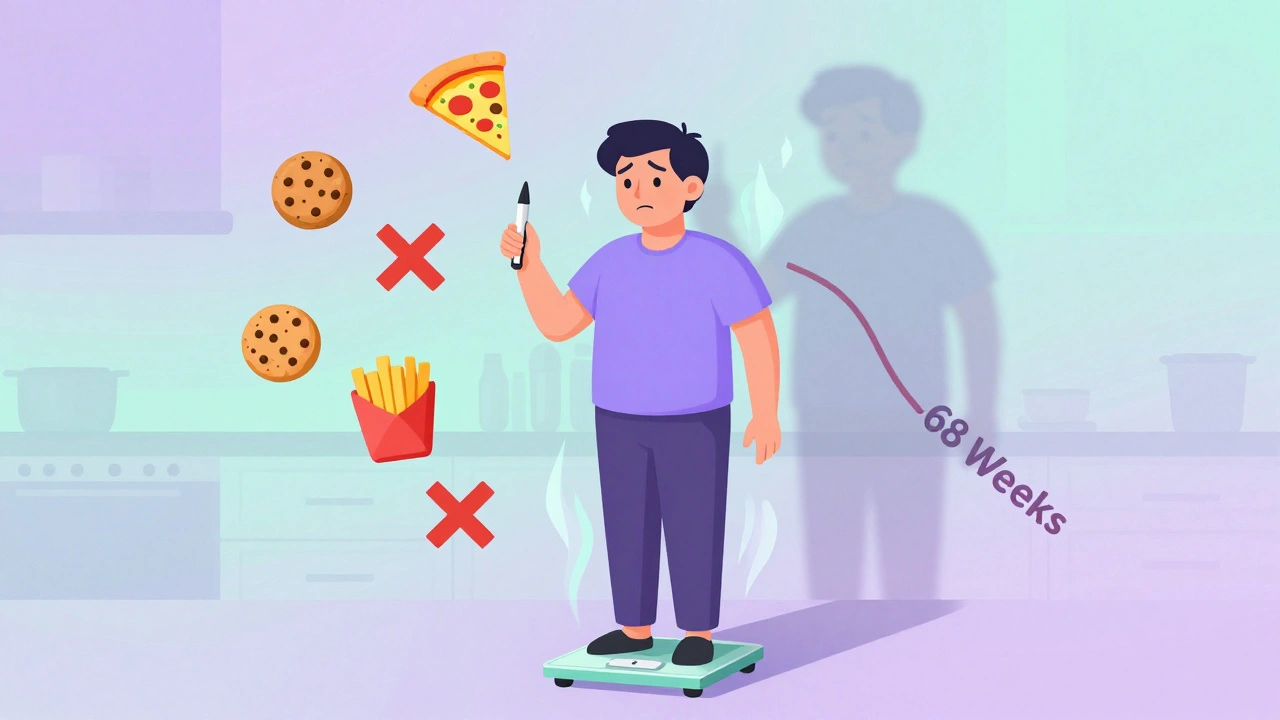
- It reduces the reward you get from high-calorie foods. Many users say, “I used to crave pizza. Now I just don’t care.”
- It improves insulin sensitivity and lowers glucagon, helping your body burn fat instead of storing it.
Side Effects: The Real Cost of Weight Loss
You can’t talk about semaglutide without talking about side effects. They’re common. And they’re real. In the STEP trials:- 77% reported nausea
- 64% had diarrhea
- 56% vomited
Wegovy vs. Ozempic: Same Drug, Different Outcomes
| Feature | Wegovy | Ozempic | |--------|--------|---------| | FDA Approval for Weight Loss | Yes | No | | Standard Dose | 2.4 mg weekly | 0.5-1.0 mg weekly | | Avg. Weight Loss (68 weeks) | 14.9% | 6-8% | | Primary Use | Chronic weight management | Type 2 diabetes | | Insurance Coverage (US) | Often restricted | More commonly covered | | Cost (Monthly, US) | ~$1,350 | ~$900 | | Side Effect Profile | Similar, but more intense | Similar, but milder | Many people start on Ozempic for diabetes and then ask their doctor to switch to Wegovy for weight loss. But that’s not always allowed. Insurance companies treat them as different drugs, even though they’re the same molecule. If you’re on Ozempic and want to lose weight, you’ll likely need to switch to Wegovy-and that means starting the dose escalation all over again.What Happens When You Stop?
This is the part no one talks about enough. In the STEP 4 trial, people who stayed on Wegovy kept most of their weight off. Those who switched to placebo? They regained 6.9% of their body weight in just 16 weeks. That’s not just a little slip-up. That’s most of the weight they worked so hard to lose. Follow-up studies show that within one year of stopping, people regain about two-thirds of what they lost. That’s not failure. It’s biology. Semaglutide doesn’t “cure” obesity. It manages it-like blood pressure medication or insulin for diabetes. If you stop, your body reverts to its old set point. Your appetite returns. Your cravings come back. Your metabolism slows. That’s why experts like Dr. Fatima Cody Stanford say: “This isn’t a short-term fix. It’s a lifelong treatment.”Who Is It For?
Wegovy is approved for adults with:- A BMI of 30 or higher (obesity), or
- A BMI of 27 or higher with at least one weight-related condition-like high blood pressure, type 2 diabetes, or sleep apnea.
Cost and Access: The Hidden Barrier
The drug costs about $1,350 a month in the U.S. without insurance. Most insurance plans don’t cover it for weight loss-only for diabetes. That means many people can’t afford it. Even with discount programs, the out-of-pocket cost can be $700-$1,000 a month. Supply shortages have been a nightmare since 2022. A 2023 AMA survey found 78% of providers couldn’t fill prescriptions on time. Patients wait months. Some switch to unregulated online sellers. Others give up. Novo Nordisk’s patient assistance program helps some uninsured people, but it’s not a solution for the millions who need it. And that’s the ugly truth: this drug works, but only for those who can pay.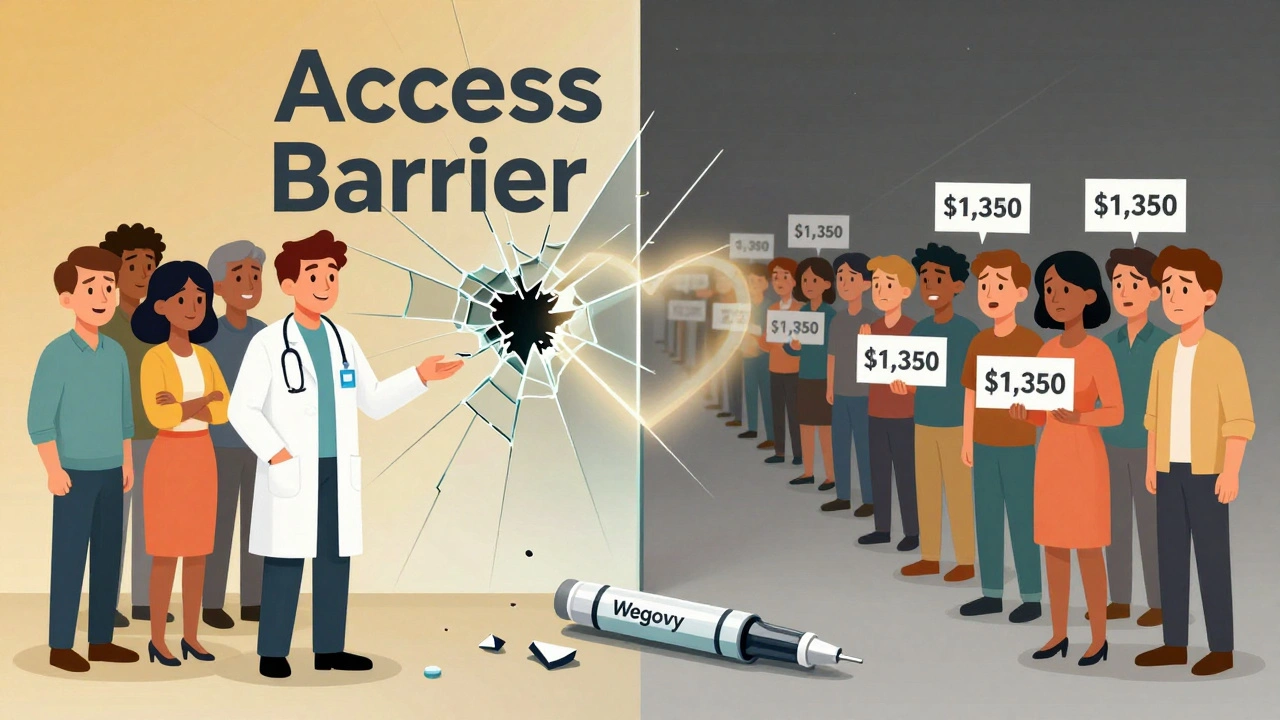
What’s Next?
The future is already here. Tirzepatide (Zepbound), a dual GLP-1/GIP agonist, is showing even better results-up to 20.9% weight loss in trials. Oral semaglutide (Rybelsus) is approved for diabetes and being tested for weight loss. Early data shows about 11% weight loss, which could be a game-changer if it works without injections. Combination therapies are coming too-drugs that target multiple appetite pathways at once. The goal isn’t just to lose weight. It’s to keep it off without lifelong medication. But for now, Wegovy is the most effective weight loss drug on the market. It’s not magic. It’s not a quick fix. It’s a powerful tool-when used correctly, with medical supervision, and with realistic expectations.Real Talk: What Users Actually Say
On Drugs.com, Wegovy has a 7.9/10 rating. Positive reviews often say:- “I stopped thinking about food all the time.”
- “I finally feel in control.”
- “My knee pain is gone. I can walk without stopping.”
- “I lost 30 pounds, but I couldn’t afford to keep taking it.”
- “My insurance denied it after 6 months. I gained it all back.”
- “The nausea was unbearable. I didn’t even get to the full dose.”
How to Use It Right
If you’re considering semaglutide:- See an obesity specialist or endocrinologist. Not your general doctor. This isn’t a simple prescription.
- Start low. Don’t rush the dose increase. Your body needs time to adjust.
- Pair it with lifestyle changes. The STEP trials included weekly nutrition counseling. You need that too.
- Plan for the long term. This isn’t a 6-month program. It’s a maintenance strategy.
- Check your insurance. Know your coverage before you start. Ask about patient assistance programs.
Final Thoughts
Semaglutide isn’t the end of the road for weight loss. It’s a beginning. For the first time, we have a drug that can match the results of surgery-with far less risk. But it’s not a cure. It’s a tool. And like any tool, its value depends on how you use it. If you’re struggling with obesity, it’s worth talking to a specialist. If you’re healthy and just want to lose a few pounds? It’s not for you. And if you’re hoping it’ll magically fix everything without diet or movement? You’ll be disappointed. The science is clear. The results are powerful. But the real challenge isn’t the drug. It’s access. It’s cost. It’s making sure this breakthrough doesn’t become another luxury for the wealthy.Is Ozempic the same as Wegovy for weight loss?
They contain the same active ingredient, semaglutide, but at different doses. Ozempic is approved for type 2 diabetes at up to 1 mg weekly and typically leads to 6-8% weight loss. Wegovy is approved for weight loss at 2.4 mg weekly and produces about 15% weight loss on average. You can’t use Ozempic as a substitute for Wegovy if your goal is significant weight loss.
How long does it take to see results with Wegovy?
Most people start noticing reduced hunger and slight weight loss within the first 4-8 weeks. The biggest changes happen between weeks 16 and 44. Maximum weight loss is typically reached by week 68-about 16 months. Patience is key. The dose increases slowly to reduce side effects, so results take time.
Will I gain all the weight back if I stop taking it?
Yes, most people do. Studies show that within one year of stopping Wegovy, people regain about two-thirds of the weight they lost. That’s because semaglutide manages obesity-it doesn’t cure it. If you stop, your body’s natural hunger signals return. To keep the weight off, you’ll need to continue the medication or make permanent lifestyle changes that replace its effects.
Can I take semaglutide if I don’t have diabetes?
Yes. Wegovy is specifically approved for weight loss in adults with obesity (BMI ≥30) or overweight (BMI ≥27) with at least one weight-related condition like high blood pressure, high cholesterol, or sleep apnea-even if they don’t have diabetes. Many participants in the STEP trials were not diabetic and still lost significant weight.
Are there cheaper alternatives to Wegovy?
Liraglutide (Saxenda) is another GLP-1 drug approved for weight loss, but it requires daily injections and leads to about 8% weight loss-less than Wegovy’s 15%. Generic versions don’t exist yet. Some people try compounded semaglutide, but these are not FDA-approved and carry risks. The only proven, safe alternatives are lifestyle changes, behavioral therapy, or bariatric surgery-none of which are cheap or easy.
Is semaglutide safe for long-term use?
Current data shows it’s safe for at least two years, with no new safety signals emerging in extended studies. The American Association of Clinical Endocrinology recommends continuing it indefinitely for weight maintenance, similar to how you’d take blood pressure medication. Long-term safety beyond five years is still being studied, but the cardiovascular benefits (reduced heart attacks and strokes) make it a strong candidate for lifelong use in eligible patients.
Can I drink alcohol while taking Wegovy?
There’s no direct interaction, but alcohol can worsen nausea and stomach upset, which are already common side effects. Alcohol also adds empty calories and can trigger cravings, which defeats the purpose of the drug. Most doctors recommend limiting or avoiding alcohol, especially early in treatment.
What should I do if I can’t afford Wegovy?
First, check if you qualify for Novo Nordisk’s patient assistance program, which provides free medication to eligible uninsured or underinsured patients. You can also ask your doctor about payment plans or coupons. If cost is a barrier, focus on proven lifestyle changes: prioritize protein and fiber, reduce ultra-processed foods, get regular movement, and manage stress. These won’t give you 15% weight loss, but they’re free, sustainable, and effective.







Iris Carmen
December 8, 2025 AT 20:01