

The U.S. Food and Drug Administration doesn’t wait for problems to happen before acting. Instead, it shows up-unannounced or with notice-to check if the places making your medicine, medical devices, and even your food are doing things right. These visits aren’t random. They’re part of a detailed, risk-based system designed to catch issues before they reach you. In 2022, the FDA inspected over 12,000 domestic facilities and nearly 1,000 overseas ones. That’s not luck. It’s strategy.
Why inspections matter more than you think
Every pill, injection, or implant you use had to pass through a manufacturing facility. That facility had to follow strict rules called Current Good Manufacturing Practices (CGMP). These aren’t suggestions. They’re legal requirements under the Federal Food, Drug, and Cosmetic Act, first passed in 1938 and updated over decades. The FDA doesn’t just approve products on paper. It checks if the place making them can actually do it consistently, safely, and without contamination.Think of an inspection as a snapshot. It’s not a full audit of everything that’s ever happened. But it’s enough to show whether the system is working. A single observation-like missing training records or unvalidated equipment-can trigger a warning letter, a product recall, or even a shutdown. In 2023, the FDA issued 1,842 warning letters after inspections. Medical device makers got 42% of them. Drug manufacturers got 38%. The rest went to food and supplement companies.
The four types of FDA inspections
Not all inspections are the same. The FDA uses four distinct types, each with a specific purpose:- Pre-approval inspections: Done before a new drug or device gets approved. The FDA needs to see that the manufacturing process is solid, the staff is trained, and the records are clean. This inspection must happen within 30 days after the agency says the facility is ready.
- Routine surveillance inspections: These happen every 2 to 5 years, depending on risk. A high-risk facility-like one making life-saving cancer drugs-might get visited every 6 to 12 months. A low-risk facility, like one making over-the-counter vitamins, might go 4 or 5 years between visits.
- Compliance follow-up inspections: If a facility got a Form 483 in the past, the FDA comes back to see if the problems were fixed. No fixes? Expect a warning letter or worse.
- For-cause inspections: Triggered by real red flags-like a spike in patient complaints, a whistleblower tip, or a sudden pattern of adverse events. These can happen with no notice at all.
The FDA uses a risk model with 12 factors to decide who gets inspected and how often. Product type, past violations, recall history, and how complex the manufacturing process is all play a role. A facility that’s never had an issue might get a heads-up inspection. One with a history of data falsification? That’s a surprise visit.
What happens during an inspection
When the FDA investigator walks in, they’ll hand you FDA Form 482-the official Notice of Inspection. You’re legally required to allow them access. They’ll be accompanied by a designated facility rep the whole time.The inspection typically lasts 3 to 10 days. Here’s what they do:
- Walk through the facility-watching how people work, checking cleanliness, verifying equipment is maintained.
- Review records: deviation reports, training logs, equipment qualification files, validation studies, batch records, and analytical data.
- Interview staff-anyone who touches the product, from lab techs to quality managers.
- Collect samples if needed-for testing in FDA labs.
They’re not looking for perfection. They’re looking for control. Did you document a change? Did you investigate a deviation? Did you train your staff? If the answer is “no,” or “we didn’t record it,” that’s a problem.
At the end, they’ll give you FDA Form 483-a list of objectionable conditions. This isn’t a final verdict. But it’s serious. You have 15 working days to respond with a corrective action plan. Ignore it? The FDA can issue a warning letter, block your product from entering the U.S., or even shut you down.
The biggest mistakes facilities make
Based on thousands of inspection reports, the top reasons for Form 483s are predictable:- Inadequate deviation investigations (32% of observations): A batch fails. Someone says, “It’s fine, we’ll just use it.” No root cause. No investigation. No documentation. That’s a red flag.
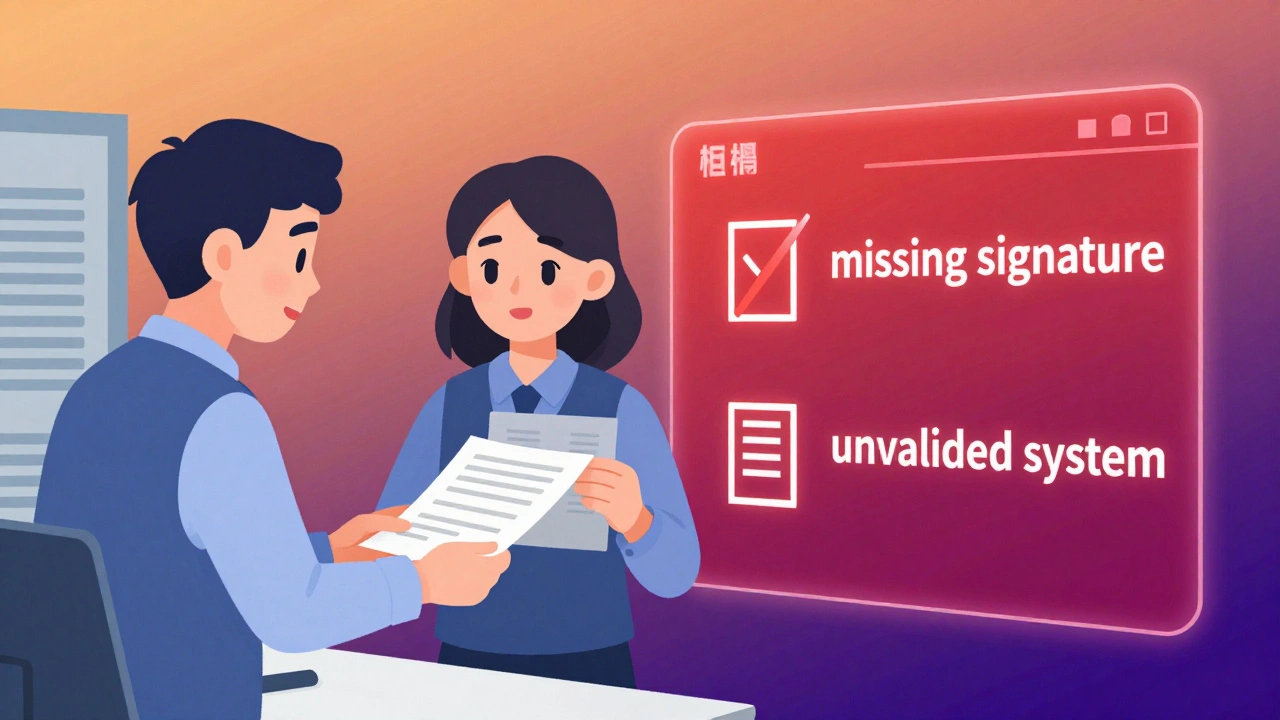
- Incomplete training records (24%): Staff can’t show proof they were trained on the procedure they’re using. That’s not just sloppy-it’s a safety risk.
- Insufficient validation documentation (15%): You didn’t prove your process works consistently. Maybe you skipped a step. Maybe you didn’t test enough samples. Validation isn’t optional.
- Poor change control (7%): You changed a supplier, a machine, or a process. Did you test it? Document it? Get approval? If not, you’re flying blind.
And here’s the fastest-growing issue: data integrity. In 2020, it made up 28% of observations. By 2023, it was 45%. Why? Because more records are electronic. The FDA is cracking down on backdated entries, deleted files, shared logins, and unsecured systems. If your computer system doesn’t meet 21 CFR Part 11 standards, you’re at risk.
How to get ready-real strategies that work
You can’t wing an FDA inspection. But you can prepare. Here’s what the most successful facilities do:- Designate one inspection coordinator: Facilities with a single point of contact reported 83% smoother inspections. No confusion. No conflicting answers.
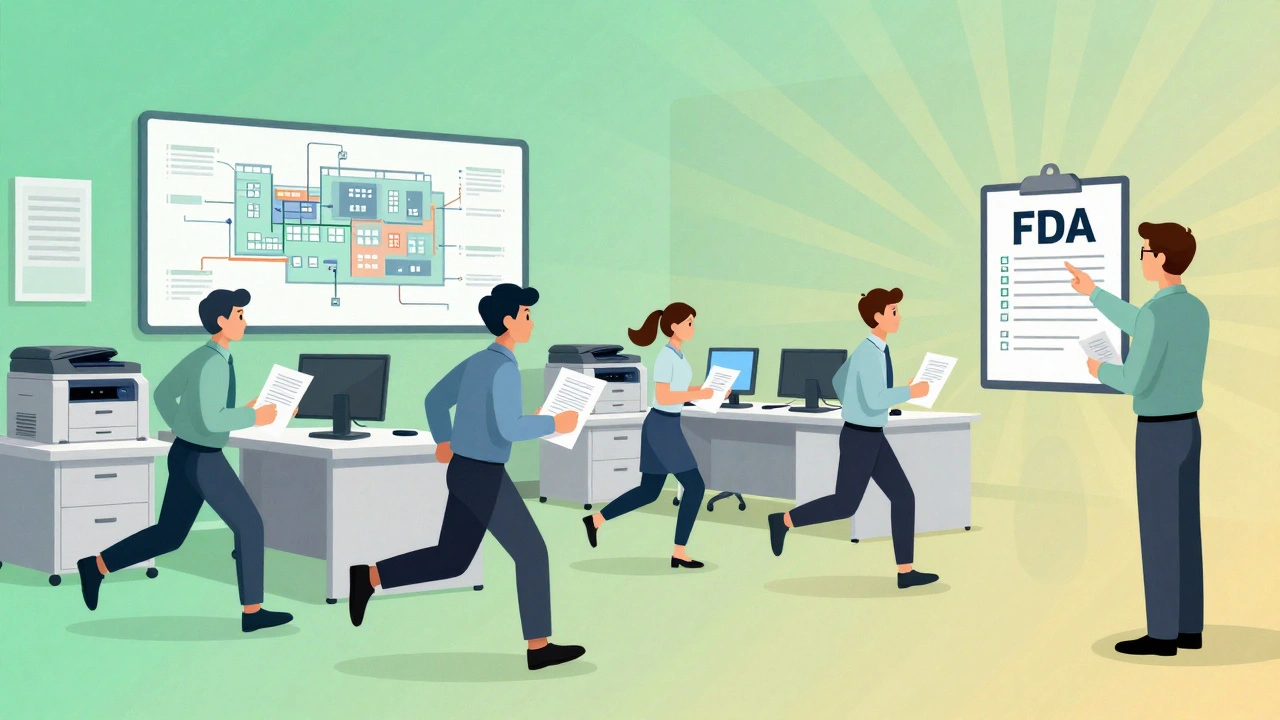
- Use a runner system: Have someone ready to fetch documents the moment they’re requested. One company cut inspection time by 22% just by having documents ready in under 2 minutes.
- Update your facility diagram: If you moved a machine last month, update the drawing. Inspectors notice discrepancies immediately. It makes you look careless.
- Run quarterly mock inspections: Facilities with formal readiness programs reduced inspection observations by 63%. Treat it like a fire drill-find your weak spots before the real thing.
- Train your team: All staff who interact with inspectors need at least 8 hours of training per year. Principal investigators need 16. Only 63% of sites meet this standard. Don’t be one of them.
Also, create a dedicated inspection support room. Equip it with printers, computers, phones, and a secure document server. In 2023, facilities using this setup resolved document requests 40% faster. Speed matters. The longer you take to hand over records, the more suspicious the inspector becomes.
What’s changing in 2025 and beyond
The FDA isn’t standing still. By Q3 2025, they’ll start using AI to help review documents. Pilot programs are already testing automated analysis of electronic records. That means even small errors-like a missing signature or an unapproved change-will be flagged faster.Remote inspections are also growing. In 2022-2023, the FDA tested virtual tours and remote document reviews at 147 facilities. For documentation checks, they were just as effective as in-person visits. Expect more of this, especially for lower-risk sites.
Inspection frequency is shifting too. High-risk facilities-especially those making products for older adults-will see more visits. Low-risk dietary supplement manufacturers may see fewer. The FDA is getting smarter about where to focus its limited resources.
What happens if you fail
A Form 483 isn’t the end. But if you ignore it, it becomes a warning letter. That’s public. It’s on the FDA’s website. Customers, partners, and investors will see it. A second failure can lead to import alerts, product seizures, or consent decrees-court orders that put your facility under federal supervision.One company got shut down because they didn’t fix a training gap. Their product was safe. But the FDA doesn’t care if the product is fine. They care if you have systems to make sure it’s always fine. That’s the difference between compliance and failure.
Don’t wait for an inspection to start preparing. Start now. Review your records. Train your people. Fix the small stuff before it becomes a big problem. Because when the FDA shows up, they’re not there to help you. They’re there to make sure you’re doing your job.
What is an FDA Form 483?
An FDA Form 483 is a list of objectionable conditions observed during an inspection. It’s not a final enforcement action, but it’s serious. Facilities must respond in writing within 15 working days with a plan to fix each issue. Ignoring it can lead to a warning letter or other regulatory actions.
How often does the FDA inspect facilities?
Inspection frequency depends on risk. High-risk facilities (like those making injectable drugs or implantable devices) are inspected every 6 to 12 months. Moderate-risk sites get visited every 2-3 years. Low-risk facilities, such as those making dietary supplements, may go 3-5 years between inspections. The FDA uses a risk-based model with 12 criteria to determine priority.
Can the FDA inspect without notice?
Yes. Routine inspections usually give 5 business days’ notice, but for-cause inspections-triggered by complaints, whistleblower tips, or adverse event spikes-can happen with no advance notice. The FDA has the legal right to enter any facility at any time to ensure compliance.
What records does the FDA check during an inspection?
Inspectors review batch records, deviation reports, non-conformance logs, training records, equipment qualification files, process validation data, analytical method validation reports, and change control documentation. They also check that records are complete, accurate, and retained for at least 2 years after product discontinuation.
What’s the biggest cause of inspection failures today?
Data integrity issues are now the top cause, making up 45% of observations in 2023. This includes backdated entries, unsecured electronic records, shared login credentials, and failure to validate computer systems under 21 CFR Part 11. Even small lapses in digital recordkeeping are being aggressively targeted by the FDA.
How can a facility reduce inspection observations?
Facilities with formal inspection readiness programs reduce observations by 63%. Key steps include quarterly mock inspections, assigning a single inspection coordinator, maintaining an updated facility diagram, creating a dedicated inspection support room, and ensuring all staff complete annual training. Proactive preparation beats last-minute scrambling.






Shawna B
December 4, 2025 AT 22:17