
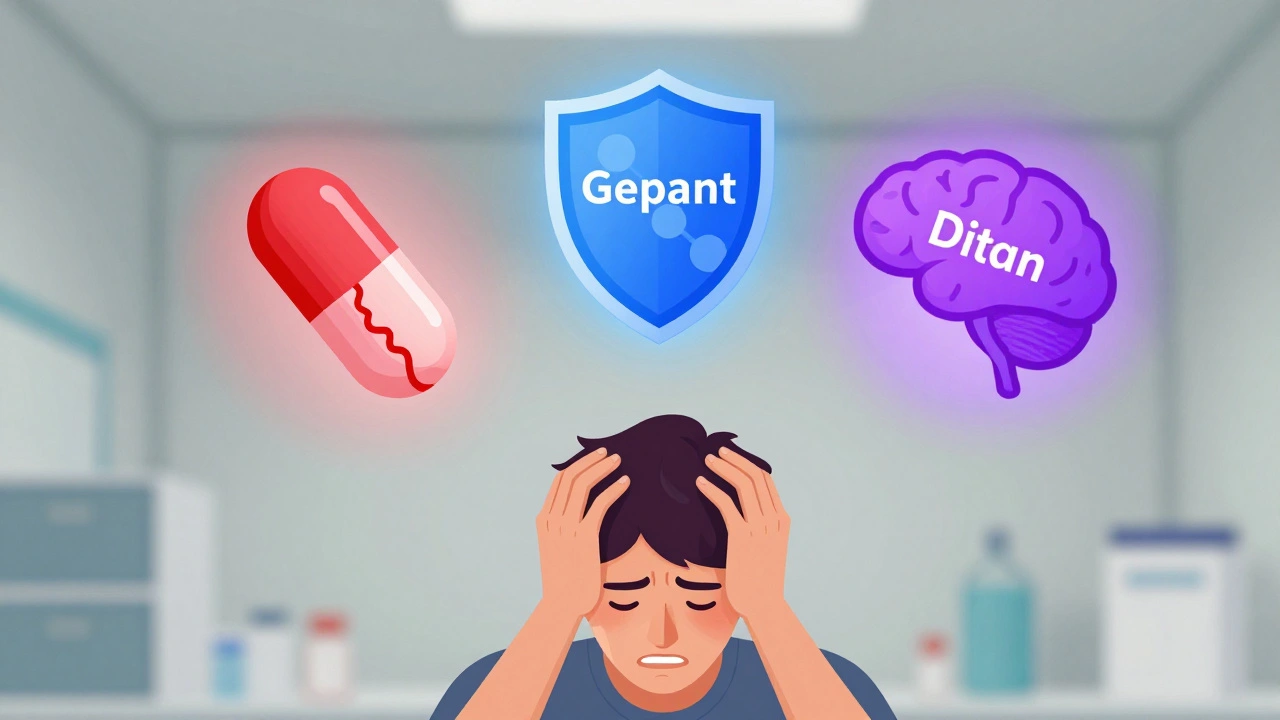
When a migraine hits, you don’t want to wait. You want relief-fast. But not at the cost of dizziness, chest tightness, or feeling like you’ve been drugged. The three main classes of acute migraine meds-triptans, gepants, and ditans-all work differently, and their safety profiles aren’t interchangeable. Choosing the right one isn’t just about which works best. It’s about which one won’t leave you worse off after the pain fades.
Triptans: Fast Relief, But With a Price
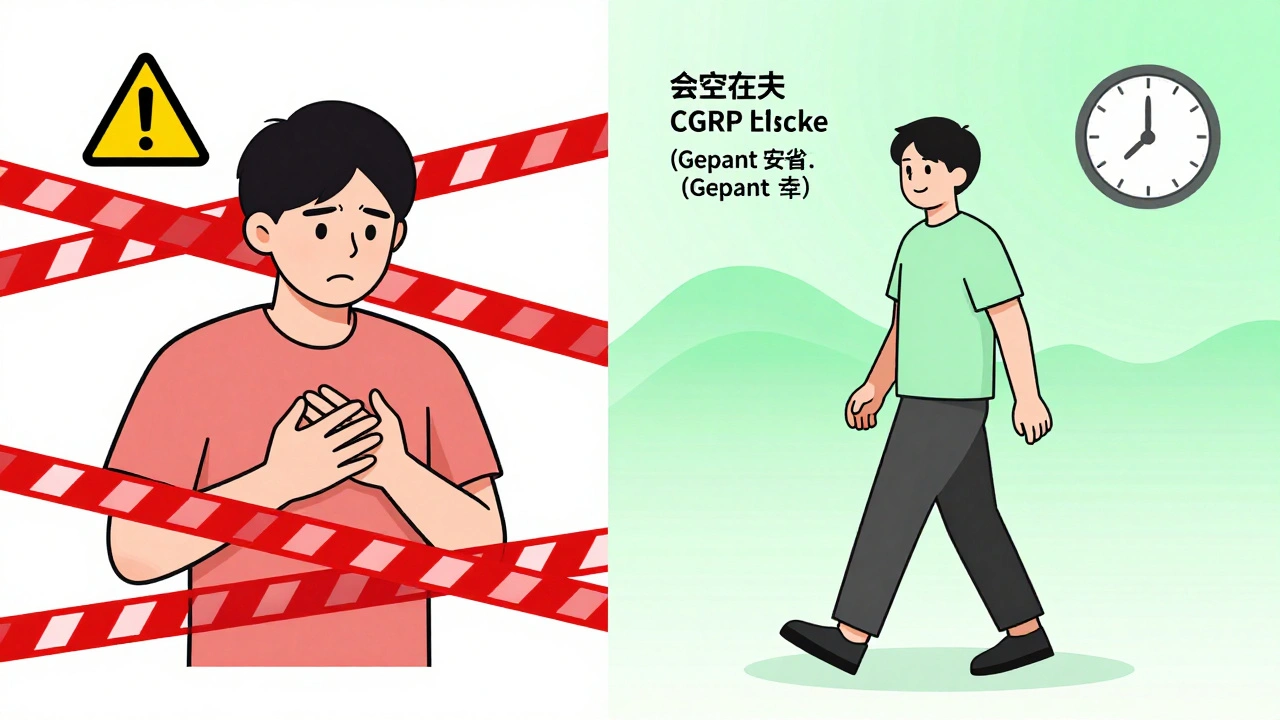
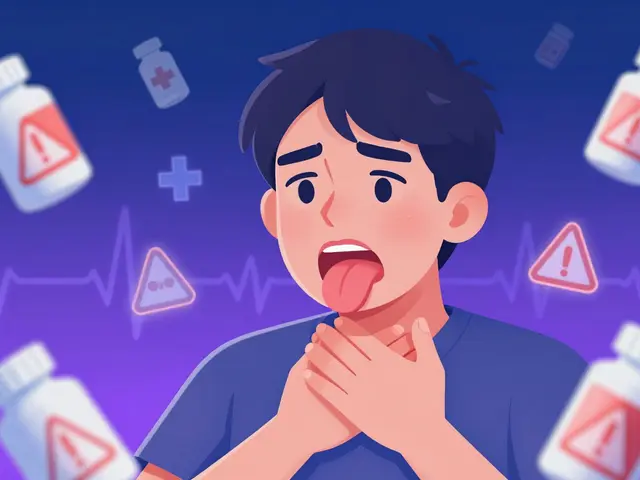
Triptans have been the go-to for decades. Sumatriptan, the first one approved in 1991, changed how migraines were treated. They work by narrowing blood vessels around the brain and blocking pain signals. That’s why they often work within 30 minutes. But that same mechanism is also why they carry risks.Up to 15% of people report tingling or flushing. About 8% feel a strange tightness or pressure in their chest. It’s not a heart attack-it’s a side effect. But if you’ve never had one before, it’s terrifying. That’s why triptans are off-limits if you have heart disease, uncontrolled high blood pressure, or a history of stroke. Even if you’re young and healthy, doctors still check your cardiovascular history before prescribing them.
Some triptans are safer than others. Almotriptan and frovatriptan cause fewer side effects overall. But even the "milder" ones still carry the same cardiovascular restrictions. And if you’re on other meds like ergotamines, you can’t use triptans within 24 hours. The risk of dangerous blood vessel narrowing adds up.
On Drugs.com, triptans average a 6.4 out of 10. Over half of users say they work well. But nearly a third say they quit because of side effects. One user wrote: "I got the pain relief I needed-but I felt like my heart was going to explode. Never again."
Gepants: The Safer Alternative for High-Risk Patients
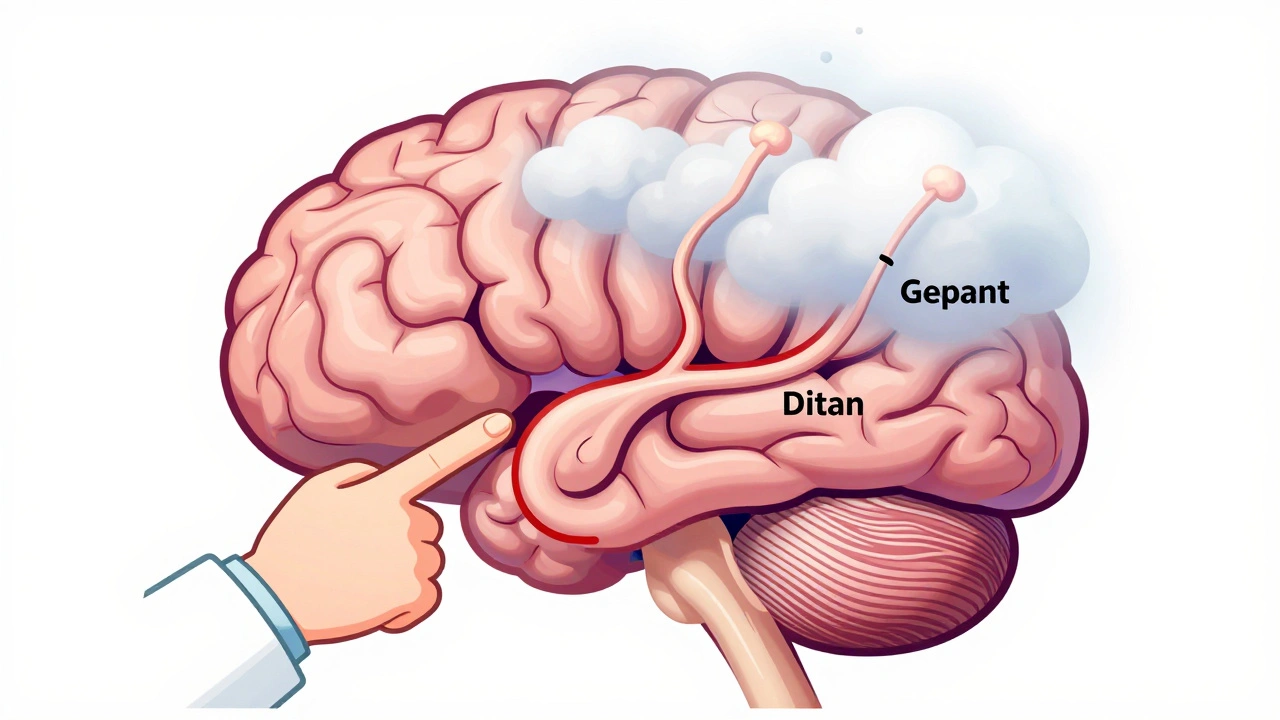
Gepants are newer. Ubrogepant (Ubrelvy) and rimegepant (Nurtec ODT) came onto the market in late 2019 and early 2020. They don’t constrict blood vessels. Instead, they block CGRP, a molecule that triggers migraine pain. That’s why they’re considered safer for people with heart problems.Studies show gepants have the lowest rate of adverse events among all three classes. Nausea? Happens in about 5% of users. Drowsiness? Around 3%. Hypersensitivity reactions are rare-under 0.1%. No chest tightness. No vasoconstriction. No cardiac contraindications.
They’re not perfect. They take longer to work. Triptans often relieve pain in 2 hours. Gepants? Maybe 2 to 4 hours. But their effects last longer. Rimegepant has a half-life of 10 to 12 hours. That means fewer rebound headaches. And rimegepant is also approved for preventive use, taken every other day. That’s a big advantage if you get migraines more than 4 days a month.
On Drugs.com, rimegepant scores 7.1 out of 10. Users praise the lack of chest pressure. One wrote: "No weird tightness. Just slower. But I can still drive afterward."
Ditans: Effective, But Too Sedating for Most
Lasmiditan (Reyvow) is the only ditan approved so far. It targets a different serotonin receptor (5-HT1F) and doesn’t affect blood vessels at all. That makes it safe for people with heart disease. But here’s the catch: it hits the brain harder.Over 18% of users report dizziness. Nearly 10% feel tingling or numbness. Almost 8% feel so sedated they can’t function. In clinical trials, 3.2% experienced incoordination. That’s not just "feeling tired." That’s impaired motor control.
The FDA requires a black box warning: you cannot drive or operate heavy machinery for at least 8 hours after taking it. That’s not a suggestion. That’s a legal requirement. In real-world reviews, 63% of negative comments mention feeling "out of it," "drunk," or "zombie-like." One Reddit user summed it up: "Reyvow made me feel drunk without alcohol."
It’s not useless. For people who can’t take triptans and need something faster than gepants, it’s an option. But it’s not a first-line treatment. Most neurologists reserve it for patients who’ve tried everything else-and can afford to sit still for half a day.
Comparing the Safety Profiles Side by Side
| Side Effect | Triptans | Gepants | Ditans (Lasmiditan) |
|---|---|---|---|
| Chest tightness or pressure | 3-8% | Not reported | Not reported |
| Dizziness | 7-14% | 2-4% | 18.8% |
| Sedation or drowsiness | 6-10% | 2-4% | 7.8% |
| Paresthesia (tingling) | 8-15% | Not common | 9.4% |
| Nausea | 5-12% | 3-6% | 5.0% |
| Cardiovascular risk | Contraindicated in heart disease | Safe for most | Safe for most |
| Driving restriction | No | No | Yes (8+ hours) |
| Onset of action | 30-60 minutes | 2-4 hours | 60-90 minutes |
The data is clear: ditans have the highest risk of side effects overall. Triptans are next, especially for cardiovascular concerns. Gepants come out on top for safety-especially if you have heart disease, high blood pressure, or just hate feeling groggy.
Who Should Use What?
It’s not one-size-fits-all. Here’s how to think about it:
- If you have heart disease, high blood pressure, or stroke risk: Skip triptans. Choose a gepant. They’re the only class with strong evidence of safety here.
- If you need fast relief and no heart issues: Triptans still win. They work quicker than gepants and don’t cause sedation like ditans.
- If you’ve tried triptans and hated the side effects: Try a gepant. Many people switch and never go back.
- If you need something for occasional use and can’t drive afterward: Lasmiditan might be an option-but only if nothing else works.
Dr. Elizabeth Loder from Harvard puts it bluntly: "I don’t think any of these drugs do a lot better than triptans for overall benefit." But she adds, "For patients with heart problems, we have no choice but to go with gepants."
What You Should Watch Out For
Some side effects aren’t from the drug-they’re from the migraine itself. Feeling tired? Weak? Nauseous? Those can be part of the attack. Doctors call this "unmasking." That’s why it’s important to track what happens after you take the pill. Did the nausea start before you took it? Or did it come 20 minutes later?
Also, watch for drug interactions. Rimegepant shouldn’t be taken with strong CYP3A4 inhibitors like ketoconazole or clarithromycin. It can build up to dangerous levels. Lasmiditan has no major interactions, but it’s still a CNS depressant. Don’t mix it with alcohol, benzodiazepines, or sleep meds.
And if you’ve ever had seizures-or take meds that lower your seizure threshold-lasmiditan is a no-go. The risk isn’t proven, but the warning is there for a reason.
The Big Picture: Why This Matters
Over 1.2 billion people worldwide get migraines. Yet more than half of people who start triptans stop taking them because of side effects. That’s not just inconvenient. It’s dangerous. People go without treatment, suffer longer, and end up in the ER.
The rise of gepants is changing that. Their market share jumped from 2% in 2020 to 28% by late 2023. Triptans still lead at 62%, but their dominance is slipping. Ditans? Still at 3%. They’re not replacing anything-they’re filling a tiny gap.
What’s next? Zavegepant, a nasal spray gepant, just finished its phase 3 trial. It works fast, doesn’t affect blood vessels, and has a side effect rate similar to rimegepant. It could be approved in 2025. That means more options-faster, safer, non-pill routes.
The goal isn’t just to kill the pain. It’s to do it without wrecking your day. You shouldn’t have to choose between relief and function. With the right medication, you don’t have to.
Are triptans safe if I have high blood pressure?
No. Triptans cause blood vessels to narrow, which can raise blood pressure and increase the risk of heart attack or stroke in people with uncontrolled hypertension. If you have high blood pressure, your doctor should avoid prescribing triptans and consider gepants instead.
Can I take gepants every day?
Rimegepant (Nurtec ODT) is approved for both acute treatment and prevention. You can take it every other day, up to 18 doses per month. Ubrogepant (Ubrelvy) is only approved for acute use-no more than 8 doses per month. Always follow your doctor’s dosing instructions.
Why does lasmiditan make me feel so drugged?
Lasmiditan works directly on serotonin receptors in the brain that affect coordination, alertness, and perception. Unlike triptans and gepants, it doesn’t target blood vessels-it targets your brain’s function. That’s why side effects like dizziness, sedation, and incoordination are so common. It’s not a flaw-it’s how the drug works.
Is there a migraine medication with no side effects?
No medication is completely free of side effects. But gepants come closest. They have the lowest rate of serious or disruptive side effects among acute migraine treatments. For many people, the trade-off of slightly slower relief is worth avoiding dizziness, chest tightness, or sedation.
How do I know if my side effect is from the drug or the migraine?
Keep a migraine diary. Note when symptoms start-before or after taking the pill. Fatigue, nausea, and sensitivity to light are common migraine symptoms. If they begin before you take the medication, they’re likely part of the attack. If they start 20-60 minutes after taking it, they’re more likely a drug side effect.
Next Steps: What to Do Now
If you’re currently on triptans and experience chest tightness, dizziness, or fatigue that lasts longer than your migraine: talk to your doctor. Ask about switching to a gepant. If you’ve been told you can’t take triptans due to heart issues, ask about rimegepant or ubrogepant. If you’ve tried both and still have bad side effects, ask if lasmiditan is worth considering-only if you can safely wait 8 hours after taking it.
Don’t suffer in silence. Migraine treatment has changed. The options now are safer, smarter, and more tailored than ever. You don’t have to settle for relief that leaves you worse off.



Reshma Sinha
December 13, 2025 AT 08:53