
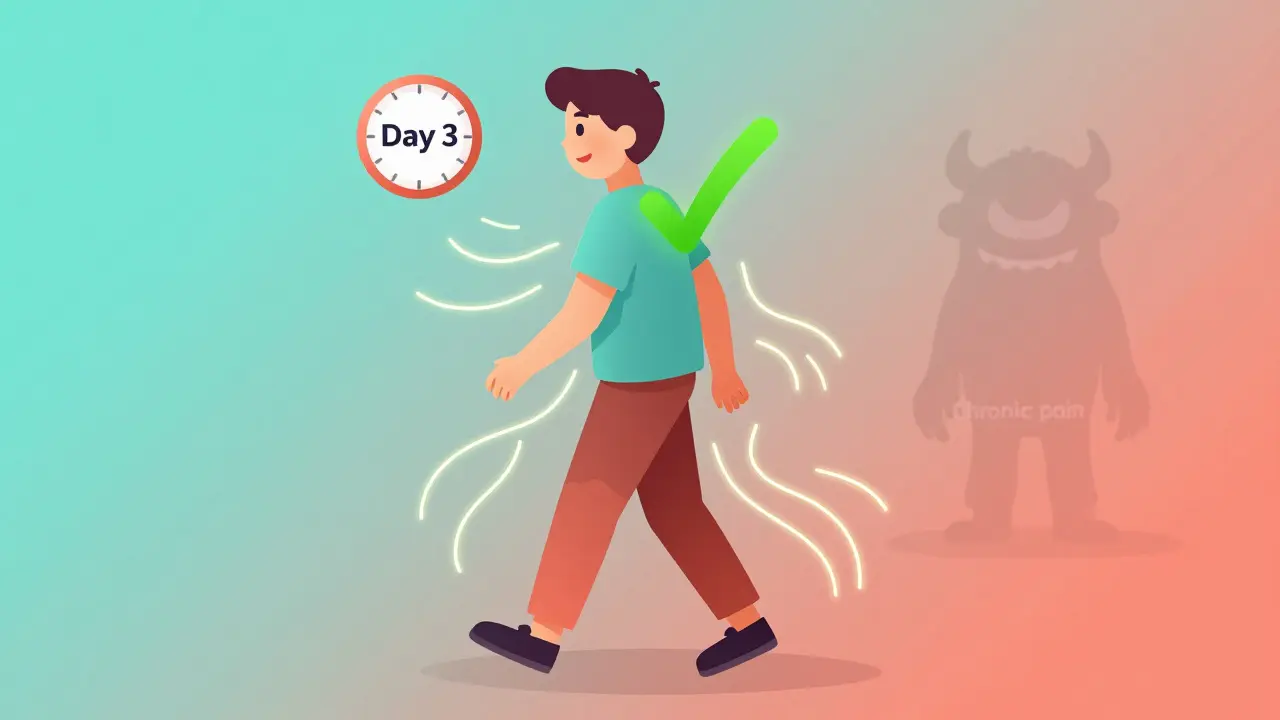
Low back pain is one of the most common reasons people visit a doctor - and one of the most misunderstood. Many assume all back pain is the same: you lift something heavy, it hurts, and it goes away. But that’s not the whole story. The difference between acute and chronic low back pain isn’t just about how long it lasts - it’s about what’s happening inside your nervous system, and that changes everything about how you treat it.
What Exactly Is Acute Low Back Pain?
Acute low back pain hits fast and hard. It usually starts after a clear injury - twisting wrong while lifting, slipping on ice, or even sneezing too hard. This kind of pain lasts less than four weeks. In most cases, it’s not a broken bone or a torn disc. It’s your muscles or ligaments screaming because they got overstretched or irritated. Here’s the good news: about 90% of people with acute back pain get better on their own within six to twelve weeks. But that doesn’t mean you should wait it out. Studies show that getting physical therapy within the first 72 hours cuts your risk of turning acute pain into chronic pain by 22%. That’s not a small edge - it’s a game-changer. Physical therapy for acute pain isn’t about deep tissue massage or aggressive stretching. It’s about movement re-education. A good therapist will teach you how to move safely again - how to bend, lift, and sit without triggering pain. They’ll use simple exercises: gentle walking, pelvic tilts, cat-cow stretches. These aren’t flashy, but they reset your body’s alarm system. One patient, John T., described it this way: “I lifted a box wrong. Three days later, I was in PT. By session five, my pain was 90% gone.” That’s not luck. That’s timing. Early intervention stops the nervous system from learning to hurt.Chronic Low Back Pain Is a Different Beast
Chronic back pain is defined as pain lasting longer than three months - some experts say six. But here’s the key: by this point, the original injury has usually healed. The pain isn’t coming from a torn muscle or a slipped disc anymore. It’s coming from your brain and spinal cord. This is called central sensitization. Think of it like a faulty alarm system. Your nerves become hyper-sensitive. Even normal movements - standing up, walking a few blocks - feel painful because your nervous system is stuck in “danger mode.” That’s why someone with chronic pain can have no visible damage on an MRI and still be in constant discomfort. Treatment for chronic pain can’t just focus on the back. You can’t stretch your way out of a rewired nervous system. Physical therapy here looks totally different. It’s not just about strength or flexibility - it’s about pain neuroscience education. Therapists explain how pain works, not just where it hurts. They help patients understand: “Your back isn’t broken. Your nerves are just overreacting.” One study found that chronic pain patients who received this kind of education were 71% more likely to report meaningful improvement. That’s because once you stop fearing movement, your body starts moving again - and movement is the best medicine for chronic pain.How Physical Therapy Outcomes Differ Between Acute and Chronic
The results speak for themselves. For acute pain: physical therapy within two weeks reduces pain intensity by 40-60%. It cuts time off work by 35-50%. And it prevents chronic pain in 84% of cases - compared to just 68% if you wait. For chronic pain: the goals shift. Complete pain relief? Rare. Most people don’t get “cured.” But they can get functional. About 60-70% of chronic patients see meaningful improvement in daily life - walking without fear, sleeping better, returning to hobbies. Pain reduction averages 30-50%. That’s not glamorous, but it’s life-changing. One patient, Sarah M., said after 20 sessions over five months: “I only have 30% relief.” That sounds disappointing - until you realize she went from being housebound to walking her dog again. That’s the real win.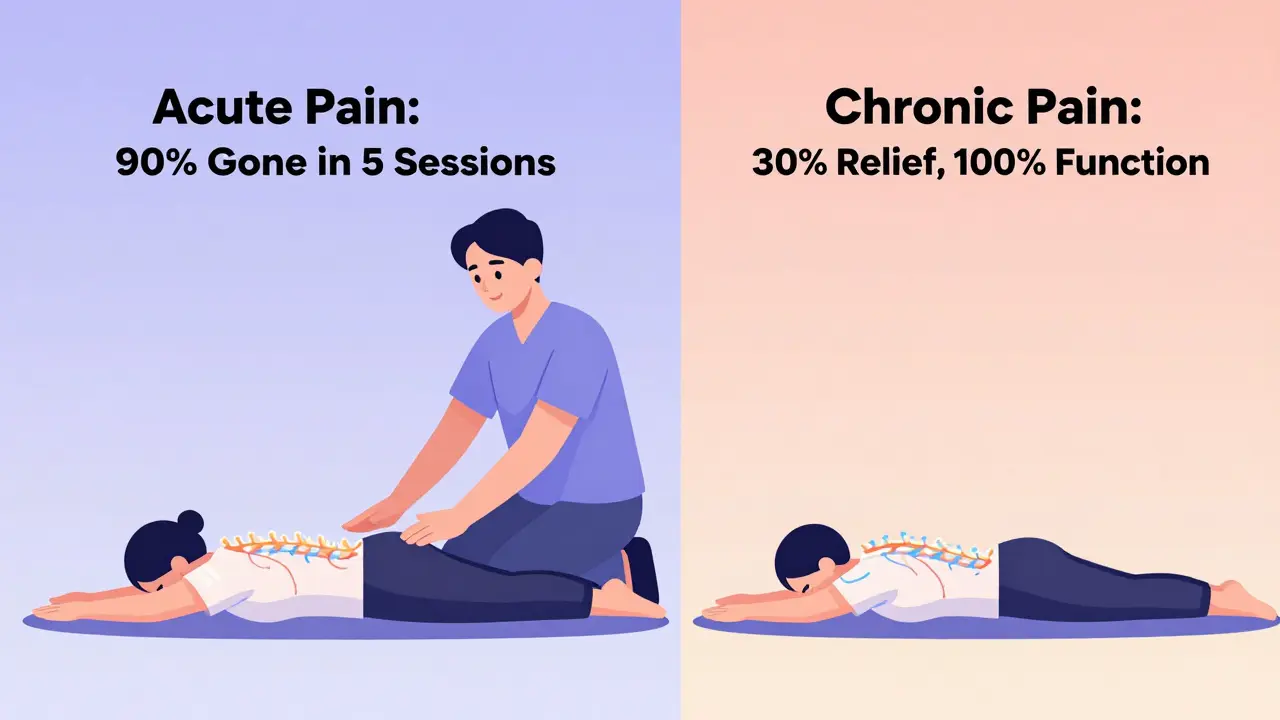
Why Timing Matters More Than You Think
Delaying physical therapy is one of the biggest mistakes people make. If you wait more than 16 days to start treatment after acute pain begins, your chance of developing chronic pain jumps by 38%. That’s not a coincidence. The longer your nervous system stays in pain mode, the harder it is to reset. The window for prevention is narrow - just two to four weeks. During that time, movement is medicine. Resting too long makes muscles weak and stiff, which makes pain worse. Staying active - even at a slow pace - tells your brain: “This isn’t dangerous.” And here’s something most people don’t know: getting an MRI or X-ray too early for acute back pain actually increases your risk of chronic pain by 27%. Why? Because seeing “abnormalities” on a scan - even harmless ones - makes you afraid to move. Fear leads to inactivity. Inactivity leads to more pain. It’s a trap.What Physical Therapy Actually Looks Like
For acute pain: expect 6-12 sessions over 3-6 weeks. The first few visits focus on calming the nervous system - ice, heat, gentle movement. Then you move into restoring normal motion: walking, bending, standing. No heavy lifting. No aggressive stretches. Just smart, gradual progress. For chronic pain: it’s longer - 15-25 sessions over 8-12 weeks. Sessions include:- Pain neuroscience education (2-4 sessions)
- Graded exposure therapy (slowly doing feared movements)
- Functional retraining (how to climb stairs, get out of a chair, carry groceries)
- Mind-body techniques to reduce stress-triggered pain spikes

What Works and What Doesn’t
Here’s what the data says:- Works: Early PT, movement-based therapy, pain education, graded activity
- Doesn’t work: Prolonged rest, excessive imaging, opioids for non-specific pain, passive treatments like ultrasound or electrical stimulation without movement
Who Should You See?
Not all physical therapists are the same. For acute pain, look for someone skilled in mechanical diagnosis - they’ll assess how your movement patterns trigger pain and fix them. For chronic pain, find someone with training in pain neuroscience education. Ask: “Do you explain how pain works in the brain?” If they say yes, you’re in good hands. The American Physical Therapy Association now offers a certification in pain science. It’s not required - but it’s a strong signal.Final Reality Check
Low back pain isn’t just a physical problem. It’s a nervous system problem. Acute pain is a warning sign - fix it early, and you avoid a lifetime of pain. Chronic pain is a misfiring alarm - you can’t silence it with force. You have to retrain it. The system is stacked against you. Insurance often won’t cover early PT. Doctors still push imaging and pills first. But you have power. If you hurt your back, don’t wait. Don’t assume it’ll just go away. See a physical therapist within the first week. Move gently. Learn how your pain works. That’s the best way to keep it from becoming something you live with forever.How do I know if my back pain is acute or chronic?
Acute back pain lasts less than four weeks and usually starts after a clear injury - like lifting something heavy or twisting wrong. Chronic back pain lasts longer than three months (or six, depending on the guideline) and often continues even after the original injury has healed. If your pain is still bothering you after 12 weeks, it’s likely chronic. The key difference isn’t just time - it’s what’s happening in your nervous system.
Should I get an MRI for my acute back pain?
No - not unless you have red flags like numbness in both legs, loss of bladder control, or unexplained weight loss. Most acute back pain is caused by muscle strain, not structural damage. MRIs often show “abnormalities” like disc bulges in people with no pain at all. Getting one too early can make you fear movement, which actually increases your risk of turning acute pain into chronic pain by 27%.
Can physical therapy really prevent chronic back pain?
Yes - if you start early. Research shows that starting physical therapy within 14 days of acute back pain onset reduces the risk of chronic pain by 84%. That’s because early movement helps reset your nervous system before it gets stuck in pain mode. Waiting more than 16 days increases chronicity risk by 38%. Timing isn’t just helpful - it’s critical.
Why doesn’t physical therapy always work for chronic pain?
It’s not that PT doesn’t work - it’s that traditional therapy often misses the mark. If you’re treating chronic pain like it’s a muscle strain, you’re treating the wrong thing. Chronic pain is about your brain and nerves being oversensitive. The most effective PT for chronic pain includes pain neuroscience education - teaching you how pain works - and graded exposure, helping you slowly do things you’ve been avoiding. Without those, progress is slow or nonexistent.
How many physical therapy sessions do I need?
For acute pain: 6-12 sessions over 3-6 weeks. For chronic pain: 15-25 sessions over 8-12 weeks. But it’s not just about numbers. Acute care focuses on restoring movement. Chronic care focuses on retraining your nervous system. One patient might need only four sessions to get back to work. Another might need months to rebuild confidence. The goal isn’t to count visits - it’s to restore function.
Is digital physical therapy (like apps) effective for chronic back pain?
Yes - and it’s growing fast. Apps like Kaia Health, approved by the FDA in 2023, use AI to guide you through evidence-based exercises and pain education. In clinical trials, users saw a 45% average pain reduction at 12 weeks. They’re not a replacement for in-person care, but they’re excellent for ongoing support, especially if you can’t access a specialist regularly. They’re also more affordable and consistent.
What’s the most important thing I can do right now for my back pain?
If your pain started in the last few weeks - get moving gently. Walk for 10 minutes a day. Avoid bed rest. Don’t wait for the pain to disappear before you move. If your pain has lasted more than three months - find a physical therapist who explains how pain works in the brain. Stop chasing quick fixes. Start retraining your nervous system. Your body is not broken. Your alarm system just got stuck.







Jody Kennedy
December 27, 2025 AT 15:27