
When you’re diagnosed with cancer, your mind races through a thousand questions. Treatment. Survival. Side effects. But one question that often gets buried under the urgency is: fertility preservation. If you’re someone who might want to have children one day, and you’re about to start chemotherapy, this isn’t just an afterthought-it’s a critical decision with long-term consequences.
Why Fertility Preservation Matters Before Chemo
Chemotherapy doesn’t just target cancer cells. It attacks rapidly dividing cells-and that includes the eggs in your ovaries and sperm in your testes. Some chemo drugs, especially alkylating agents like cyclophosphamide, are especially harsh on reproductive tissue. Studies show 30% to 80% of premenopausal women who get these drugs end up with premature ovarian insufficiency, meaning their ovaries stop working much earlier than expected. For men, sperm counts can drop to zero after just one cycle. The good news? You don’t have to accept this as inevitable. Fertility preservation isn’t experimental anymore. It’s standard care. The American Society of Clinical Oncology says it clearly: every cancer patient of reproductive age should be offered options before treatment begins. But time is tight. Many patients miss out because they wait too long.What Are Your Options?
There are six proven methods to protect fertility before chemo. Not all apply to everyone, but knowing what’s available helps you ask the right questions.- Sperm banking is the most straightforward option for men. It takes just a few days. You provide samples through masturbation, usually after 2-3 days of abstinence. The sperm is frozen and stored. Post-thaw, motility rates stay between 40% and 60%. No hormones. No surgery. Just a simple, effective step.
- Egg freezing (oocyte cryopreservation) is common for women. It involves 10-14 days of daily hormone injections to stimulate your ovaries, followed by a quick outpatient procedure to retrieve the eggs. They’re then frozen using vitrification-a fast-freezing method that keeps 90-95% of eggs alive. Success rates? About 4-6% chance of pregnancy per frozen egg. That means most women need to freeze 15-20 eggs to have a realistic shot at one baby.
- Embryo freezing gives the highest success rate: 50-60% live birth per transfer for women under 35. But it requires sperm-either from a partner or donor. If you’re single or not ready to choose a donor, this isn’t an option. Still, if you have a partner and time, it’s the most reliable path forward.
- Ovarian tissue freezing is the only option for girls who haven’t gone through puberty, or for women who can’t delay chemo for hormone stimulation. Surgeons remove small pieces of ovarian tissue through a minimally invasive laparoscopic procedure. The tissue is frozen and stored. Later, it can be re-implanted to restore hormone production and fertility. Over 200 live births have been reported globally from this method. It’s still considered experimental by the FDA, but it’s becoming more common in major cancer centers.
- Ovarian suppression uses monthly shots of drugs like goserelin (Zoladex) to put your ovaries into temporary hibernation during chemo. It doesn’t protect eggs directly, but studies show it can reduce the risk of premature ovarian failure by 15-20%. It’s not a guarantee, but it’s low-risk and can be done quickly. Side effects? Think menopause: hot flashes, night sweats, vaginal dryness. Some women stop the shots because they’re too uncomfortable.
- Radiation shielding isn’t for chemo, but it’s worth mentioning if you’re also getting radiation. Custom lead shields can block up to 90% of radiation from reaching the testes or ovaries. This only helps if the radiation is targeted near your pelvis. It won’t protect you from chemo damage.
How Much Time Do You Really Have?
This is where things get urgent. For most cancers, you have a narrow window-sometimes just days. In acute leukemia, doctors may need to start treatment within 48 to 72 hours. That’s not enough time for egg or embryo freezing unless you’re lucky enough to have a clinic ready to jump in. That’s why timing matters more than you think. The clock starts ticking the moment you get your diagnosis. Most patients who delay fertility discussions beyond 21 days later regret it. A 2022 study at MD Anderson found 68% of women under 35 who didn’t act in time wished they had. New protocols like “random-start” egg freezing have helped. Instead of waiting for your period to begin a cycle, you can start hormone injections anytime. This cuts the average delay from 14 days to just over 11. That’s still tight, but it’s enough for many. For men, sperm banking can often be done in under 72 hours. If you’re in the hospital, many centers have mobile collection units. Just ask.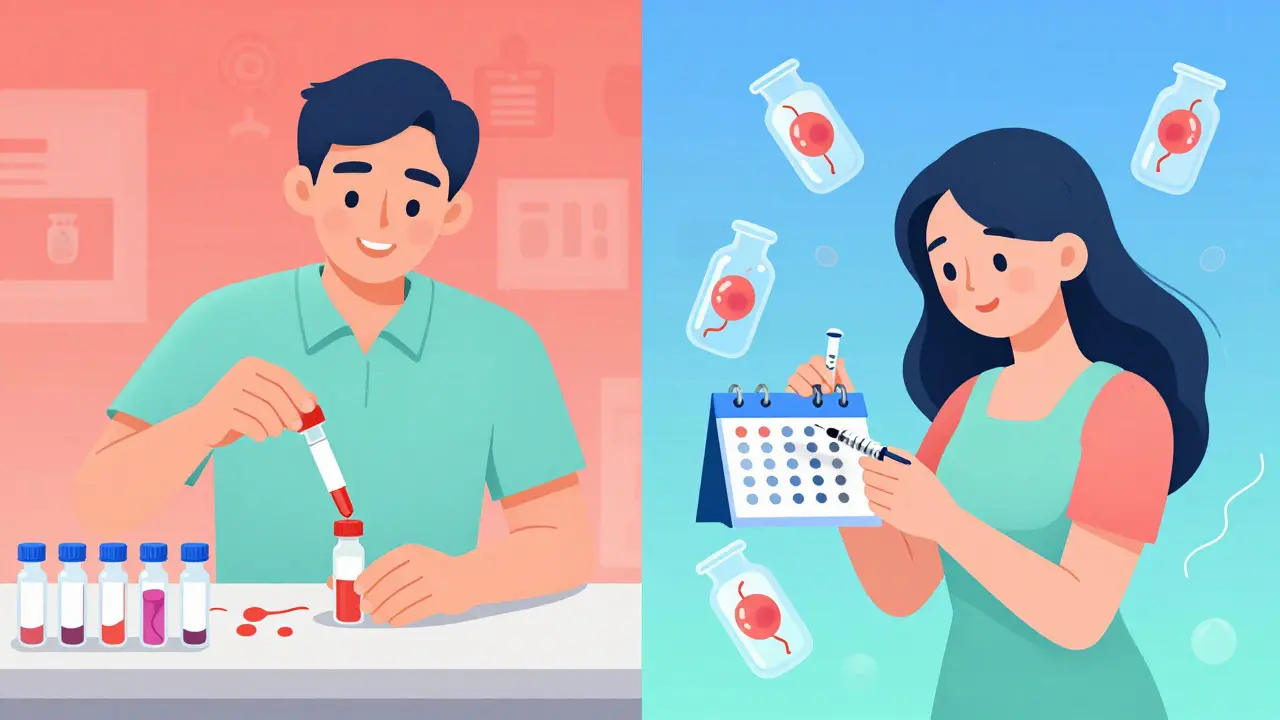
Who Gets Left Out?
Not everyone has equal access. Urban patients in big cities might walk into a fertility clinic next door. Rural patients? On average, they drive 178 miles to reach one. That’s a two-hour trip, sometimes more, on top of cancer appointments. Insurance is another barrier. In the U.S., 24 states now require insurers to cover fertility preservation for cancer patients. But in 38 states, you’re on your own. Medicaid covers it in only 12. Many patients get denied coverage for egg freezing, even though it’s medically necessary. Reddit threads are full of stories: “Insurance said it was ‘elective.’ I had breast cancer at 29.” And for kids? Ovarian tissue freezing is the only option for prepubescent girls. But it’s still not offered everywhere. Testicular tissue freezing for boys? Still experimental. No proven success yet. That means families are left with no clear path forward.Success Stories and Hard Truths
There are inspiring cases. A 32-year-old woman with BRCA1+ breast cancer went through five years of chemo, lost her periods, and thought motherhood was over. Then, doctors re-implanted her frozen ovarian tissue. She gave birth to twins. That’s real. But there are also hard truths. Freezing eggs doesn’t guarantee a baby. You might need to freeze 20 eggs to have a 50% chance. That means multiple cycles. More injections. More cost. More emotional toll. And not everyone survives to use their frozen material. That’s a painful reality. But for those who do? It’s life-changing.
What Should You Do Next?
If you’re facing chemotherapy and care about future fertility:- Ask your oncologist right away: “Can you refer me to a fertility specialist?” Don’t wait.
- If you’re a man: Schedule sperm banking immediately. It’s fast, cheap, and effective.
- If you’re a woman: Ask about egg freezing, embryo freezing, or ovarian tissue freezing. Ask if random-start protocols are available.
- Ask about ovarian suppression with GnRHa. Even if it’s not perfect, it’s better than nothing.
- Call your insurance. Ask what’s covered. Appeal denials. You have rights.
- If you’re under 18 or have a child with cancer: Push for a referral to a pediatric oncofertility program. Ovarian tissue freezing may be their only option.
It’s Not Just About Babies
Fertility preservation isn’t only about having children. For many, it’s about keeping a part of your future self intact. It’s about hope. About identity. About feeling like you still have control when everything else feels stolen by cancer. The science is here. The options exist. The biggest obstacle now isn’t technology-it’s awareness, access, and timing. Don’t let fear or silence rob you of the chance to build the life you want after cancer. Talk to your team. Ask questions. Push for answers. Your future self will thank you.Can I still get pregnant after chemotherapy if I didn’t preserve my fertility?
It’s possible, but not guaranteed. Some women regain natural fertility after chemo, especially if they’re younger and received less aggressive drugs. But for many, especially those over 30 or treated with alkylating agents, ovarian function doesn’t return. If you didn’t preserve fertility and now want to conceive, consult a reproductive endocrinologist. Options like donor eggs or surrogacy may be necessary.
How long can frozen eggs or sperm be stored?
There’s no set expiration date. Frozen sperm and eggs have been successfully used after 20+ years. The key is proper storage in liquid nitrogen at -196°C. Most clinics guarantee storage for at least 10 years, with renewal options. The longer it’s stored, the lower the cost per year, but success rates depend more on your age when you froze them than how long they’ve been frozen.
Is fertility preservation covered by insurance?
In the U.S., 24 states require insurance to cover fertility preservation for cancer patients. But coverage varies widely. Some plans cover only sperm banking, others cover egg freezing, and many exclude embryo freezing or ovarian tissue procedures. Medicaid covers it in only 12 states. Always check your policy and appeal denials. The American Society of Reproductive Medicine offers sample appeal letters.
Can I do fertility preservation while undergoing chemo?
No. Hormone stimulation for egg freezing requires stopping chemo, which isn’t safe or practical in most cases. That’s why it must be done before treatment starts. Ovarian suppression with GnRHa can be started at the same time as chemo, but it doesn’t preserve eggs-it only reduces damage. Sperm banking can be done during chemo if sperm are still being produced, but quality drops quickly after treatment begins.
What if I’m single and don’t want to use donor sperm?
Egg freezing is your best option. You don’t need a partner or donor to freeze your own eggs. Later, you can use a sperm donor for IVF. Many single women choose this path. It’s more expensive and less guaranteed than embryo freezing, but it gives you full control over your reproductive future. Some clinics offer payment plans or discounts for cancer patients.
Are there any risks to fertility preservation procedures?
The risks are low but real. Egg retrieval carries a small chance of bleeding, infection, or ovarian hyperstimulation syndrome (OHSS), though modern protocols have reduced OHSS to under 1%. Ovarian tissue removal is a minor surgery with standard risks like infection or adhesions. GnRHa can cause menopausal symptoms. Sperm banking has no physical risks. The bigger risk? Delaying cancer treatment. Always work with a team that coordinates closely with your oncologist to avoid delays.
What’s the success rate of ovarian tissue transplantation?
About 65-75% of women who have frozen ovarian tissue transplanted back regain ovarian function, meaning they start having periods again and can produce hormones naturally. Around 15-20% of those go on to have a live birth. Success depends on age at freezing, amount of tissue stored, and how long the tissue was frozen. It’s not a guarantee, but for girls and women who have no other options, it’s a lifeline.






Coral Bosley
January 21, 2026 AT 09:09