

Medication Safety Decision Tool
This tool uses the evidence-based Four-Tier Decision Framework from the article to help you determine if your symptoms require immediate action. It's designed to help you distinguish between normal side effects and emergencies.
What symptoms are you experiencing?
Not every side effect means you should stop your medication. But some do - and waiting even a few hours can be life-threatening. If you’re experiencing a strange rash, trouble breathing, or sudden jaundice after starting a new drug, you’re not overreacting. You might be seeing the first signs of something dangerous. The key isn’t to panic, but to know when to act fast.
What Makes a Side Effect an Emergency?
< p>Most side effects are annoying, not deadly. A dry mouth from blood pressure meds, a little nausea from antibiotics, or mild dizziness from antidepressants? These usually fade or can be managed. But when a reaction crosses into serious territory, stopping the drug isn’t optional - it’s urgent.The FDA defines a serious adverse event as one that causes death, hospitalization, permanent disability, or a life-threatening condition. In the U.S., over 1.3 million emergency room visits each year are due to bad reactions to medications. About 350,000 of those lead to hospital stays. These aren’t rare outliers. They’re preventable - if you know what to look for.
Stop Immediately: Life-Threatening Reactions
- Anaphylaxis: This is a full-body allergic reaction. Symptoms include swelling of the tongue or throat, wheezing, rapid pulse, dizziness, or a sudden drop in blood pressure. It can happen within minutes of taking a drug. Penicillin is the most common trigger, but any medication - even something you’ve taken before - can cause it. If you feel like you’re choking or your chest is closing, call emergency services and stop the drug right away.
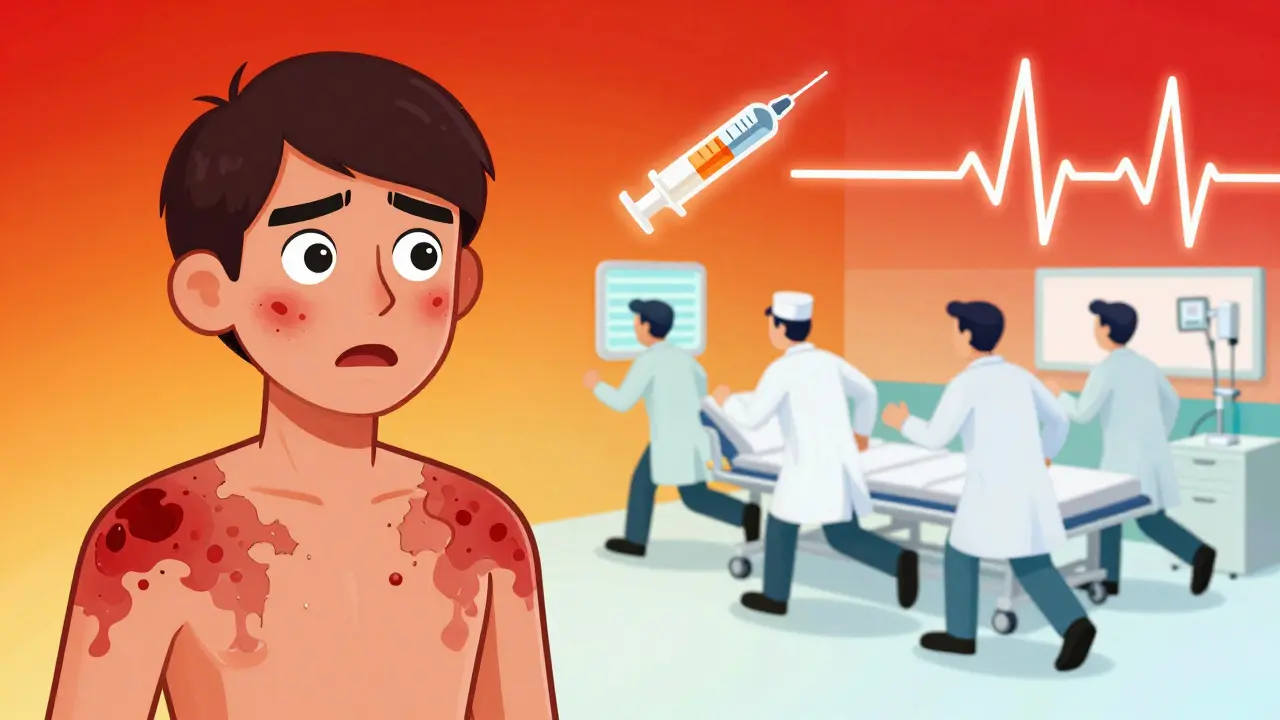
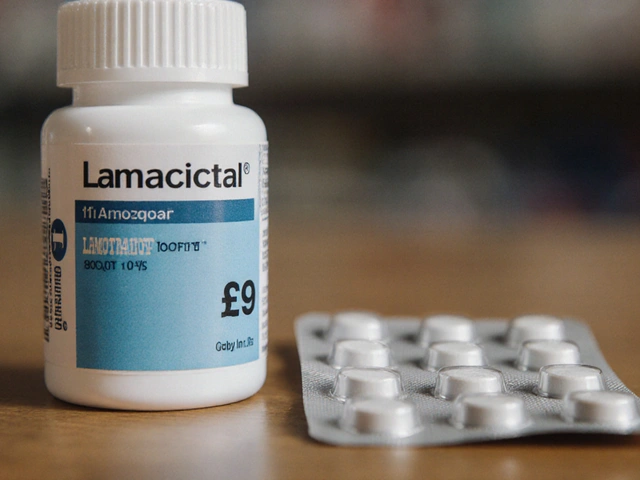
- Stevens-Johnson Syndrome (SJS) and Toxic Epidermal Necrolysis (TEN): These are rare but deadly skin reactions. SJS starts with flu-like symptoms, then a painful red or purple rash that spreads and blisters. The skin begins to peel off, like a severe burn. TEN is even worse - over 30% of the skin can detach. Medications like carbamazepine, lamotrigine, allopurinol, and sulfa drugs are common culprits. The mortality rate for TEN can hit 50%. If you notice blistering skin, mouth sores, or eye pain after starting a new drug, stop it and get to a hospital immediately.
- Acute Liver Failure: Some drugs, like isoniazid (used for tuberculosis) or high-dose acetaminophen, can fry your liver. Signs include yellowing skin or eyes (jaundice), dark urine, severe fatigue, nausea, and pain in the upper right abdomen. If your liver enzymes are more than three times the normal level and you have symptoms, or five times without symptoms, stop the drug. Delaying can mean needing a transplant - or worse.
- Agranulocytosis: This is when your body stops making white blood cells. Without them, even a small infection can become deadly. Symptoms include sudden high fever, sore throat, mouth ulcers, or chills. Drugs like clozapine, antithyroid meds, and some antibiotics can cause this. It happens in about 1 to 15 cases per million users, but if missed, 5-10% of people die. A blood test confirms it. If suspected, stop the drug and get emergency care.
Why You Can’t Just Quit Any Medication
Here’s the tricky part: stopping some drugs suddenly can be just as dangerous as keeping them. This isn’t about being stubborn. It’s about physiology.
Take beta blockers - used for high blood pressure, heart disease, or anxiety. If you stop them cold turkey, your heart rate and blood pressure can spike. In people with heart disease, this raises the risk of a heart attack by up to 300% in the first week. Rebound hypertension from stopping clonidine? It can send you to the ER with a stroke risk. Benzodiazepines like Xanax or Valium? Stopping abruptly can trigger seizures. Antidepressants? Up to half of users get withdrawal symptoms - brain zaps, dizziness, nausea - if they quit too fast.
Research shows that 65-75% of all serious withdrawal events come from just two groups: cardiovascular drugs and central nervous system drugs. That’s not a coincidence. Your body adapts. When you remove the drug suddenly, your system goes into chaos.
The Four-Tier Decision Framework
Doctors and pharmacists use a simple, evidence-based system to decide what to do:
- Tier 1 - Stop Immediately: Anaphylaxis, SJS/TEN, acute liver failure, agranulocytosis. No delay. No waiting for a doctor’s appointment. Stop the drug and go to the ER.
- Tier 2 - Stop Within 24-48 Hours: Severe skin rashes without blistering, sudden kidney damage, or major drops in blood cell counts. Call your provider today. Don’t wait for your next scheduled visit.
- Tier 3 - Talk Before Stopping: Persistent nausea, dizziness, headaches, or mild rashes. These may be temporary. A dose change, timing adjustment, or alternative drug might fix it. Don’t quit on your own.
- Tier 4 - Keep Taking It: Mild, short-lived side effects like a headache on day two or a slightly upset stomach. Give it a week. If it doesn’t improve, then talk to your provider.
This framework was tested in a study with over 1,200 patients. When doctors used it, they made the right call 92% of the time. Without it? Only 67%. That’s a huge gap.
What Patients Get Wrong
Too many people stop meds because they’re scared or frustrated. A 2022 study found that 31% of people quit statins because of muscle pain - but only 5% of those cases were true drug-induced muscle damage. The rest? They could’ve switched to a different statin or lowered the dose. Another study showed that 42% of patients stop meds due to side effects without telling their doctor. Of those, 18% ended up with worse health problems because they stopped something they shouldn’t have.
On Reddit, one user wrote: “I stopped my antidepressant cold turkey after feeling awful. Was I wrong?” Over 200 replies said yes - not because the side effects weren’t real, but because quitting suddenly caused withdrawal symptoms that lasted weeks. The original problem - depression - came back harder.
And then there’s antibiotics. People stop because of mild diarrhea or a rash. But that’s exactly how drug-resistant infections spread. The CDC says 15-25% of antibiotic treatment failures happen because patients quit too soon.
What You Should Do Right Now
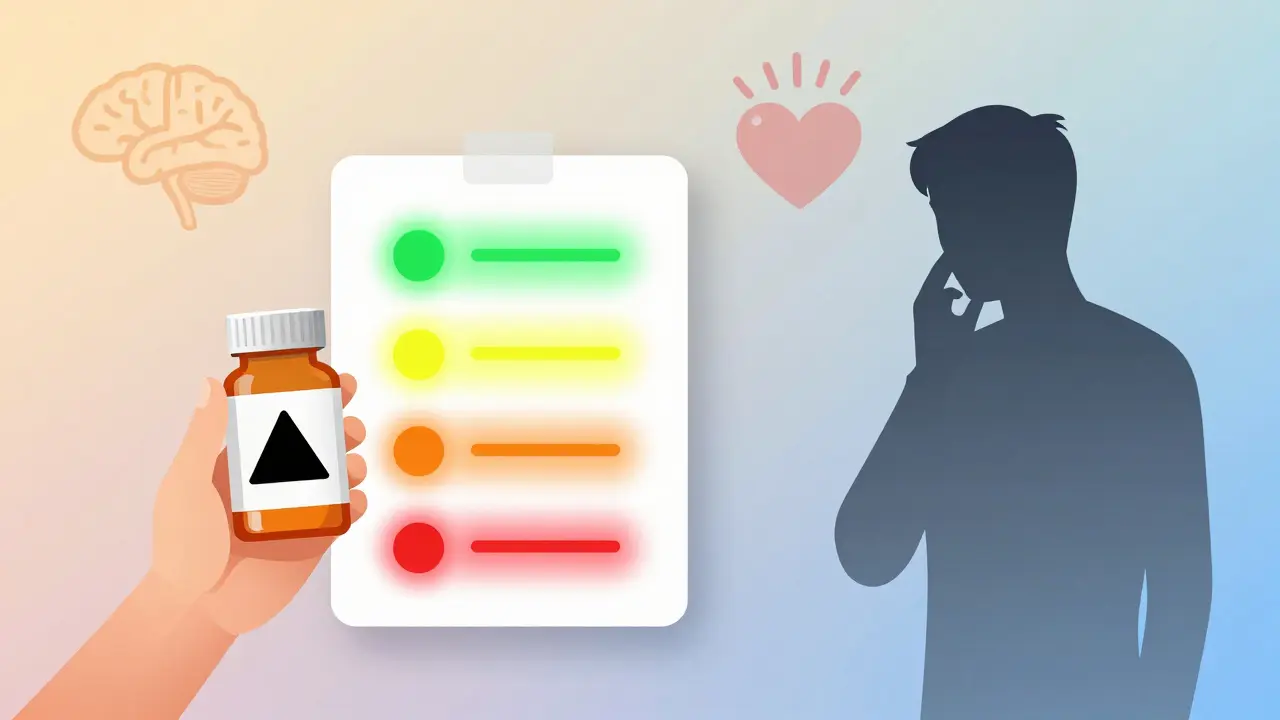
- Know your meds: Read the patient leaflet. Look for the black box warning - the FDA’s strongest alert. If your drug has one, know what it means.
- Track side effects: Write down what you feel, when it started, and how bad it is. Use a notes app or a small notebook. This helps your doctor spot patterns.
- Never stop without asking: If you’re unsure, call your pharmacist or doctor. They can tell you if it’s safe to stop, if you need to taper, or if you need an emergency visit.
- Keep a list: Have a current list of all your meds - including doses and why you take them. Bring it to every appointment. Many errors happen because providers don’t know what you’re on.
Regulations Are Changing - But You Still Need to Act
The FDA and European Medicines Agency now require drug labels to include specific tapering instructions for antidepressants, benzodiazepines, and other high-risk meds. That’s progress. But it doesn’t replace your responsibility. If you feel something is wrong, don’t wait for a label update. Trust your body.
The Institute for Safe Medication Practices estimates that 8.5 million Americans face risky medication discontinuation decisions every year. Most of those are avoidable - if people know the difference between a nuisance and a nightmare.
You’re not alone in this. But you’re the only one who can recognize the warning signs in your own body. Learn them. Trust them. And act fast when it matters.
Can I stop a medication if I think it’s causing side effects?
Only if it’s a life-threatening reaction like anaphylaxis, SJS/TEN, acute liver failure, or agranulocytosis. For all other side effects, contact your doctor or pharmacist first. Stopping some drugs suddenly can cause worse problems than the side effect itself.
What should I do if I develop a rash after starting a new drug?
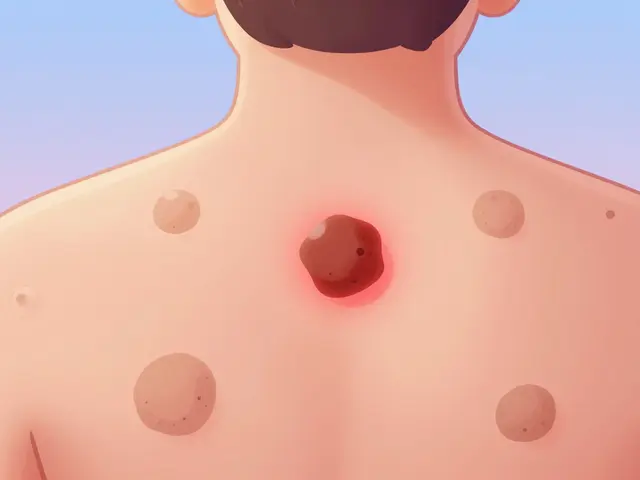
If the rash is mild and not spreading, call your doctor within 24 hours. If it’s painful, blistering, spreading quickly, or accompanied by fever or mouth sores, stop the drug immediately and go to the emergency room. This could be Stevens-Johnson Syndrome - a medical emergency.
Are all allergic reactions to medications the same?
No. Mild reactions like itching or a small rash can often be managed with antihistamines and continued use. Anaphylaxis - swelling of the throat, trouble breathing, dizziness, rapid pulse - is life-threatening and requires immediate stopping of the drug and emergency care. Don’t assume a mild reaction means you’re safe to keep taking the drug.
Why can’t I just stop my blood pressure medication if I feel fine?
Even if you feel fine, your body has adapted to the drug. Stopping suddenly can cause your blood pressure to spike dangerously high - sometimes within hours. This can lead to stroke, heart attack, or kidney damage. Always taper under medical supervision.
How do I know if my side effect is from the drug or something else?
Track when it started. Did it begin within days of starting the new medication? That’s a strong clue. Also, does it get worse when you take the drug and improve when you skip a dose? Talk to your doctor. They may suggest stopping the drug temporarily under supervision to see if symptoms clear up - but never do this on your own for high-risk meds.
Is it safe to stop a medication if I’m pregnant?
Never stop a medication during pregnancy without talking to your doctor. Some drugs are risky for the baby, but others are safer than the condition they treat. Stopping abruptly can harm both you and your baby. Always get professional advice - don’t rely on internet advice or old habits.
Can I switch to a different drug instead of stopping completely?
Yes, often that’s the best option. Many side effects are specific to one drug in a class. For example, if one statin causes muscle pain, another might not. If one antidepressant causes nausea, another might be better tolerated. Your doctor can help you find a safer alternative without risking withdrawal.
What Comes Next
If you’ve ever stopped a medication because you were scared, you’re not alone. But now you know the difference between a warning sign and a red flag. The goal isn’t to avoid side effects at all costs - it’s to respond correctly when they turn dangerous.
Keep your medication list updated. Talk to your pharmacist every time you get a new script. Ask: “What side effects mean I should stop this right away?” Write it down. That’s how you take control - without panic, without guesswork.
Medications save lives. But they can hurt you too - if you don’t know how to use them wisely. You’re not just a patient. You’re the most important part of your own care team. Use that power well.




Jodi Harding
January 19, 2026 AT 05:03