
Most people think sunscreen is simple: slap it on, go outside, stay safe. But if your sunscreen is leaving a white cast, stinging your eyes, or you’re still getting sunburned after two hours, something’s off. You’re not alone. In fact, a 2024 study found that only 14.3% of people at the beach reapply sunscreen when they should. The rest? They’re relying on myths - like SPF 100 lasts all day, or mineral sunscreens are always safer. Let’s cut through the noise.
What SPF Actually Means (And Why Higher Isn’t Always Better)
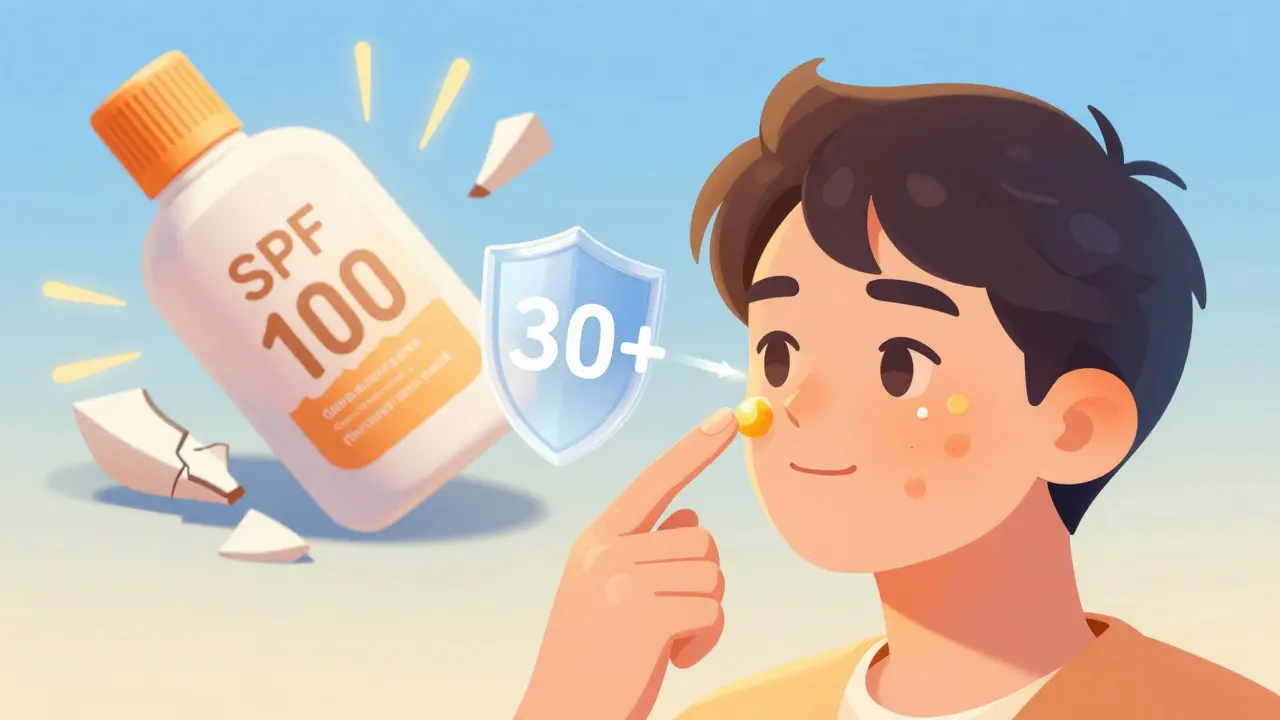
SPF stands for Sun Protection Factor. It measures how well a sunscreen blocks UVB rays - the ones that cause sunburn. It’s not a timer. SPF 30 doesn’t mean you can stay out three times longer than without sunscreen. It means it takes 30 times longer for your skin to burn if applied correctly. Here’s the math: SPF 30 blocks about 97% of UVB rays. SPF 50 blocks 98%. SPF 100? Just 99%. That last 1% isn’t worth the extra cost or the false sense of security. The American Academy of Dermatology says SPF 30+ is enough for daily use. Anything higher is mostly marketing. In 2024, Consumer Reports tested over 100 sunscreens and found that many SPF 100 products didn’t even hit their claimed number. One popular brand tested at SPF 68 when labeled SPF 100. The FDA is cracking down on this. By late 2025, new rules will cap SPF labels at 60+ unless the product proves real-world protection beyond that. Don’t fall for the hype. You’re not getting meaningful extra protection - just a higher price tag.Broad Spectrum Isn’t Just a Buzzword - It’s Your Shield Against Aging and Cancer
UVB causes burns. UVA causes aging - wrinkles, dark spots, and DNA damage that leads to skin cancer. That’s why “broad spectrum” matters. It means the sunscreen protects against both. The FDA requires sunscreens to pass a Critical Wavelength test. To qualify as broad spectrum, they must block UVA rays up to 370 nanometers. That’s not optional. If it doesn’t say “broad spectrum” on the label, it’s not protecting you from the invisible damage that builds up over years. A 2013 study in the Journal of the American Academy of Dermatology found that daily sunscreen use prevents 90% of visible skin aging. That’s not a guess. That’s science. And it’s not just about looking younger - it’s about avoiding melanoma. The AAD says daily use cuts melanoma risk by 50%. But here’s the problem: many mineral sunscreens fail this test. Consumer Reports tested dozens of mineral-only formulas in 2025. The top performer, Blue Lizard Sensitive SPF 50, scored 55 out of 100 for UVA protection. The average mineral sunscreen? Just 34.2. That’s barely better than no protection at all.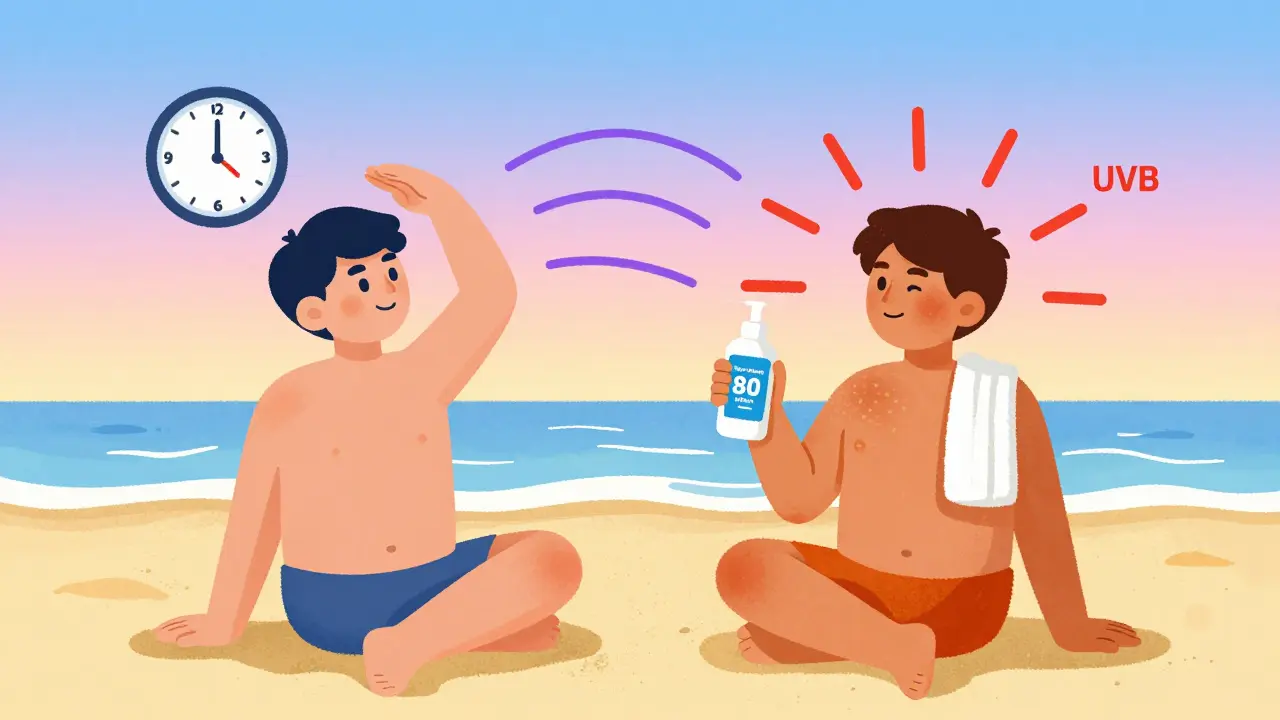
Mineral vs Chemical: Which One Should You Use?
There are two main types of sunscreen: mineral (zinc oxide, titanium dioxide) and chemical (avobenzone, octinoxate, oxybenzone). Mineral sunscreens sit on top of your skin and physically block UV rays. They start working immediately. That’s good if you’re in a hurry. But they often leave a white cast - especially on darker skin tones. In a Reddit thread with 1,200+ comments, 68% of users with Fitzpatrick skin types IV-VI said they avoid mineral sunscreens because of the chalky look. Some brands, like CeraVe Hydrating Mineral SPF 30, got slammed for leaving residue even after waiting 20 minutes. Chemical sunscreens absorb UV rays. They’re usually lighter, invisible on skin, and better at blocking UVA. Top performers like La Roche-Posay Anthelios Melt-in Milk SPF 60 scored 92/100 in protection tests. But they need 15-20 minutes to activate. And some ingredients, like oxybenzone, can irritate eyes or harm coral reefs. Hawaii banned oxybenzone and octinoxate in 2021 after studies showed they bleach coral at concentrations as low as 62 parts per trillion. So which is better? If you have sensitive skin, melasma, or rosacea, dermatologists like Dr. Michele Green recommend mineral sunscreens with zinc oxide - especially EltaMD UV Clear SPF 46, which contains 9% zinc oxide and niacinamide to calm inflammation. If you want the strongest, most reliable UVA/UVB protection, chemical sunscreens win. But avoid oxybenzone if you’re swimming in the ocean or have sensitive skin.Reapplication: The Most Ignored Rule (And Why You’re Still Getting Burned)
Sunscreen doesn’t last all day. Even “water-resistant” formulas wear off. The FDA says “water-resistant” means either 40 or 80 minutes of protection while swimming or sweating. After that? You’re exposed. And towel drying? That removes up to 80% of sunscreen. That’s why the AAD says reapply every two hours - and immediately after swimming, sweating, or towel drying. Yet a 2024 survey of 1,500 Reddit users found 72% skip reapplication on beach days. Here’s what most people get wrong: they use too little. The standard test uses 2 mg per square centimeter of skin. That’s about a quarter teaspoon for your face. Not a light smear. Not one pump. Four to six pea-sized dots, rubbed in thoroughly. Most people use half that. That’s why your SPF 50 feels like SPF 15. Try this: apply sunscreen like you’re painting your face. Don’t rub it in fast. Wait 15 minutes before applying makeup. If it pills, you didn’t let it absorb. Use apps like Sunscreenr to scan your skin with UV light and see where you missed spots.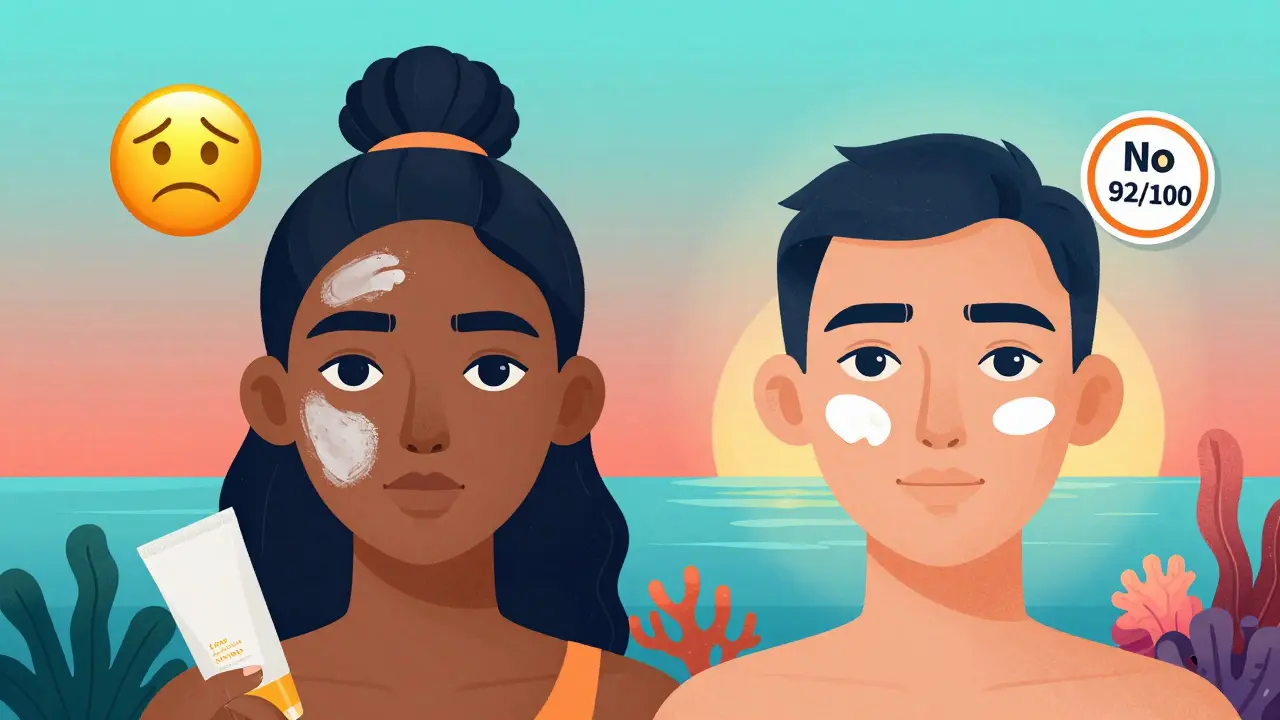
What to Look For (And What to Avoid)
You don’t need to spend $50 on a sunscreen. The median price for a 3-ounce bottle in 2024 was $14.75. CVS Health SPF 50 spray costs $2.99 and passed Consumer Reports’ tests. Supergoop! Unseen Sunscreen SPF 40, a favorite among people with darker skin, costs $38 but disappears completely - no white cast. Here’s what to check on the label:- SPF 30 or higher - no exceptions
- Broad Spectrum - non-negotiable
- Water-resistant (40 or 80 minutes) - if you’ll sweat or swim
- Active ingredients - zinc oxide (5-25%), titanium dioxide (2-15%), avobenzone (up to 3%), octinoxate (up to 7.5%)
- Avoid - PABA, trolamine salicylate (banned by FDA in 2026), and oxybenzone if you’re near coral reefs
The Bottom Line: Sunscreen Isn’t Optional - It’s Your Daily Armor
You don’t need expensive products. You don’t need SPF 100. You just need to use SPF 30+ broad spectrum sunscreen, apply the right amount, and reapply every two hours. That’s it. If you have sensitive skin, pick a mineral sunscreen with zinc oxide. If you want the best protection, go with a chemical formula like La Roche-Posay or Neutrogena. If you’re in Australia, where UV levels are extreme, don’t skip this step - even on cloudy days. The science is clear. Sunscreen saves lives. It prevents cancer. It stops aging. And if you’re not doing it right, you’re wasting your time - and your money.Start today. Use a quarter teaspoon. Wait 15 minutes. Reapply every two hours. Your skin will thank you in 10 years.
Is SPF 50 better than SPF 30?
SPF 50 blocks 98% of UVB rays; SPF 30 blocks 97%. That’s only a 1% difference. No sunscreen blocks 100%. The real issue isn’t the number - it’s whether you’re applying enough and reapplying often enough. SPF 50 isn’t twice as strong as SPF 25. It’s barely stronger than SPF 30. Save your money and focus on proper use.
Do I need sunscreen on cloudy days?
Yes. Up to 80% of UV rays penetrate clouds. You can still get sunburned or accumulate skin damage on overcast days. Daily sunscreen use isn’t just for beach trips - it’s for walking the dog, driving, or sitting by a window. Studies show people who use sunscreen every day reduce their risk of skin cancer by half.
Why does my mineral sunscreen leave a white cast?
Mineral sunscreens use zinc oxide or titanium dioxide, which sit on top of the skin and reflect light. On darker skin tones, this can look chalky or ashy. Newer formulas use micronized particles or tinted bases to reduce this. Brands like Caravee and Black Girl Sunscreen have made progress, but many still fall short. If white cast bothers you, try tinted mineral sunscreens or switch to a chemical formula.
Can I rely on makeup with SPF instead of sunscreen?
No. Most makeup with SPF has SPF 15 or lower - not enough for daily protection. Plus, you’d need to apply a thick layer (a quarter teaspoon) to get the stated protection. Most people use a fraction of that. Makeup with SPF is a bonus, not a replacement. Always apply a dedicated sunscreen underneath.
Are spray sunscreens safe and effective?
They’re convenient, but risky. It’s easy to miss spots or not apply enough. The FDA has raised concerns about inhalation risks, especially for kids. If you use a spray, hold it close, spray generously, and rub it in. Never spray directly on your face - spray into your hands first. For the face, lotion is safer and more reliable.
How do I know if my sunscreen is expired?
Check the expiration date on the bottle. If there’s none, most sunscreens last three years from the date of purchase. But heat and sunlight degrade them faster. If the texture changes - it separates, smells odd, or looks grainy - toss it. Expired sunscreen won’t protect you. Don’t risk it.





Aadil Munshi
December 19, 2025 AT 14:50