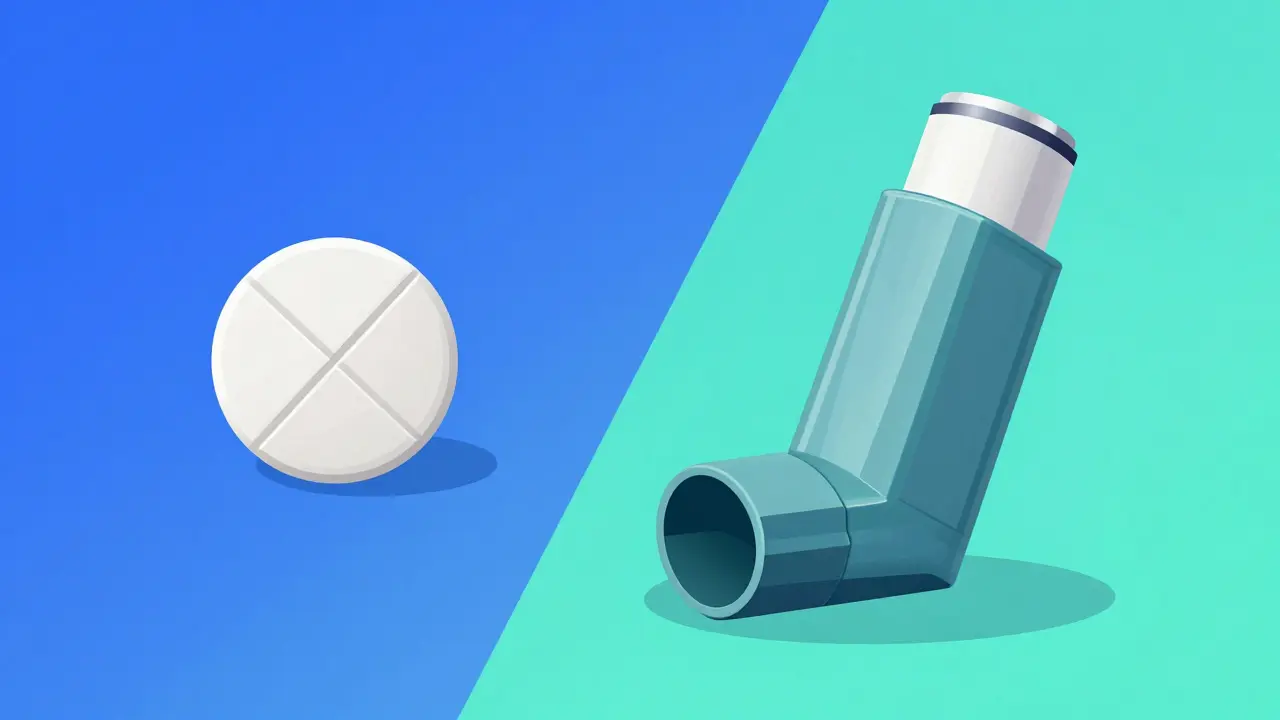
Switching to a cheaper version of a medication usually seems like a win-win: you save money, and the drug does the same thing. But when it comes to respiratory combination inhalers is pharmaceutical products that deliver two or more active ingredients, typically a corticosteroid and a long-acting beta agonist, through a single device to treat asthma and COPD , the "drug" isn't just the chemical powder inside-it's the device itself. If the device changes, the way the medicine reaches your lungs changes, and that can be dangerous. While generic versions of blockbusters like Symbicort have hit the market, substituting them isn't as simple as swapping one pill for another.
Why Inhalers Aren't Like Regular Pills
With a standard tablet, the main concern is bioequivalence-whether the generic drug hits your bloodstream at the same rate as the brand name. Inhalers are different because they rely on lung deposition. This is the actual amount of medication that makes it deep into the airways rather than hitting the back of your throat.
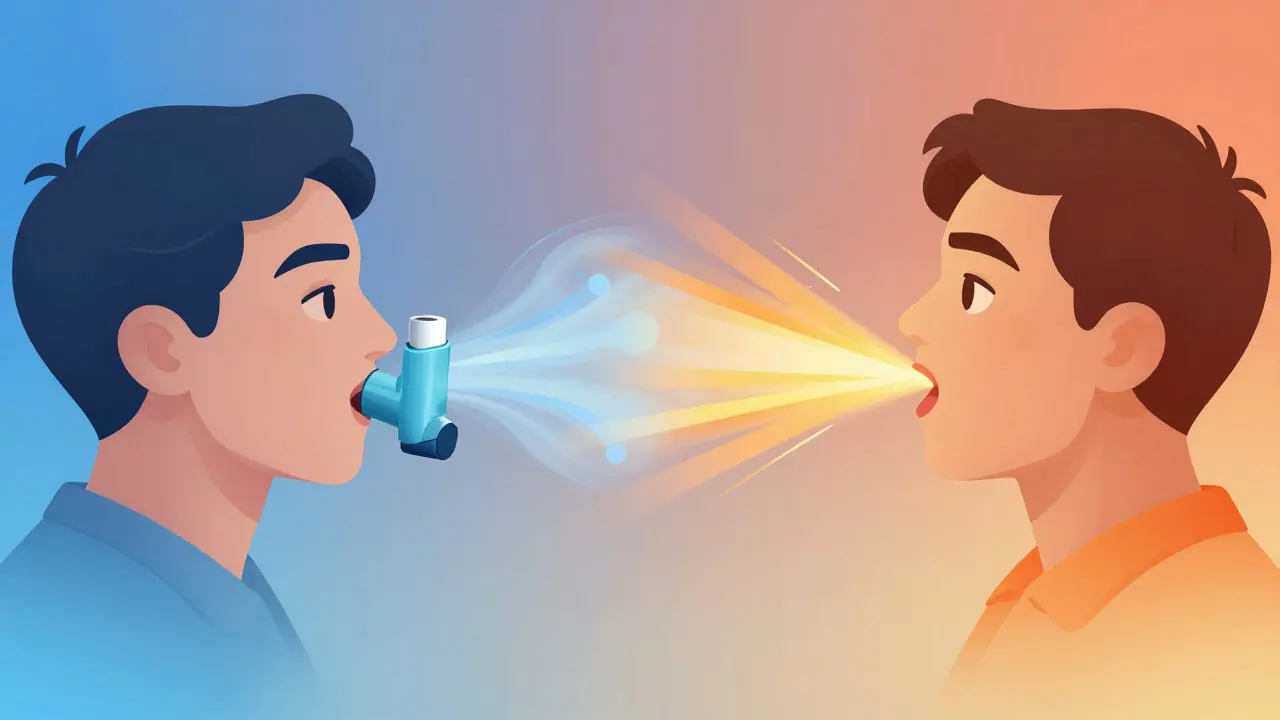
Different devices use different physics to move medicine. For instance, pMDIs (pressurized metered-dose inhalers) use a propellant to push medicine out, requiring a slow, deep breath. On the other hand, DPIs (dry powder inhalers) require the patient to create a forceful inhalation to "pull" the powder into the lungs. If you treat a DPI like a pMDI, you might only get a fraction of your dose, leaving your asthma or COPD uncontrolled.
The risk is real. Data from the American Thoracic Society shows that automatic substitution without a consultation increases the risk of treatment failure by 37%. When the device changes, the user's muscle memory becomes a liability.
The Turbohaler vs. Spiromax Dilemma
A perfect example of this complexity is the switch from Symbicort Turbohaler to DuoResp Spiromax. While both contain the same active ingredients-budesonide and formoterol-they are not interchangeable in how you use them. The Turbohaler requires a twisting motion to load the dose, while the Spiromax uses a side slider mechanism.
It sounds like a small difference, but it's a hurdle for many. A study found that 76% of patients who switched from Turbohaler to Spiromax without training used the device incorrectly. This isn't just a "learning curve" issue; it's a health risk. One patient reported in the Pharmaceutical Journal that after an unannounced pharmacy switch to Spiromax, they didn't realize they needed to breathe in harder, leading to a hospital admission because their asthma spiraled out of control.
| Feature | pMDI (Metered Dose) | DPI (Dry Powder) |
|---|---|---|
| Activation Method | Chemical propellant | Patient's inhalation force |
| Breathing Technique | Slow and deep | Quick and forceful |
| Common Error | Poor hand-breath coordination | Insufficient inspiratory flow |
| Key Requirement | Breath-hold (5-10 sec) | Strong lung effort |
Regulatory Divide: US vs. Europe
How you're handled during a generic switch depends heavily on where you live. In the United States, the FDA generally expects that a user can switch to a generic combination product without needing extra training from a provider. This is a high bar for the manufacturer, but in practice, it often leads to "silent substitutions" at the pharmacy counter.
Europe takes a more cautious path. The EMA (European Medicines Agency) requires strict therapeutic equivalence, meaning they look at pharmacokinetic and pharmacodynamic assessments to ensure the drug behaves the same way in the body. In the UK, NICE guidelines specifically advise against automatic substitution, noting that switching devices without a proper consultation can worsen asthma control.
The Danger of "Silent" Substitution
The most dangerous scenario is the "silent switch," where a pharmacy replaces a branded inhaler with a generic one to save costs without notifying the patient. This removes the opportunity for a healthcare provider to teach the new technique. When patients are switched from Advair Diskus to generics without instruction, a staggering 83% of those reporting on community forums like Reddit noticed their symptoms worsening.
This isn't just anecdotal. Research in the Journal of Aerosol Medicine and Pulmonary Drug Delivery found a 22% increase in asthma exacerbations within six months for patients switched to generic Spiromax without training. This suggests that the cost savings of generics are often wiped out by the cost of emergency room visits and hospitalizations-estimated at $1.2 billion annually for healthcare systems.

How to Switch Safely: A Checklist for Patients and Providers
If you are moving to a generic inhaler, the goal is to ensure your lung deposition remains consistent. The AARC recommends the "teach-back" method, which is the gold standard for preventing errors. Instead of just watching a video or reading a pamphlet, the patient must actually demonstrate the technique back to the pharmacist or doctor.
For Patients:
- Ask your pharmacist: "Is this the exact same device I used before, or is the mechanism different?"
- If the device is different, request a physical demonstration.
- Perform the "teach-back": show the provider how you use it and ask them to correct your form.
- Monitor your symptoms closely for the first two weeks after a switch.
For Healthcare Providers:
- Avoid automatic substitutions in electronic prescribing systems.
- Allocate time for technique assessment (studies show GPs need about 13 minutes of training to be proficient in multiple devices).
- Verify the patient's inspiratory flow to ensure they can actually trigger a DPI.
- Document the specific device name, not just the drug name (e.g., "Budesonide/Formoterol in Spiromax" rather than just "Symbicort generic").
The Future: Smart Inhalers and Precision
We are moving toward a world where the device can tell us if we're doing it wrong. Smart inhalers with sensors, like those from Propeller Health, can track adherence and technique. A study in JAMA Internal Medicine showed a 33% reduction in exacerbations when patients received digital feedback on their technique. This technology could bridge the gap during generic substitutions by alerting a patient if their inhalation wasn't strong enough to deliver the dose.
As more combination products face generic competition-with about 45% projected by 2027-the focus must shift from the chemistry of the drug to the ergonomics of the device. The most "affordable" drug is the one that actually reaches your lungs.
Is a generic inhaler as effective as the brand name?
Chemically, yes. The active ingredients are usually identical. However, the effectiveness depends on the device. If the generic uses a different delivery mechanism (like moving from a Turbohaler to a Spiromax) and the patient doesn't change their technique, the medicine may not reach the lungs, making it effectively less potent.
What is the "teach-back" method?
The teach-back method is a communication confirmation technique where the patient demonstrates the correct use of the inhaler to the healthcare provider. This ensures the patient hasn't just heard the instructions but can physically execute them, increasing technique retention from 35% to 82%.
Can I switch between a pMDI and a DPI without training?
No. This is highly discouraged. pMDIs require a slow, coordinated breath, while DPIs require a forceful, fast inhalation. Using the technique for one on the other will likely result in a failed dose delivery.
Why do some countries allow automatic substitution while others don't?
It comes down to regulatory philosophy. The US FDA focuses on the manufacturer's ability to make a product that is generally usable, while European agencies like the EMA and UK's NICE emphasize the clinical risk of technique error and the necessity of professional consultation during the switch.
What should I do if my pharmacy switched my inhaler and I feel worse?
Contact your doctor or pharmacist immediately. You may need a technique refresher or may find that the specific device is not compatible with your inspiratory flow. Do not wait for your next scheduled appointment if you are experiencing increased shortness of breath.