

C. diff Symptom Checker
After taking clindamycin or other antibiotics, your gut microbiome can be disrupted, allowing C. difficile (C. diff) to grow. This tool helps you determine if your symptoms may indicate C. diff infection. Remember: Early detection is critical for effective treatment.
Please indicate any symptoms you're experiencing
When you take clindamycin for a tooth infection, skin rash, or other bacterial issue, you’re trusting it to kill the bad bacteria. But what you might not realize is that it’s also wiping out the good ones - the ones living in your gut that keep things balanced. And when that happens, a dangerous germ called Clostridioides difficile (or C. diff) can take over. This isn’t just a mild stomach bug. It can turn into a life-threatening infection. The good news? You don’t have to wait until you’re in crisis. Knowing the warning signs and when to act can make all the difference.
Why clindamycin is one of the riskiest antibiotics
Not all antibiotics carry the same risk when it comes to C. diff. Clindamycin stands out - not because it’s weak, but because it’s too effective at killing certain bacteria. It targets gram-positive bugs, which sounds great until you realize that includes many of the helpful microbes in your intestines. Studies tracking over 150,000 patients found clindamycin had the highest odds of causing C. diff infection compared to other antibiotics. Even a single dose can trigger it. The CDC calls it a top-tier risk, and doctors now avoid it unless absolutely necessary.Other antibiotics like fluoroquinolones (ciprofloxacin, levofloxacin) and cephalosporins also carry risk, but clindamycin is consistently ranked worst. Why? It lingers in the gut longer than most, giving C. diff more time to grow. And unlike some antibiotics that hit a broad range of bugs, clindamycin leaves a vacuum - one that C. diff is uniquely built to fill.
What C. difficile infection actually looks like
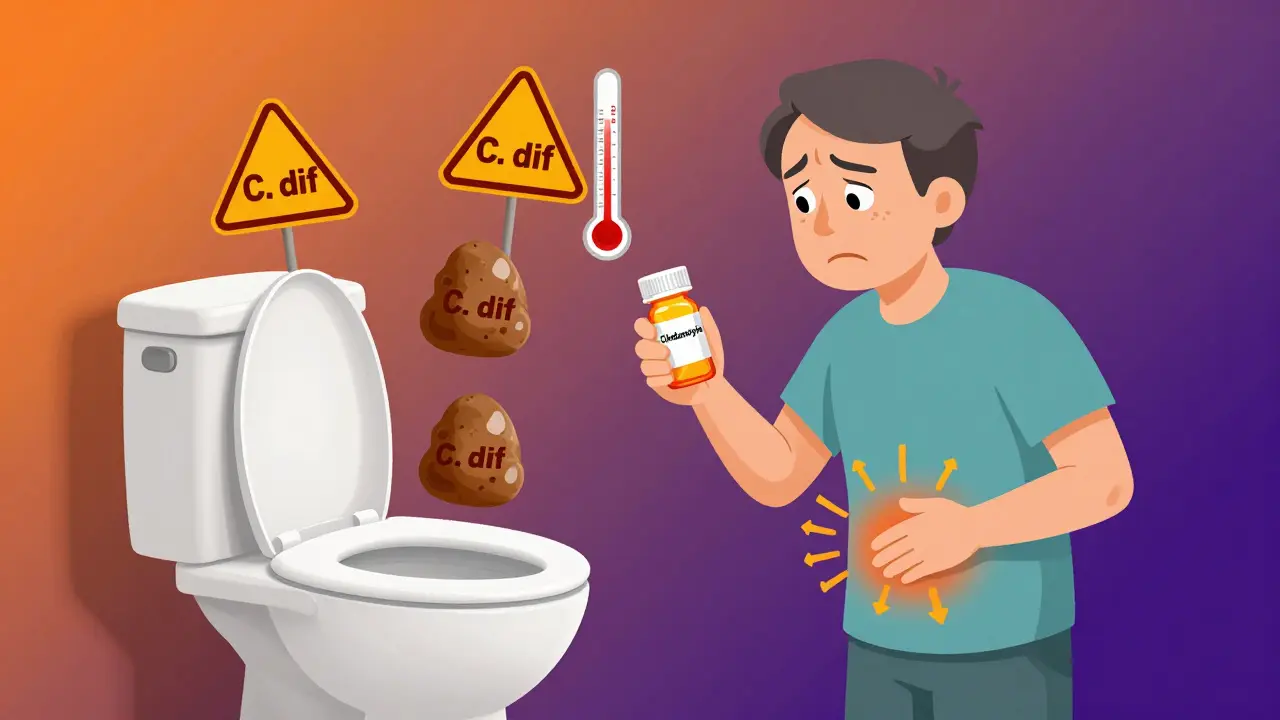
C. diff doesn’t always start with dramatic symptoms. Many people think of it as just “bad diarrhea,” but it’s more specific than that. The classic sign is three or more loose, unformed stools in a 24-hour period - not just watery, but stools that hold the shape of the toilet bowl or container. That’s a red flag. It’s often accompanied by cramping, bloating, or a sudden urge to go. Fever above 101.3°F (38.5°C) is another major warning. If you’re also seeing blood or pus in your stool, or if your abdomen feels hard and tender, you’re not dealing with a stomach virus.What makes C. diff tricky is that symptoms can show up after you’ve finished the antibiotic. The average time from starting clindamycin to symptoms is 5 to 10 days, but cases have been reported as early as one day in - or as late as 12 weeks after you stopped taking it. That’s why so many people ignore early signs. They think, “I’m not on the medicine anymore, so it can’t be that.” But the damage was already done.
Who’s at highest risk - and why timing matters
Not everyone who takes clindamycin gets C. diff. But some people are far more vulnerable. Age over 65, recent hospital stays, weakened immune systems, kidney problems, or having had a previous C. diff infection all raise your risk. If you fall into one of these groups, don’t wait. If you have even two unformed stools in 24 hours - especially with cramping - call your doctor. Don’t wait 48 hours. Don’t try an over-the-counter anti-diarrhea pill. That can trap toxins in your gut and make things worse.Real-world data from hospitals shows delays cost lives. Patients who waited more than 72 hours after symptoms started had over twice the chance of needing surgery to remove part of their colon. Their death rate was four times higher than those who got help within 24 hours. This isn’t a “wait and see” situation. It’s a race against time.
When to go to the emergency room
There’s a point where C. diff turns from serious to critical. If you have any of these signs, get to the ER immediately:- Severe abdominal pain or swelling that doesn’t go away
- Low blood pressure, dizziness, or fainting
- Not urinating for more than 8 hours
- High fever (over 102°F) with rapid heartbeat
- Stomach that feels rigid or distended
These aren’t normal side effects. They mean your colon is swelling dangerously - a condition called toxic megacolon. It can lead to perforation, sepsis, and death if not treated fast. Emergency care here isn’t optional. It’s survival.
What doctors do when C. diff is confirmed
If your doctor suspects C. diff, they’ll order a stool test. It’s quick, non-invasive, and highly accurate. If positive, treatment starts right away. The standard first-line drugs are vancomycin or fidaxomicin. Fidaxomicin is newer and has a lower chance of recurrence - about 15% compared to vancomycin’s 25%. Metronidazole is no longer first choice because it’s less effective and has more side effects.For people who keep getting C. diff after treatment (recurrent cases), a new option called VOWST is now available. It’s a pill made of frozen, processed bacterial spores from healthy donors. It’s not a transplant - it’s a targeted reset for your gut microbiome. FDA-approved in 2023, it’s already helping reduce recurrence rates by over a third in early use.
What you can do to protect yourself
The best defense is prevention. If you’re prescribed clindamycin, ask: Is there another antibiotic that works just as well but with lower risk? For skin infections, trimethoprim-sulfamethoxazole is often a safe alternative. For dental infections, amoxicillin or penicillin are usually better choices unless you’re allergic. If clindamycin is truly necessary, take it exactly as directed - don’t skip doses or stretch it out. And never save leftover pills for later.Hydration is critical. Drink water, broth, or oral rehydration solutions. Avoid sugary drinks and caffeine - they make diarrhea worse. Wash your hands often with soap and water (alcohol-based sanitizers don’t kill C. diff spores). If you’re in a hospital or care facility, ask staff to wash their hands before touching you. And if you’ve had C. diff before, tell every doctor you see - even for unrelated issues.

Why community cases are rising
You might think C. diff only happens in hospitals. But nearly half of all cases now start in the community. A big reason? Outpatient prescriptions. Dental offices prescribe clindamycin often - especially for patients allergic to penicillin. Skin infections, sinus infections, and even acne are sometimes treated with it, even though safer options exist. The CDC estimates 13% of community C. diff cases may be tied to dental antibiotic use. That’s why the FDA now requires all antibiotic labels to clearly state C. diff risk - and why clindamycin’s label says “highest risk.”Doctors are catching on. New guidelines from the Infectious Diseases Society of America suggest lowering the threshold for testing: two loose stools in 24 hours plus abdominal discomfort in high-risk patients should trigger testing. That’s a big shift - it means catching cases before they spiral.
What to do if you’re already on clindamycin
If you’re currently taking clindamycin, monitor yourself. Keep a simple log: number of bowel movements per day, consistency, and any pain or fever. If you notice a change - especially if you’re over 65, have had C. diff before, or are on other medications - contact your provider immediately. Don’t wait for it to get worse. Early treatment cuts complications by over 60%.Remember: antibiotics save lives. But they’re not harmless. Clindamycin is powerful - and powerful things come with powerful risks. Your job isn’t to avoid all antibiotics. It’s to know when to question them, when to watch closely, and when to act fast.
Can you get C. diff from a single dose of clindamycin?
Yes. Even one dose of clindamycin can trigger C. diff infection in susceptible people. Case reports exist of patients developing severe symptoms after a single pre-surgery dose. While the absolute risk is low (around 1-2% of courses), the risk is real and doesn’t require multiple doses or long-term use.
Is diarrhea after clindamycin always C. diff?
No. Many antibiotics cause temporary, mild diarrhea due to gut irritation or changes in bacteria. But if you have three or more unformed stools per day for two or more days - especially with cramping, fever, or blood - it could be C. diff. Testing is the only way to know for sure. Don’t assume it’s just a side effect.
How long after stopping clindamycin can C. diff develop?
C. diff can appear anytime from one day to 12 weeks after you stop clindamycin. Most cases (about 70%) show up within two weeks, but delayed cases are common. This is why people often miss the connection - they think the antibiotic is done, so the problem must be something else.
Can you prevent C. diff while taking clindamycin?
You can’t fully prevent it, but you can reduce risk. Stay hydrated, avoid unnecessary antibiotics, wash hands with soap and water, and avoid anti-diarrhea meds like loperamide if you suspect C. diff. Probiotics have not been proven to prevent it. The best prevention is using clindamycin only when no safer alternative exists.
What’s the difference between C. diff and regular food poisoning?
Food poisoning usually hits fast - within hours of eating bad food - and lasts 1-3 days. C. diff develops over days to weeks after antibiotic use. It often includes persistent diarrhea (not just one episode), abdominal pain, and fever. Food poisoning rarely causes blood in stool or severe cramping. If symptoms last more than 48 hours after starting antibiotics, treat it as a potential C. diff until proven otherwise.
Are there new treatments for recurrent C. diff?
Yes. VOWST, an FDA-approved pill made of bacterial spores from healthy donors, was introduced in 2023. It’s designed to restore healthy gut bacteria and has shown a 37% reduction in recurrence rates compared to older treatments. It’s taken as a one-time oral dose and is now available for patients who’ve had multiple recurrences after standard antibiotic therapy.
Should I stop taking clindamycin if I get diarrhea?
Don’t stop without talking to your doctor. Stopping abruptly can make the original infection worse. But if you have three or more loose stools per day for two days or more - especially with cramping or fever - contact your provider immediately. They may test for C. diff and decide whether to switch antibiotics or add treatment. Never self-diagnose or self-treat.







Chima Ifeanyi
February 8, 2026 AT 07:39