
Ginseng Blood Sugar Risk Calculator
How This Tool Works
Based on clinical evidence from the article, this calculator assesses your risk of hypoglycemia when taking ginseng with diabetes medications. The tool uses factors mentioned in medical literature to provide personalized risk assessment.
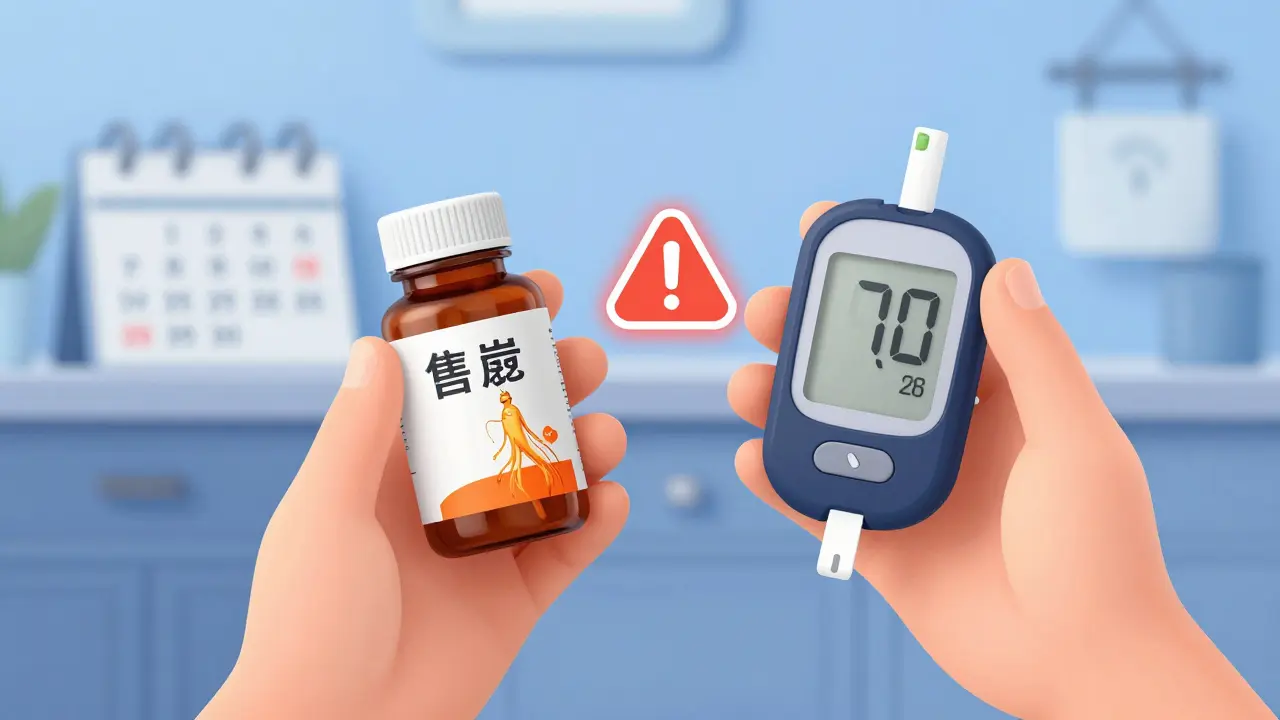
When you're managing type 2 diabetes, every supplement you take matters. Even something as natural as ginseng can throw your blood sugar out of balance - especially if you're already on insulin or oral diabetes meds. It’s not just about what ginseng does. It’s about what it does to your meds.
How Ginseng Affects Blood Sugar
Ginseng isn’t just a trendy herbal tea. It’s been used for centuries in Asian medicine, and modern science is catching up. The active ingredients, called ginsenosides, actually help lower blood sugar. They do this in a few ways: they help your pancreas release more insulin, make your cells more sensitive to insulin, and reduce inflammation that interferes with glucose uptake. Studies show real results. One 12-week trial with 74 people with type 2 diabetes found that taking 3 grams of American ginseng daily dropped fasting blood sugar by 0.71 mmol/L - that’s a measurable change. Another study using 200 mg of standardized extract daily saw similar drops. It’s not a miracle cure, but it’s not nothing either. The problem? These effects don’t stop when you take your metformin or glipizide. They pile on.The Hidden Risk: Too Much Blood Sugar Drop
If you’re taking insulin, sulfonylureas, or other diabetes pills that lower blood sugar, adding ginseng can push you into hypoglycemia. That means dizziness, shaking, sweating, confusion - even fainting. It’s not theoretical. The Merck Manual, WebMD, Cleveland Clinic, and Banner Health all warn about this exact interaction. They say it plainly: ginseng may lower your blood sugar too much. This isn’t just about feeling off for an hour. Severe hypoglycemia can land you in the ER. And it’s sneaky. You might not notice it at first. Your body gets used to lower glucose levels. You start thinking, “I feel fine,” but your numbers are dropping below safe levels. And here’s the kicker: not all ginseng is the same. Asian ginseng (Panax ginseng) and American ginseng (Panax quinquefolius) both lower blood sugar, but Siberian ginseng (Eleutherococcus senticosus) - which isn’t even true ginseng - can go either way. It might lower or raise glucose. If your bottle doesn’t say “Panax ginseng” or “Panax quinquefolius,” you’re guessing.What Your Doctor Needs to Know
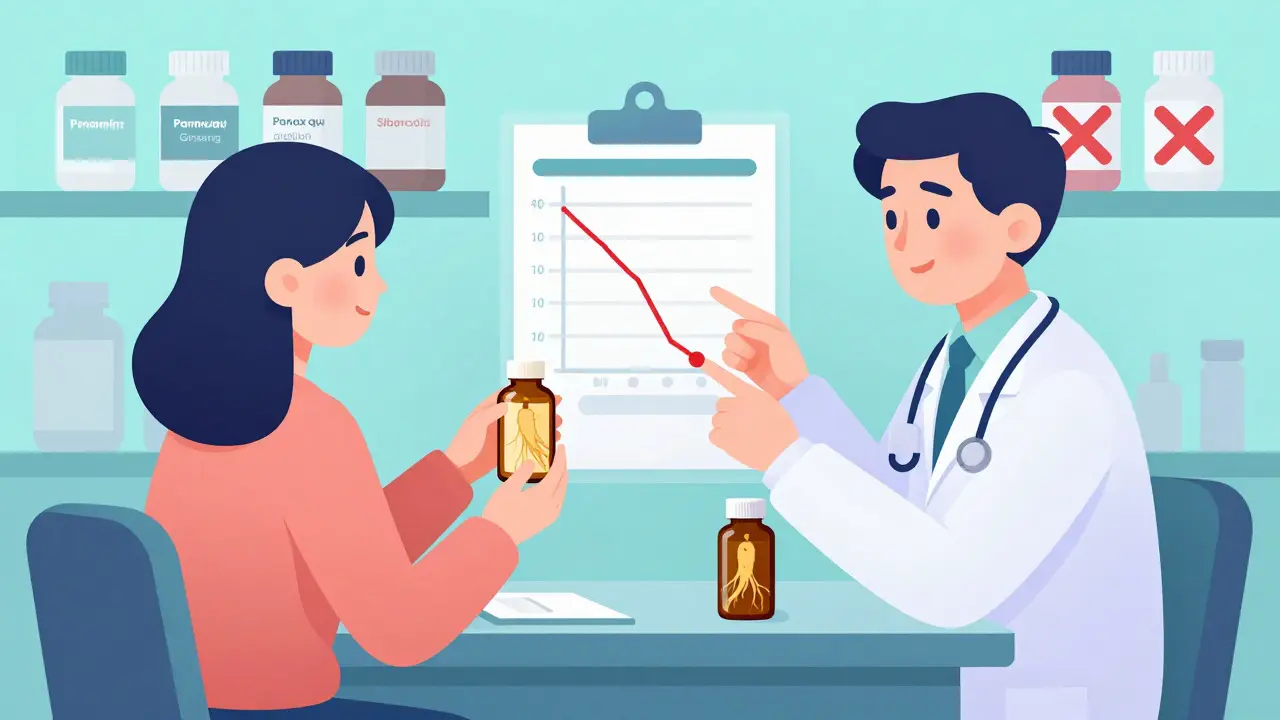
Most people don’t tell their doctor they’re taking ginseng. They think it’s “natural,” so it’s safe. But supplements aren’t regulated like drugs. There’s no guarantee that what’s on the label is what’s inside. One study found some ginseng products had no ginsenosides at all. Others had heavy metals or contaminants. Your doctor can’t help you if they don’t know you’re taking it. And they need to know because they might need to adjust your meds. If your blood sugar starts trending lower after starting ginseng, your insulin dose or oral medication might need to come down. Otherwise, you’re at risk. The American Academy of Family Physicians says ginseng has a “modest effect” on blood sugar - not strong enough to replace your meds, but strong enough to cause real problems if not monitored.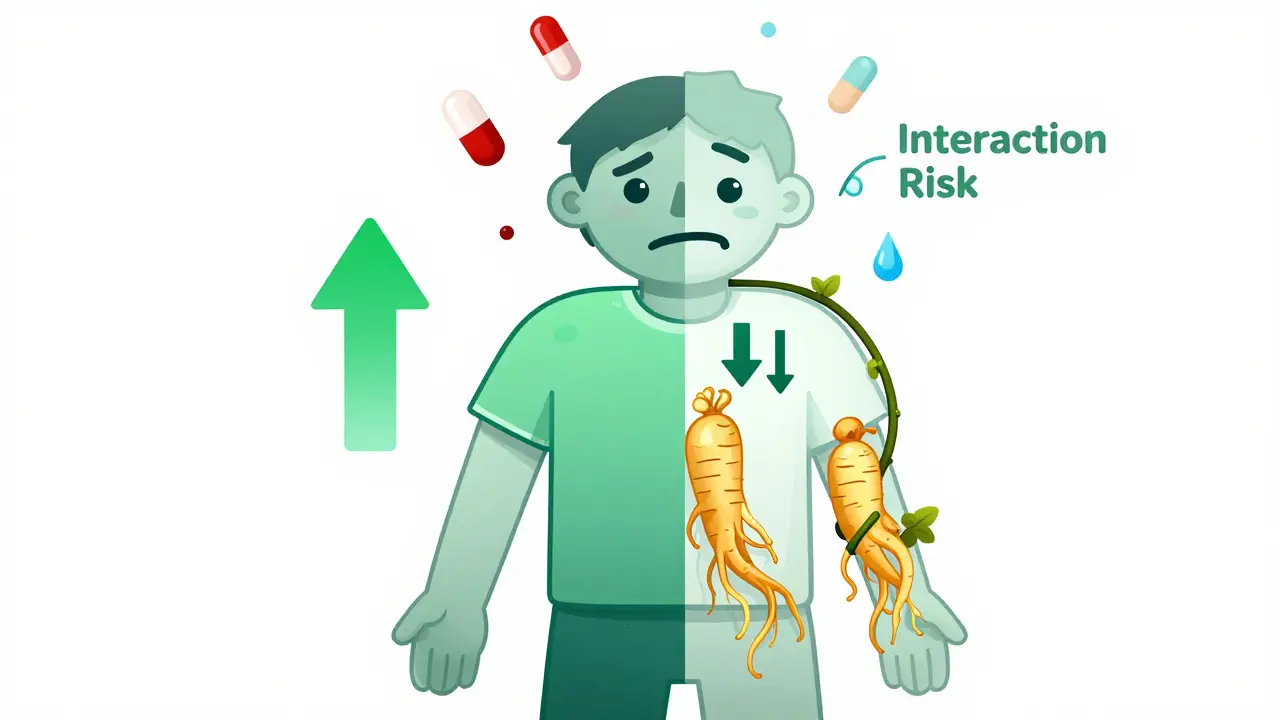
How to Monitor Blood Sugar Safely
If you’re already on diabetes medication and want to try ginseng, don’t wing it. Here’s what works:- Start with a low dose: 100-200 mg of standardized extract or 1 gram of dried root per day. Don’t jump to 3 grams right away.
- Check your blood sugar more often - especially before meals and at bedtime. Do this for at least two weeks after starting.
- Keep a log: write down your glucose numbers, what you ate, when you took ginseng, and any symptoms like shakiness or fatigue.
- Watch for liquid forms. Some ginseng tonics contain added sugar or alcohol - both bad for diabetes.
- Stop immediately if your blood sugar drops below 4 mmol/L two times in a row.
Other Medications Ginseng Might Interact With
Diabetes isn’t the only concern. Many people with type 2 diabetes also take meds for high blood pressure, blood thinners, or depression. Ginseng doesn’t play nice with any of them. It can:- Increase the risk of bleeding if you’re on aspirin, warfarin, or NSAIDs like ibuprofen
- Raise levels of certain cancer drugs like imatinib, leading to liver damage
- Interfere with antidepressants called MAOIs
- Change how your body processes estrogen or corticosteroids
What the Science Still Doesn’t Know
The good news? Most studies show ginseng is well-tolerated. No major liver or kidney damage was found in trials. Side effects like headaches, insomnia, or nausea are rare and mild. But here’s the gap: almost all studies were short - 4 to 12 weeks. We don’t know what happens after six months or a year. We don’t know how it affects people with type 1 diabetes. We don’t know how it works with newer drugs like SGLT2 inhibitors or GLP-1 agonists. The 2020 review in PubMed Central says it plainly: “Larger, longer-term trials are needed.” So while the early data looks promising, we’re still in the early stages.Bottom Line: Talk to Your Doctor First
Ginseng isn’t evil. It’s not a magic cure. But it’s not harmless either. For people on diabetes meds, it’s a potential risk - one that’s easy to miss because it’s sold as a “natural” product. If you’re thinking about trying it:- Don’t start without talking to your doctor or diabetes educator.
- Choose a reputable brand that lists the ginseng type and ginsenoside content.
- Start low and go slow.
- Test your blood sugar more often - at least daily for the first month.
- Stop if you feel off or your numbers drop too low.
Can ginseng replace my diabetes medication?
No. Ginseng may help lower blood sugar slightly, but it’s not strong or consistent enough to replace insulin or oral diabetes drugs. Stopping your prescribed meds to use ginseng instead can be dangerous and lead to high blood sugar, nerve damage, or other complications.
How long does it take for ginseng to affect blood sugar?
Effects can show up within a few days to a couple of weeks. In clinical trials, people saw changes in fasting glucose after 4 to 12 weeks of daily use. But some people report feeling changes - like more energy or mild dizziness - within the first week. That’s why monitoring early is critical.
Is American ginseng safer than Asian ginseng for diabetes?
Both types lower blood sugar, but American ginseng (Panax quinquefolius) has been studied more for diabetes and tends to have a gentler effect. Asian ginseng (Panax ginseng) is more stimulating and may cause jitteriness or higher blood pressure in some people. Neither is “safe” without monitoring - both can cause hypoglycemia when combined with diabetes meds.
What should I look for on a ginseng supplement label?
Look for: 1) “Panax ginseng” or “Panax quinquefolius” - avoid “Siberian ginseng.” 2) Standardized extract with ginsenoside content listed (e.g., “20% ginsenosides”). 3) No added sugar, alcohol, or fillers. 4) Third-party testing seals (USP, NSF, or ConsumerLab). If it doesn’t have these, you’re taking a gamble.
Can I take ginseng if I have type 1 diabetes?
There’s very little research on ginseng and type 1 diabetes. Since type 1 involves little to no insulin production, ginseng’s effect on insulin secretion may not help - but it can still cause dangerous drops in blood sugar if you’re taking insulin. It’s not recommended without close medical supervision.
What are the signs I’m having a bad reaction to ginseng?
Signs of low blood sugar: shaking, sweating, rapid heartbeat, confusion, dizziness, blurred vision. Signs of other reactions: headaches, trouble sleeping, high or low blood pressure, nausea, or unusual bruising. If you experience any of these after starting ginseng, stop taking it and contact your doctor immediately.




Dusty Weeks
January 1, 2026 AT 12:43