
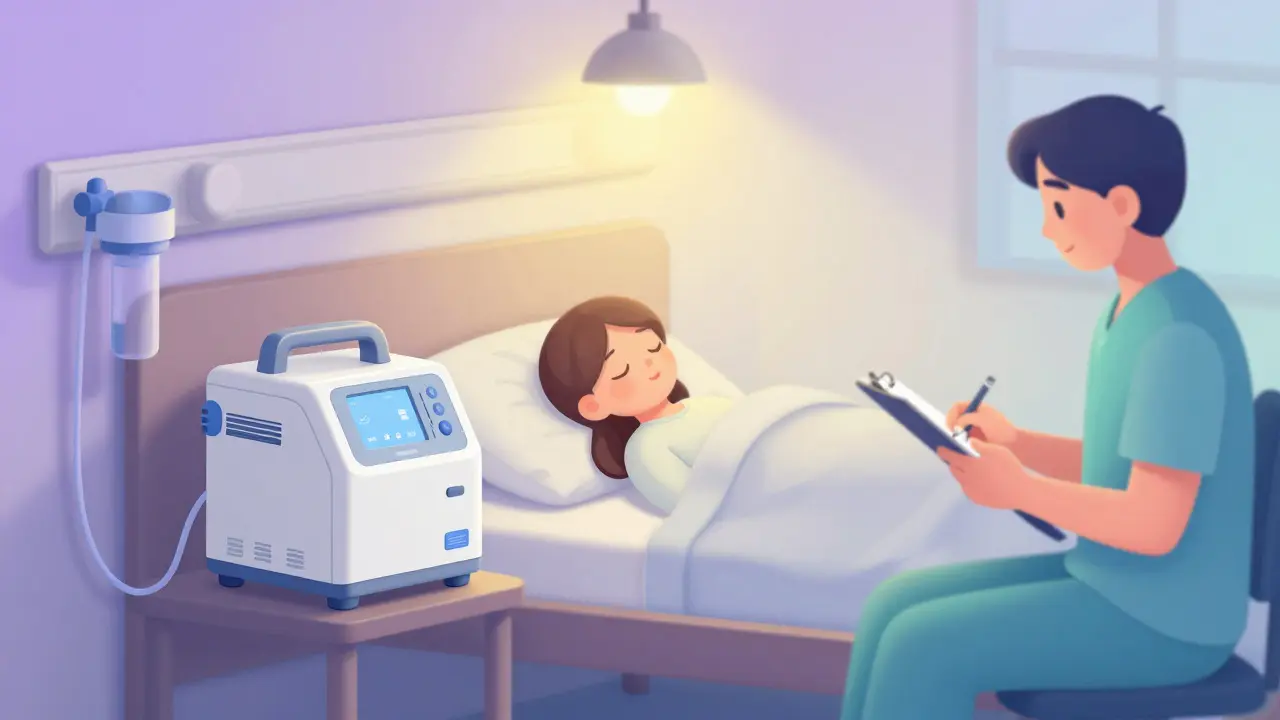
What Is Home Hemodialysis?
Home hemodialysis lets people with end-stage kidney disease do their dialysis treatments in their own homes instead of going to a clinic three times a week. It’s not just a convenience-it changes how you live. You control when you dialyze: early morning, late at night, or even while you sleep. The machines are smaller than they used to be, and many are designed to fit in a corner of a bedroom or laundry room. But it’s not as simple as plugging in a device. This treatment demands preparation, discipline, and support.
Why Choose Home Hemodialysis?
People who switch to home hemodialysis often report feeling better than they did on in-center treatments. Why? Because they can dialyze more often or for longer periods. Standard in-center dialysis is usually three times a week for three to four hours. That’s not enough to fully clean the blood between sessions. Home hemodialysis can be done five to seven times a week for two to four hours, or six to ten hours overnight. More frequent treatments mean fewer toxins build up, less fluid overload, and better blood pressure control. A 2021 study in the Clinical Journal of the American Society of Nephrology found that patients on short daily home dialysis had a 28% lower risk of death compared to those on standard in-center schedules.
Quality of life improves too. One 2019 review in the American Journal of Kidney Diseases showed home dialysis patients scored 37% higher on quality-of-life surveys. They sleep better, have more energy, and don’t need as many phosphate binders or blood pressure meds. Many say they feel like they’re living again, not just surviving between treatments.
Training: It’s Not Just Learning How to Use a Machine
Training for home hemodialysis isn’t a one-week class. It’s a full process that usually takes 3 to 8 weeks, sometimes longer. You’ll spend 3 to 5 hours per session, several times a week, learning how to:
- Set up the dialysis machine and connect it to water and power
- Perform sterile techniques to avoid infections
- Insert needles into your vascular access (fistula or graft) - this is the hardest part for most people
- Monitor your blood pressure and fluid removal
- Recognize and respond to alarms or complications like low blood pressure or air in the line
- Order and store supplies
- Keep detailed treatment logs
You won’t be left alone after training. Most programs require you to complete 20 to 30 supervised treatments before going home. Some centers now use virtual reality simulators to practice needle insertion, which has raised competency rates from 78% to 92% in places like the University of Washington Medical Center.
Who Needs a Care Partner?
Unless you’re one of the rare exceptions, you must have a care partner. This is non-negotiable. The Maryland Department of Health and most major dialysis providers require a trained person to be present during every treatment. That’s because emergencies can happen-low blood pressure, bleeding, machine malfunctions. You need someone who knows how to stop the machine, apply pressure, call for help, and stay calm.
Your care partner goes through the same training as you. They learn to handle the machine, check for leaks, manage alarms, and even help with needle insertion. About 30% of people who want to do home dialysis can’t because they don’t have a reliable partner. Spouses, adult children, or close friends are the most common choices. But it’s not always easy. On Reddit’s kidney community, 41% of home dialysis users reported strain in their relationships because of the constant responsibility.

Types of Home Hemodialysis Schedules
There are three main schedules, each with different benefits:
- Conventional Home HD - Three times a week, 3-4 hours per session. This is the closest to in-center dialysis but gives you control over timing. Good for people who want flexibility but aren’t ready for more frequent treatments.
- Short Daily Home HD - Five to seven times a week, 2-3 hours per session. This is the most popular option for improving health outcomes. It leads to better blood pressure, less heart strain, and fewer hospitalizations.
- Nocturnal Home HD - Three to seven nights a week, 6-10 hours while you sleep. This is the most effective for clearing toxins and phosphorus. One study found patients on nocturnal dialysis had 42% lower phosphate levels and needed 3.2 fewer phosphate binder tablets daily.
Most people start with short daily dialysis. It’s easier to fit into a routine than overnight sessions, and the benefits are clear. Nocturnal dialysis works well for those who can sleep through the machine’s noise and have a partner willing to stay up late or wake up early.
Space, Water, and Electricity: What You Need at Home
You don’t need a whole new room, but you do need a dedicated spot. Most machines require a 6-foot by 6-foot area with:
- A dedicated electrical outlet: a 120-volt, 20-amp circuit (no extension cords allowed)
- A water line: must supply 40-80 psi pressure and connect to a reverse osmosis (RO) system that filters water to medical-grade standards
- A drain: you’ll need a dedicated drain line to handle the wastewater from dialysis
The RO system is critical. Every month, you must test the water for bacteria and chemicals. Annual testing is required by law. If the water isn’t clean, you risk serious infections. Some machines, like the NxStage System One, are portable and can be used while traveling-just make sure you have access to clean water and a power source wherever you go.
Outcomes: Better Survival, Fewer Complications
Home hemodialysis isn’t just about comfort-it saves lives. The U.S. Renal Data System (USRDS) found home dialysis patients have a 15-20% lower mortality rate than those on in-center dialysis. The difference is even clearer when comparing frequent treatments. Nocturnal and short daily schedules show the strongest survival benefits.
Why? Because your body gets cleaned more often. Toxins like urea and creatinine don’t build up as much. Fluid doesn’t pile up between sessions. Your heart doesn’t have to work as hard. You’re less likely to develop heart failure, anemia, or bone disease from high phosphate levels.
One 2018 study in Nephrology Dialysis Transplantation showed patients on nocturnal home dialysis needed 3.2 fewer phosphate binder pills per day. That’s not just a convenience-it’s fewer side effects like nausea, constipation, and stomach pain.

Barriers: Why So Few People Do It
Despite the benefits, only about 12% of U.S. dialysis patients do home hemodialysis. Why? Three big reasons:
- Training capacity - Only 12% of dialysis centers offer home training. Most staff are trained for in-center care, not teaching patients to be their own technicians.
- Reimbursement - Medicare pays for up to 25 training sessions, but the time and resources required aren’t fully covered. Many centers can’t afford to run home programs.
- Needle fear - About 45% of trainees struggle with self-needling. It’s a real psychological barrier. Some people can’t bring themselves to stick needles into their own arm, even if they’ve practiced on simulators.
There’s also the emotional toll. A 2023 thread on the American Association of Kidney Patients forum had 142 responses. 87% said their quality of life improved-but 63% said they were terrified of handling an emergency alone.
What’s Changing in 2025?
Things are shifting. The 2021 Advancing American Kidney Health initiative aimed for 80% of new patients to start on home dialysis or transplant by 2025. That goal is unlikely to be met-but momentum is building.
New FDA-approved machines like the WavelinQ endoAVF system make access easier. Portable devices like the NxStage System One are becoming more common. And starting in 2025, Medicare will start paying dialysis centers based on patient outcomes, not just how many treatments they give. That means centers will have a financial reason to push home dialysis-it’s cheaper and leads to better results.
Is Home Hemodialysis Right for You?
It’s not for everyone. You need:
- Good physical health to handle the training
- A reliable care partner
- Space and plumbing in your home
- Psychological readiness to take charge
- Willingness to learn, adapt, and follow strict routines
If you’re tired of being tied to a clinic schedule, if you want more energy, better sleep, and more control over your life-then home hemodialysis could be the best choice you’ve ever made. But don’t rush into it. Talk to your nephrologist. Ask if your center offers home training. Visit a patient who’s been doing it for a year. See what it really looks like.
Because this isn’t just about dialysis. It’s about reclaiming your life.
Can you do home hemodialysis alone?
In almost all cases, no. Medicare and most state regulations require a trained care partner to be present during every treatment. Solo home hemodialysis is only allowed under very limited circumstances and requires special equipment and additional training. Even then, it’s rare and heavily monitored.
How long does home hemodialysis training take?
Training usually lasts between 3 and 8 weeks, depending on your learning pace, the type of machine, and whether you’re doing self-needling. Most programs require 3-5 hours of training per week, with at least 20 supervised treatments before you go home. Some centers now use VR simulators to speed up the learning process and improve confidence.
Is home hemodialysis cheaper than in-center dialysis?
For the patient, the out-of-pocket cost is usually the same-Medicare covers most of it. But for the healthcare system, home dialysis is significantly cheaper. It reduces hospitalizations, emergency visits, and the need for expensive medications. A 2022 analysis by Kidney Care Partners estimated that widespread adoption could save the U.S. healthcare system over $1 billion annually.
What happens if the machine breaks down?
Every home hemodialysis program provides 24/7 technical support. If the machine alarms or fails, you’re instructed to stop the treatment, disconnect safely, and call the support line. Most companies send a replacement machine within 24 hours. You’ll also have backup supplies on hand. If you miss a treatment, you’ll need to schedule an in-center session immediately to avoid dangerous fluid and toxin buildup.
Can you travel with a home hemodialysis machine?
It depends on the machine. Standard home dialysis machines are not portable. But devices like the NxStage System One are designed for travel. You can take them on planes (with airline approval), use them in hotels, or even in RVs. You’ll need to plan ahead-find clean water sources, power outlets, and arrange for dialysis backup at your destination. Many patients travel successfully with proper preparation.




Mandy Vodak-Marotta
February 3, 2026 AT 23:51