More than one in three adults over 65 struggle with insomnia. It’s not just trouble falling asleep-it’s waking up too early, not being able to get back to sleep, or feeling exhausted all day despite spending hours in bed. For many, the go-to solution has been a pill. But in recent years, doctors have started warning that some of the most common sleep medications may do more harm than good in older adults.
Why Older Adults Are at Higher Risk
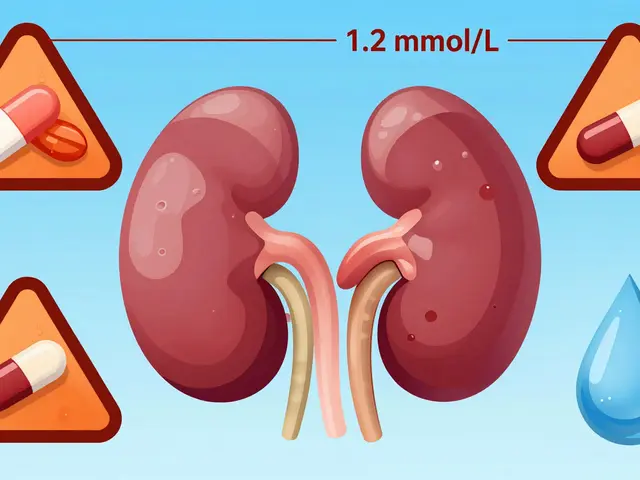
As we age, our sleep changes naturally. We spend less time in deep sleep, wake up more often, and our internal clock shifts earlier. But insomnia isn’t just a normal part of aging. When it lasts three months or longer and leaves you tired, irritable, or unable to focus, it becomes a medical issue. And for seniors, the risks of using the wrong medication are serious.Older bodies process drugs differently. Liver and kidney function slow down. This means medications stick around longer, increasing side effects like dizziness, confusion, and next-day grogginess. Combine that with other prescriptions-blood pressure pills, painkillers, antidepressants-and the risk of dangerous interactions climbs. A 2018 study found that using sleep meds along with other sedatives increases the chance of a fall by 70%. Falls in older adults often lead to broken hips, hospital stays, and loss of independence.
The Old Way Isn’t Safe Anymore
For decades, doctors reached for benzodiazepines like lorazepam or triazolam, or z-drugs like zolpidem (Ambien). These worked quickly and were easy to prescribe. But research piled up showing they were risky for seniors.The American Geriatrics Society’s Beers Criteria, updated in 2019, says clearly: avoid benzodiazepines and z-drugs as first-line treatment for older adults. Why? Because they increase fall risk by up to 60%, raise the chance of hip fractures, and can worsen memory problems. One study found that seniors on these meds had a 2.3 times higher risk of side effects compared to placebo. Even worse, some people have reported sleepwalking, eating in their sleep, or driving while not fully awake-rare but terrifying events.
Despite the warnings, a 2024 analysis of Medicare data showed that 7.2 million older adults were still prescribed benzodiazepines. That’s nearly half of all insomnia prescriptions. Many patients don’t know there are safer options. Others are told, “This is the only thing that works.” But that’s not true anymore.
What Actually Works-Without the Danger
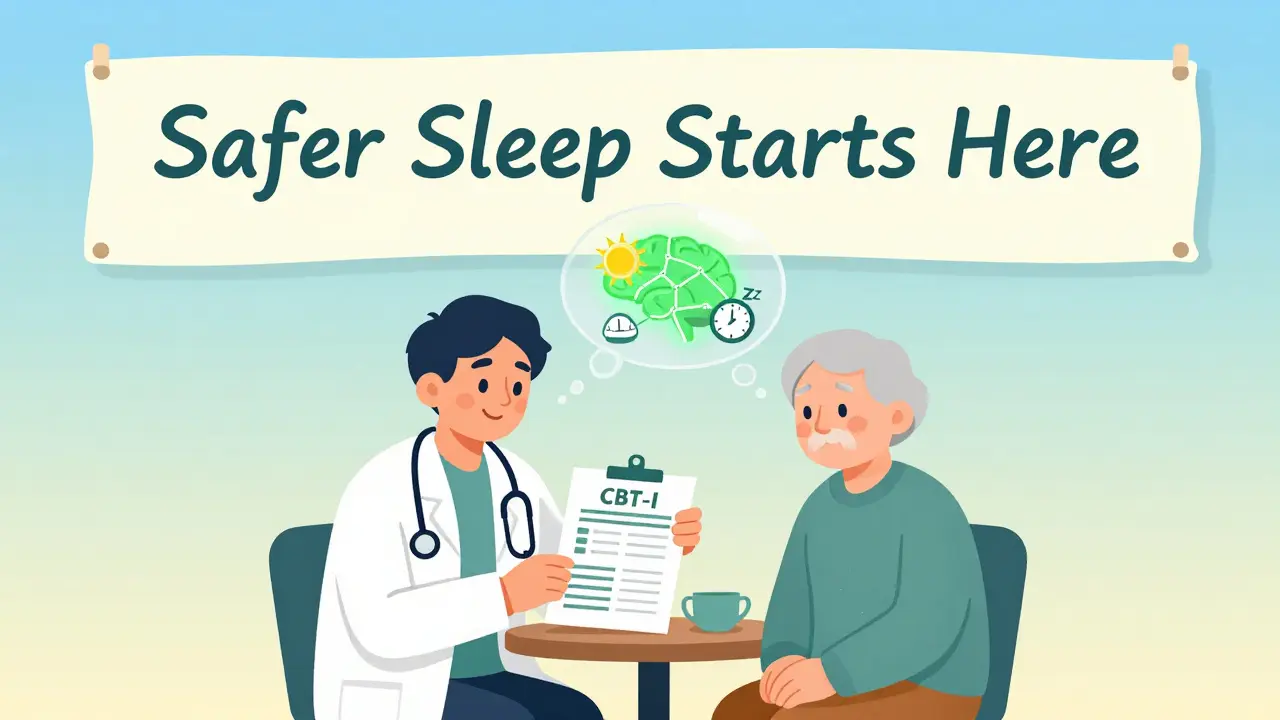
The best first step for insomnia isn’t a pill. It’s Cognitive Behavioral Therapy for Insomnia, or CBT-I. This isn’t talk therapy. It’s a structured program that teaches you how to fix bad sleep habits: limiting time in bed, stopping clock-watching, and changing thoughts about sleep. Studies show CBT-I works better than medication for long-term results. But it’s not always available. So when a pill is needed, here are the safest choices.Low-Dose Doxepin (3-6 mg)
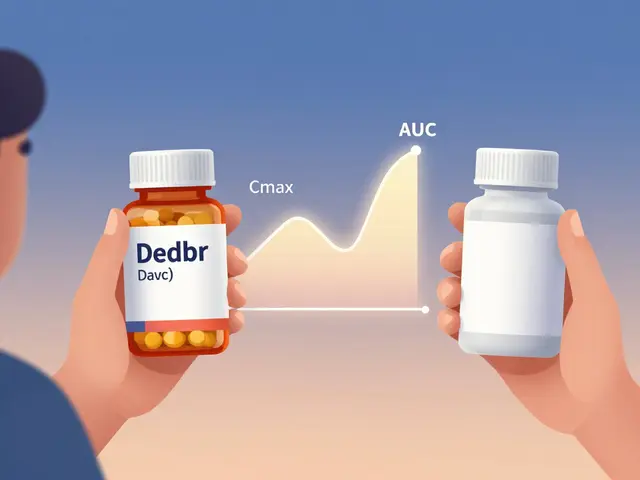
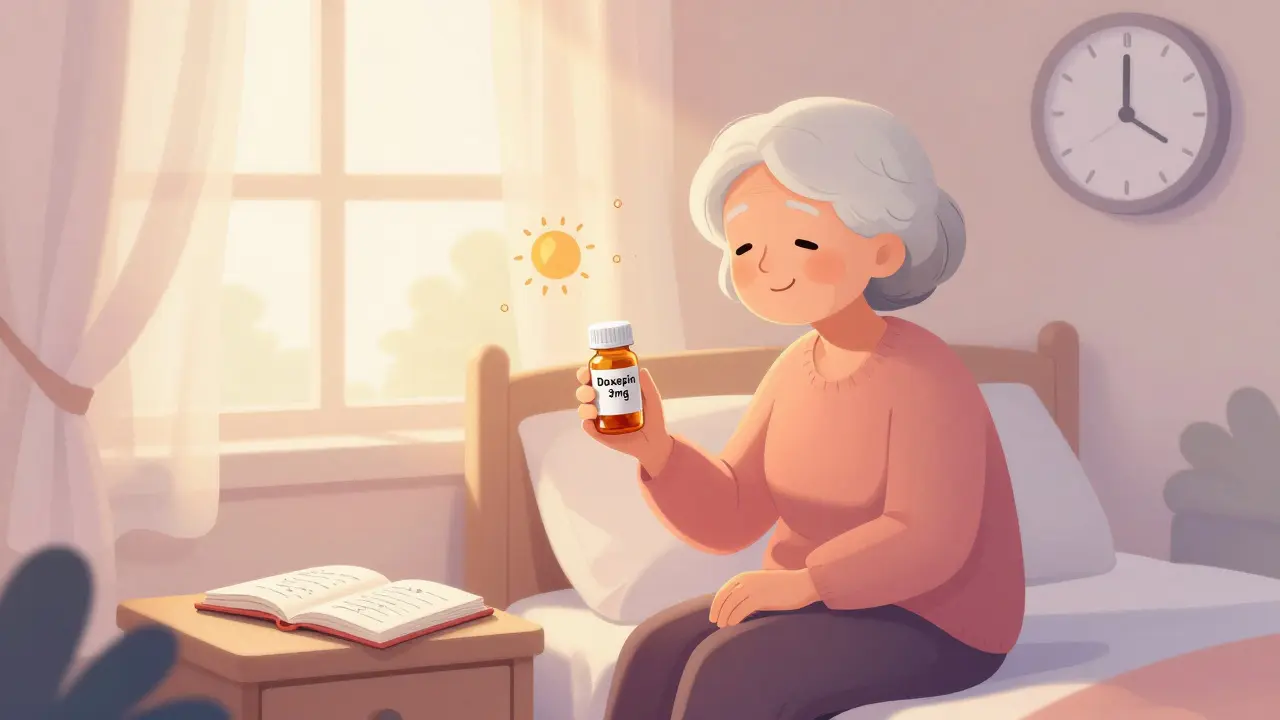
This is one of the most underrated options. Doxepin is an old antidepressant, but at very low doses (3 or 6 mg), it acts as a histamine blocker-calming the brain just enough to help you stay asleep. It’s FDA-approved specifically for sleep maintenance insomnia in older adults. A 2024 meta-analysis found it improved sleep efficiency by over 6%-more than any other medication tested. At this dose, next-day drowsiness is rare. Only 12% of users report grogginess, compared to 34% with zolpidem. It’s also cheap: a 30-day supply costs about $15 without insurance.Ramelteon (8 mg)
Ramelteon works by mimicking melatonin, the body’s natural sleep hormone. It doesn’t sedate you. Instead, it helps reset your internal clock, making it easier to fall asleep. It’s especially helpful if you go to bed late and can’t fall asleep until 2 or 3 a.m. Studies show it reduces sleep onset time by nearly 10 minutes. Side effects are minimal-headache or dizziness in less than 5% of users. No risk of dependence. No risk of falls. It’s a clean, gentle option.Lemborexant (5-10 mg)
Approved in 2019, lemborexant (Dayvigo) is one of the newest and most effective options. It targets orexin, a brain chemical that keeps you awake. By blocking it, lemborexant helps you fall asleep faster and stay asleep longer. In clinical trials with seniors, users gained over 40 extra minutes of sleep per night and woke up less often. Importantly, users reported feeling more alert the next day. A 2025 study found lemborexant users had 18% less decline in daily function over a year compared to those on benzodiazepines. The downside? Cost. Without insurance, it can run $750 a month. But for some, the safety and effectiveness make it worth it.Controlled-Release Melatonin (2 mg)
Melatonin supplements are widely available, but not all are equal. Regular melatonin pills release too quickly. Controlled-release versions mimic the body’s natural slow release. At 2 mg, it’s shown to help seniors fall asleep 10-15 minutes faster. It’s not a powerhouse, but it’s safe, inexpensive, and has no known interactions. Many users say it “feels natural”-no hangover, no fog.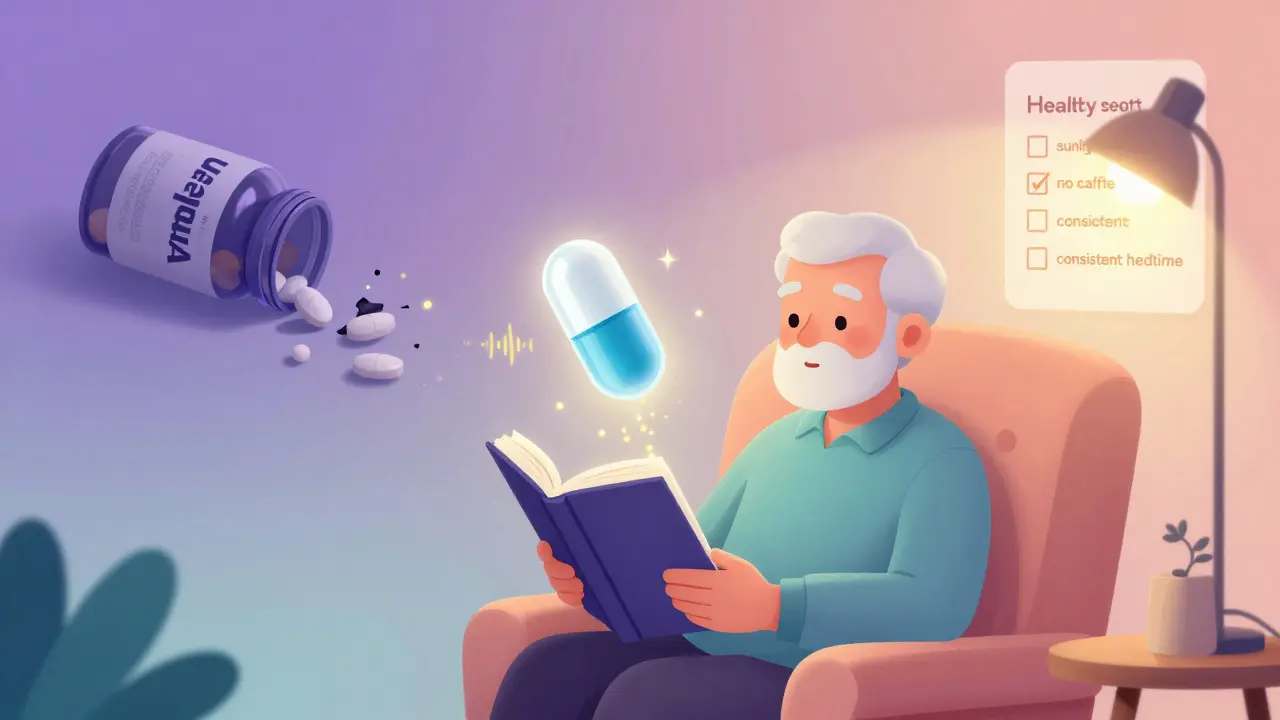
What to Avoid
Even if you’ve been on these for years, it’s worth reconsidering:- Benzodiazepines (lorazepam, temazepam, triazolam): High fall risk, memory issues, dependency.
- Z-drugs (zolpidem, eszopiclone, zaleplon): Still prescribed often, but carry the same risks as benzos, including sleepwalking and confusion.
- Sedating antidepressants (trazodone, amitriptyline): Sometimes used off-label, but can cause dizziness, dry mouth, and urinary problems in older adults.
One patient on Reddit wrote: “Doxepin 3mg gave me 5 extra hours of solid sleep without the hangover I got from Ambien-wish my doctor had tried this first.” That’s the kind of result we’re aiming for.
How to Talk to Your Doctor
If you’re currently on a sleep med, don’t stop suddenly. Talk to your doctor about switching. Bring this list:- Your current medication and dose
- How long you’ve been taking it
- Any side effects (dizziness, confusion, falls, grogginess)
- Whether you’ve tried CBT-I or sleep hygiene changes
Ask: “Is there a safer alternative?” and “Can we try a non-drug approach first?” Many doctors still default to prescribing pills because they’re quick. But guidelines have changed. You have the right to ask for the safest option.
What to Expect When Switching
Switching medications isn’t always smooth. You might feel worse at first. That’s normal. The goal isn’t perfection-it’s better, safer sleep. For example:- If you switch from zolpidem to doxepin, you might take 1-2 weeks to feel the full effect.
- If you start lemborexant, some report mild dizziness at first-it usually fades in a week or two.
- Always start low. Doctors should begin with the lowest dose and increase only if needed.
Track your sleep. Use a simple journal: bedtime, wake time, how many times you woke up, how you felt in the morning. This helps your doctor see what’s working.
Cost and Access
Affordability matters. Doxepin and melatonin are generics and cost under $20 a month. Ramelteon is also affordable. But lemborexant? Without insurance, it’s out of reach for many. Medicare Part D often requires prior authorization for it. If cost is an issue, ask your doctor about doxepin first. It’s effective, safe, and cheap. Some pharmacies offer discount programs-even for newer drugs.Long-Term Thinking
Sleep meds should never be a lifelong crutch. Even the safest ones are meant for short-term use. The goal is to fix the habits that keep you awake. Combine medication with:- Getting sunlight in the morning
- Avoiding caffeine after 2 p.m.
- Keeping a consistent bedtime
- Not lying in bed awake for more than 20 minutes-get up, read, then return when sleepy
One study found that seniors who used CBT-I plus a safe medication had better long-term sleep than those on medication alone. The best outcome isn’t just sleeping more-it’s waking up feeling rested, safe, and in control.
What is the safest sleep medication for older adults?
The safest options are low-dose doxepin (3-6 mg), ramelteon (8 mg), and controlled-release melatonin (2 mg). These have minimal side effects, low risk of falls, and no dependency potential. Lemborexant is effective but expensive. Benzodiazepines and z-drugs like Ambien should be avoided.
Can I stop taking my sleep medication cold turkey?
No. Stopping suddenly can cause rebound insomnia or withdrawal symptoms like anxiety and tremors. Always work with your doctor to taper off slowly. If you’re on a benzodiazepine or z-drug, switching to a safer alternative before stopping is often the best approach.
Why isn’t CBT-I used more often?
CBT-I is highly effective, but access is limited. Many primary care doctors aren’t trained in it, and insurance doesn’t always cover it. Online CBT-I programs are becoming more available and affordable. Ask your doctor for a referral or search for certified programs through the Society of Behavioral Sleep Medicine.
Do melatonin supplements really work for seniors?
Yes-but only if it’s the controlled-release type at 2 mg. Regular melatonin pills release too fast and don’t help with staying asleep. Controlled-release versions mimic your body’s natural rhythm, helping you fall asleep faster and sleep more soundly. They’re safe and have no known interactions.
How do I know if my sleep medication is causing falls?
Signs include dizziness in the morning, feeling unsteady when standing, or confusion after taking the pill. If you’ve had a fall, even a minor one, talk to your doctor. A simple test called the Timed Up and Go can assess your fall risk. If your score is over 12 seconds, your medication may be contributing.
If you or a loved one is struggling with sleep, remember: better sleep doesn’t mean stronger pills. It means smarter choices. The safest path isn’t always the fastest-but it’s the one that lets you wake up without fear.