
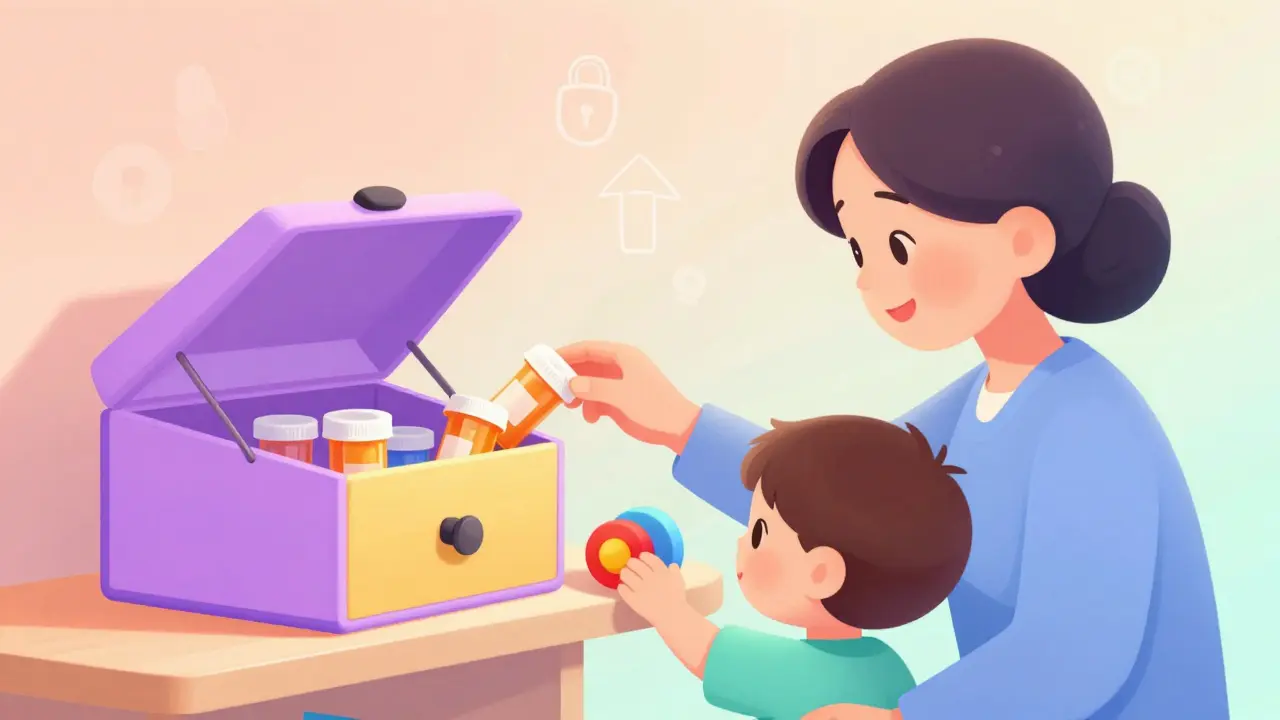
Every year, more than 58,000 children under five end up in emergency rooms because they got into medicine they weren’t supposed to. And in nearly four out of ten of those cases, the medicine came from a grandparent’s purse, nightstand, or kitchen counter. This isn’t about carelessness. It’s about a gap in communication, awareness, and systems designed for families who don’t live in the same house.
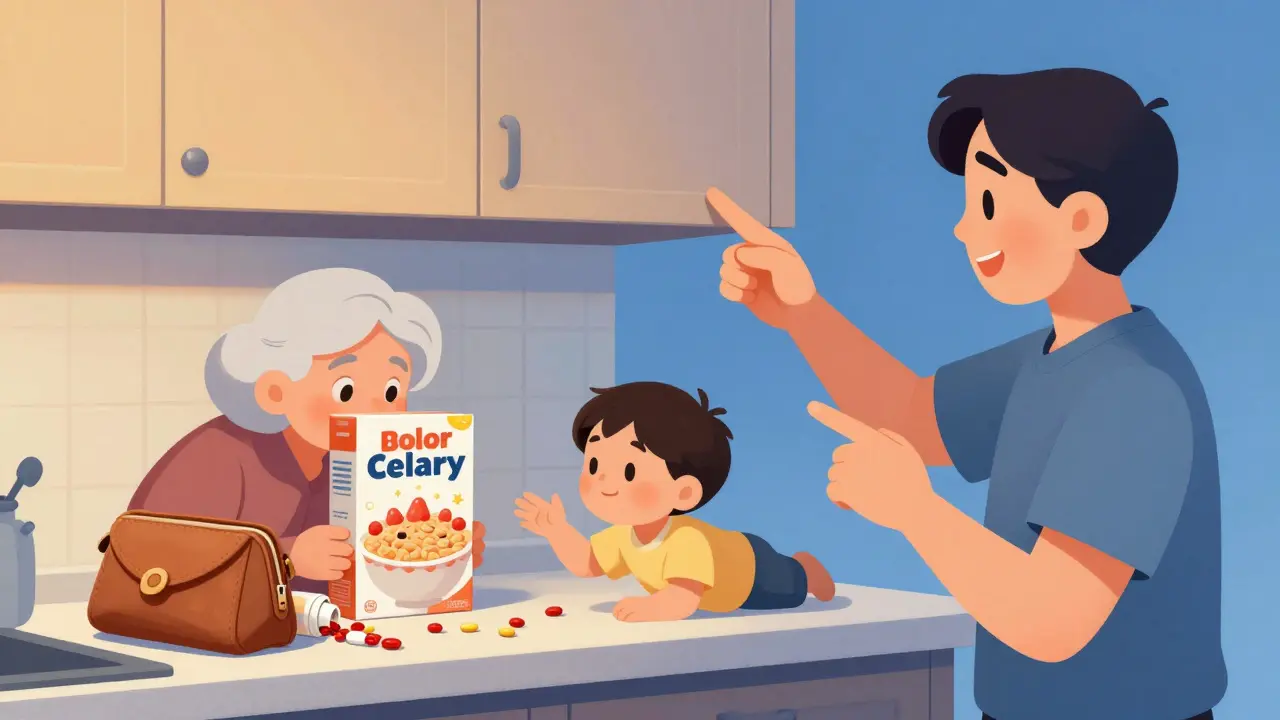
Grandparents are more involved in child care than ever. One in seven U.S. children lives with or is regularly cared for by a grandparent. Many of these grandparents take four or more prescription medications daily. They’re not storing pills like parents do. They keep them in purses because they’re always on the go. They put them on the nightstand because they forget where they put them. They transfer pills into weekly pill organizers because the original bottles are hard to open. And they think child-resistant caps are enough - even though 30% of 4-year-olds can open them in under five minutes.
Why Grandparents Are at the Center of This Problem
Parents aren’t the only ones managing kids’ medicine. Grandparents often step in during school drop-offs, weekend visits, or after-school care. But they’re rarely told how to handle their own medications safely around children. Most have never been trained on this. They don’t get safety brochures from their doctor. They don’t get reminders at the pharmacy. And when they do hear something, it’s often vague: “Keep medicine out of reach.” That doesn’t tell them where to put it, how to lock it, or what to do if their grandchild finds a pill.
The numbers show the risk. According to the National Poll on Healthy Aging, 31% of grandparents keep medicine in purses or bags. 29% transfer pills to non-childproof containers. 12% leave them on bedroom nightstands. And 36% believe child-resistant caps are foolproof - even though testing shows kids can beat them. Meanwhile, parents store medicine safely 68% of the time. Grandparents? Only 52%.
It’s not that grandparents are careless. They’re overwhelmed. They’re juggling multiple medications, memory lapses, arthritis that makes opening bottles hard, and the emotional weight of caring for a grandchild. Many feel guilty if they admit they’re worried about their meds being found. Some even think asking for a lockbox is an insult to their parenting skills.
What Works: The PROTECT Initiative and Real-World Results
There’s a proven fix. It’s called the PROTECT Initiative’s “Up & Away and Out of Sight” campaign - a joint effort by the CDC and the Consumer Healthcare Products Association. It’s simple. It’s visual. And it works.
In a 2017 study of 223 grandparents, a single 15-minute educational session - with printed visuals, live demos, and no blame - raised safe storage from 39% to 78% within 90 days. That’s not a small change. That’s life-saving.
The key? They didn’t say, “You’re doing it wrong.” They said, “Let’s keep our grandkids safe.” They showed grandparents exactly where to store medicine: high up, locked, in the original bottle, with the child-resistant cap snapped shut. They demonstrated how to use a cabinet lock that needs 15 pounds of force to open - the kind most kids under five can’t manage. They even taught them how to dispose of old pills safely.
And it wasn’t just about the home. The same changes worked when grandparents visited their grandchildren’s houses. Safe storage jumped from 39% to 78% in both places. That’s rare. Most interventions only change behavior in one environment. This one changed it everywhere.
How to Talk to Grandparents Without Making Them Feel Guilty
One of the biggest barriers isn’t knowledge - it’s emotion. Many grandparents feel judged. They think, “If I’m being told this, it means I’m not a good caregiver.” That’s why the most successful programs avoid language like “you must” or “you’re at risk.” Instead, they say:
- “Let’s make sure our grandkids stay safe.”
- “I know you want them to be healthy - let’s make sure medicine doesn’t get in the way.”
- “This is something we can do together.”
Use stories. One grandma on Reddit shared how her 3-year-old grabbed her blood pressure pills from her purse. She didn’t panic. She didn’t yell. She just said, “These are Grandma’s special vitamins - only adults can touch them.” Now she keeps them in a locked box in the closet. She even made a poster with her grandchild: “Medicine is not candy.”
Another tip: don’t just give advice - give tools. A $15 lockbox from the pharmacy, a printed reminder magnet for the fridge with the poison control number (1-800-222-1222), and a quick 5-minute demo on how to open a child-resistant cap can make all the difference. Most grandparents can’t open those caps themselves. They need practice.
What Grandparents Can Do Right Now
Here’s what works - and what you can start today:
- Keep medicine in its original bottle. No more pill organizers for meds you take daily. Those are easy for kids to open and hard to read.
- Store it high and locked. Not on the nightstand. Not on the kitchen counter. Not in your purse. Use a cabinet above 4 feet with a latch that needs 15+ pounds of force to open. Many pharmacies give out free lockboxes to seniors.
- Check every few months. Throw out expired or unused pills. Don’t flush them. Don’t toss them in the trash. Take them to a pharmacy drop-off. Most chain pharmacies offer free disposal.
- Teach your grandchild. Say it simply: “Medicine is not candy.” “Only adults give medicine.” “If you find medicine, tell an adult right away.” Make it part of your routine - like brushing teeth.
- Use the “Safety Talk” with parents. Ask: “Where do you keep your child’s medicine?” “Do you know where I keep mine?” “Can we agree on one spot for all meds?” Only 38% of families do this. You can be one of the ones who does.
What Parents Can Do to Help
Parents can’t fix this alone. They need to speak up - gently.
- Don’t wait for a crisis. Bring it up before the first visit: “I know you love taking care of them. We’ve learned a lot about keeping medicine safe. Would you be open to putting your meds in a lockbox?”
- Offer to buy a lockbox. Many insurance plans cover them. Or buy one yourself as a gift.
- Send a photo of your child’s medicine cabinet. Say: “This is what we do. Can we do something similar at your house?”
- Ask the pharmacist. When you pick up your child’s prescription, ask: “Do you have materials for grandparents?” Most pharmacies now do.
One mother in Michigan told her mom: “I don’t want you to feel bad. I just want to make sure we’re both doing everything we can to keep the kids safe.” Her mom cried - then went to the pharmacy and got a lockbox the next day.
What Pharmacies and Providers Should Be Doing
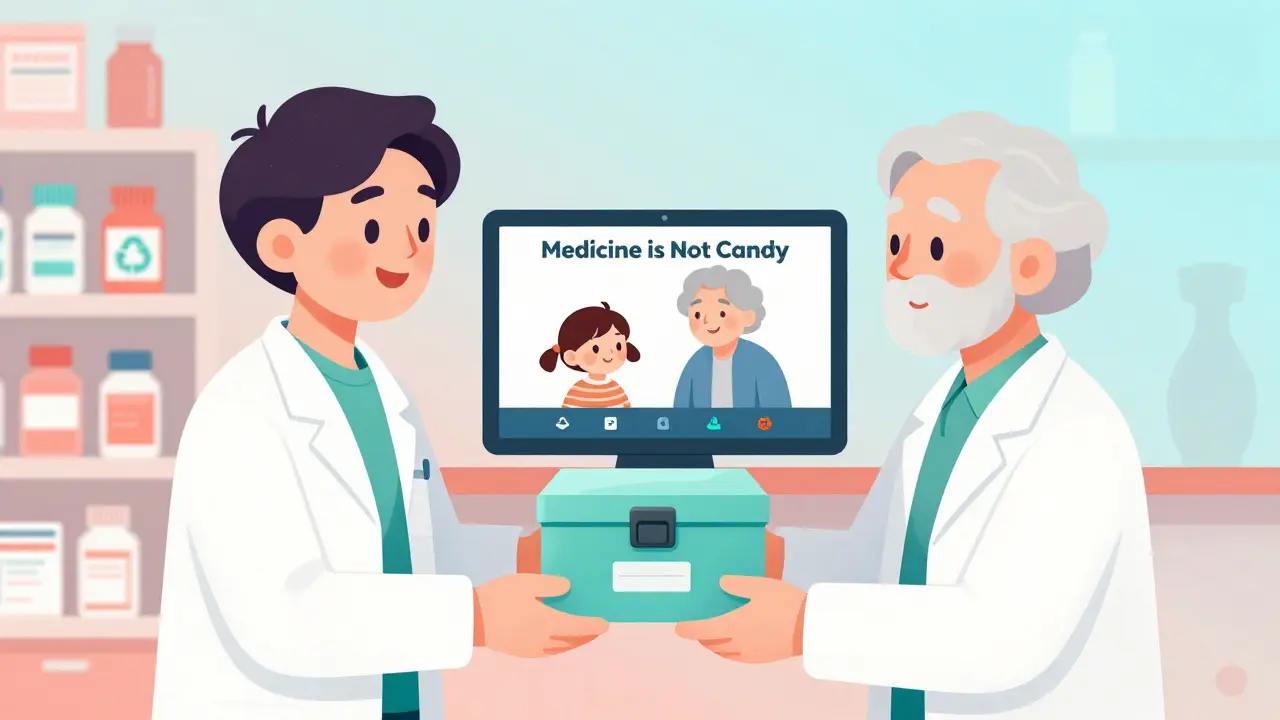
Right now, only 12% of Medicare Part D plans offer medication safety counseling. That’s not enough. Pharmacists are the most trusted source of health advice for seniors. Yet most never ask, “Do you have grandchildren visiting?”
That’s changing. In California, a new law requires pharmacists to counsel patients over 60 who have visiting grandchildren. Other states are following. Major pharmacy chains now offer free lockboxes to seniors. The CDC’s “Grandparent Guardian” digital toolkit has multilingual videos showing how to store medicine safely. It’s been viewed over 2 million times.
Doctors need to ask too. The American Geriatrics Society added “medication safety for visiting children” to its official guidelines in 2023. Now, during annual wellness visits, providers are supposed to screen for this. But most still don’t. It’s time they did.
The Bigger Picture: Why This Matters
By 2040, one in five Americans will be over 65. And more of them will be raising grandchildren. Prescription use among seniors has jumped from 78% in 2005 to 89% today. The number of kids under five getting into medicine is rising - not falling.
This isn’t just about one family. It’s about a system that assumes everyone lives in the same house, has the same habits, and gets the same advice. But families are different now. Grandparents are essential caregivers. And they need support - not shame.
When we fix this, we don’t just prevent poisonings. We strengthen families. We give grandparents confidence. We give parents peace of mind. And we teach kids something vital: medicine is powerful. It’s not a toy. It’s not candy. It’s something grown-ups handle with care.
And that’s a lesson every child should learn - from the people who love them most.



Jamie Hooper
January 23, 2026 AT 22:35