
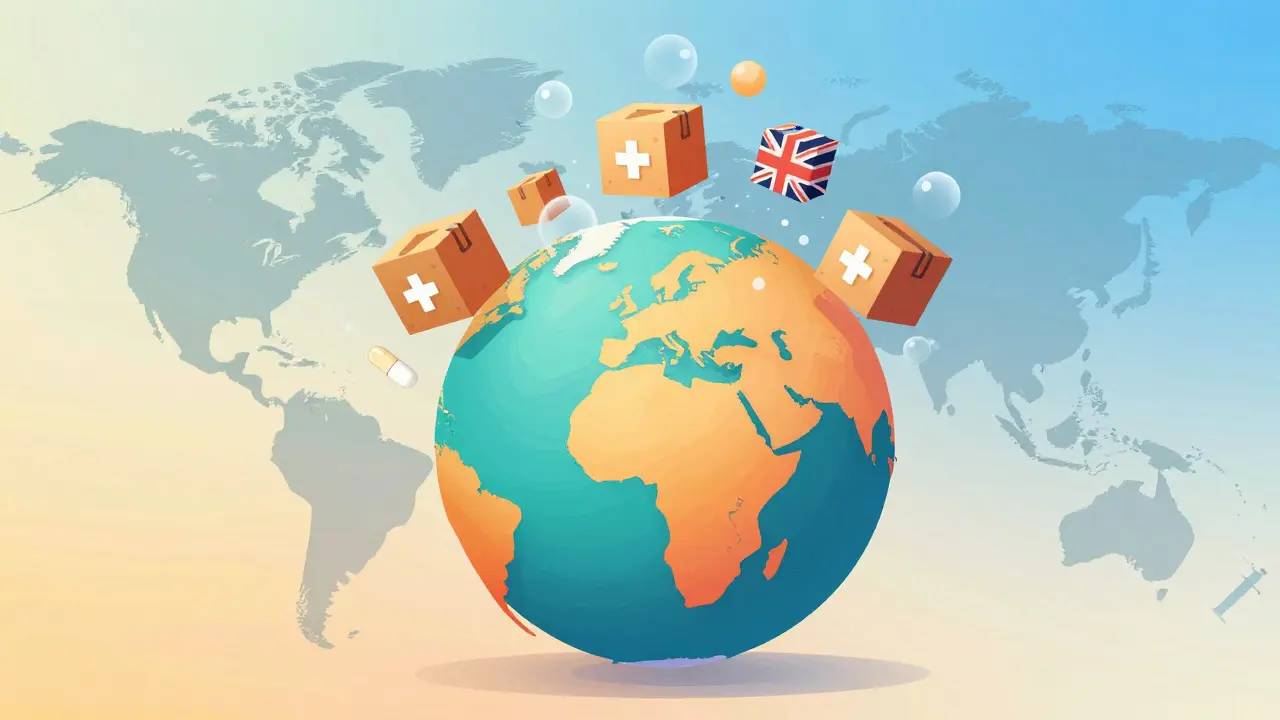
Have you ever wondered where the cheap medicines filling your local pharmacy shelves actually come from? You might assume they are made locally, but a massive portion of the medicine cabinet across the globe relies on a single country. That country is India. Known widely as the world's pharmacy, this nation supplies affordable healthcare solutions to billions of people. By April 2026, the industry continues to evolve, moving beyond just making copies of old drugs into creating complex treatments. Understanding this ecosystem matters because it affects your wallet, your health access, and global security.
The Foundation of Global Medicine Access
Why did India take center stage? It wasn't luck; it was a legal decision made decades ago. Back in the 1970s, specifically between 1970 and 1976, the government amended its Patents Act. This move allowed domestic companies to reverse-engineer patented drugs and produce them affordably. This strategy positioned the country to become a powerhouse. Fast forward to today, and the sector represents a significant chunk of the global economy. In fiscal year 2023-24 alone, the industry was valued around US$50 billion. Experts project it could hit $130 billion by 2030 if current trends hold.
You might ask how this benefits regular people. The math is simple. These drugs cost significantly less-often 30% to 80% cheaper than branded versions found in Western markets. When you buy insulin or blood pressure medication from an Indian manufacturer, you get the same therapeutic effect without the brand premium. This model allows countries with smaller budgets to treat their populations effectively. For example, Sub-Saharan Africa gets about half of its pharmaceutical requirements from here. Without this supply chain, prices would skyrocket, leaving many vulnerable populations without care.
What Exactly Do These Factories Produce?
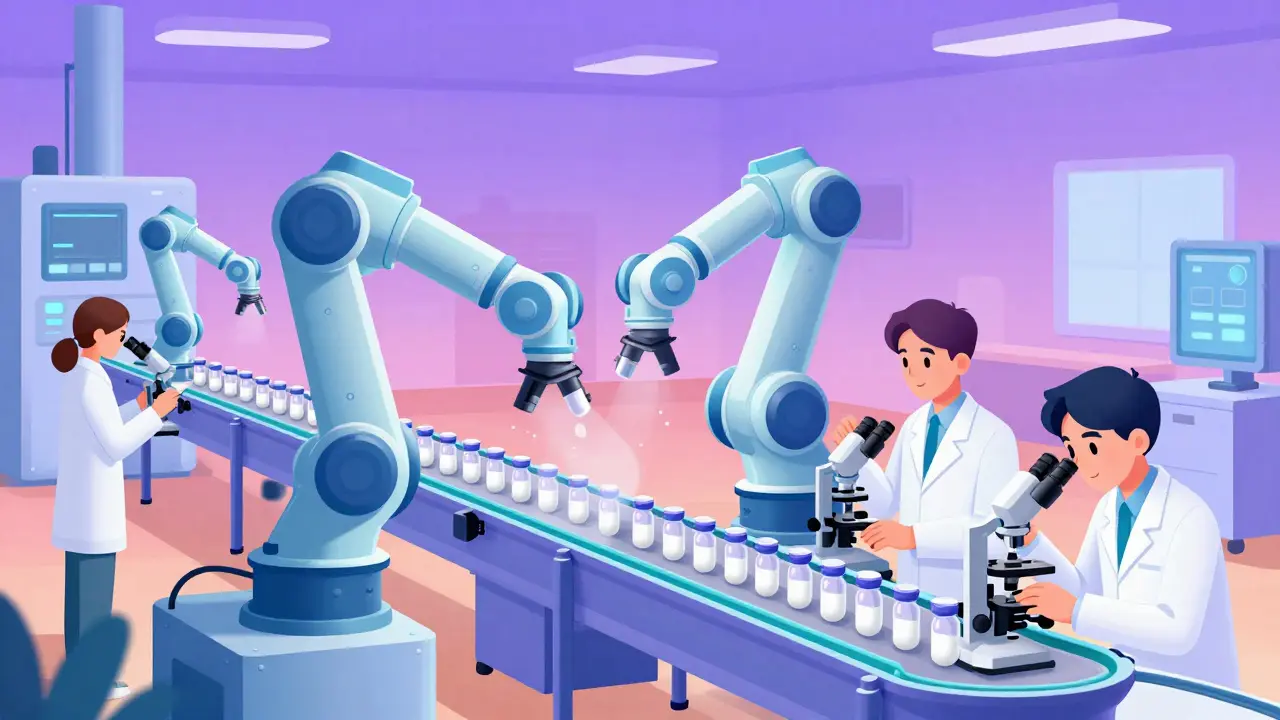
It isn't just one type of pill. The production capacity is staggering. There are more than 10,000 drug manufacturing facilities operating across the region. These plants cover almost every major area of medicine. You have neuro-psychiatry, cardiology, diabetes care, and even complex cancer therapies. While many people think of simple pills, the industry has moved toward sophisticated dosage forms. Think extended-release tablets that last all day or transdermal patches that bypass the stomach.
Generic Medicines Medications that are bioequivalent to a brand-name drug, containing the same active ingredients but sold at a lower cost once the patent expires. Major players invest heavily here. Companies like Sun Pharma spend between 6% and 8% of their revenues on research and development annually. This investment drives innovation even in generic spaces. Recently, the focus has shifted toward biosimilars. These are biological versions of expired patent medicines, often used for autoimmune diseases and cancer. As of 2024, biosimilars represent about 8% of export value, a number that was only 3% four years prior. This shift signals a maturation of the industry from volume-based sales to high-value products.
Export Reach and Market Dynamics
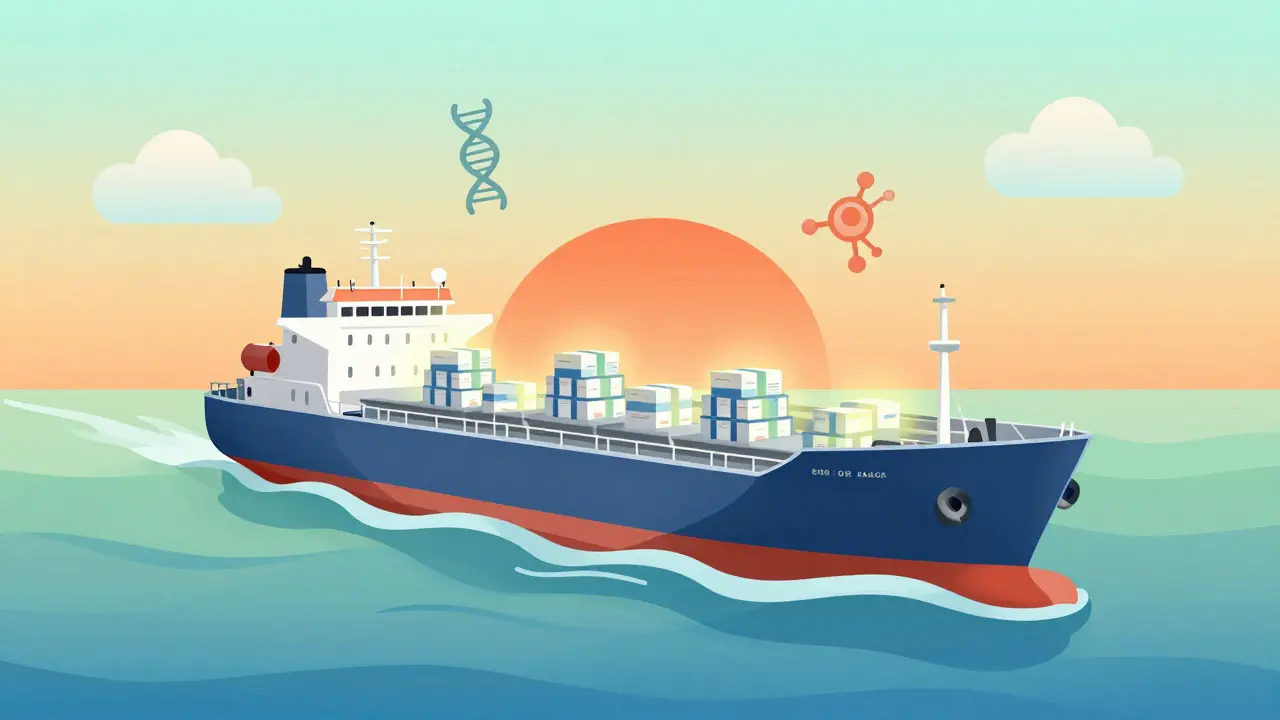
Where does all this inventory go? The reach is truly global. India serves over 150 countries. If you live in the United States, you are likely taking medicine made here. About 40% of the US generic drug demand is fulfilled by Indian manufacturers. In the United Kingdom, that number is roughly 33%. Even in developed economies with strict safety standards, these medicines pass rigorous checks. The industry maintains 650 plants compliant with US-FDA standards. This is the largest concentration of such facilities outside of the United States itself.
| Feature | India | China | Western Europe |
|---|---|---|---|
| Primary Focus | High-volume Generics | API Production | Specialized/Niche |
| FDA Compliant Plants | 650+ | 153 | Varies by Country |
| Cost Advantage | High (30-80%) | Moderate | Low |
| Regulatory Risk | Low-Medium | High (Data Integrity) | Low |
Look at the table above. You can see why the volume is high but value remains modest. India accounts for 20% of global pharmaceutical exports by volume, yet holds only about 10% of the US generics market by value. This reflects the business model: selling millions of units at lower price points rather than few units at high prices. While China produces cheaper raw materials, India holds the edge in finished dosage form quality and regulatory trust. European giants like Teva command higher prices but focus more on specialized therapeutic areas where competition is lower.
The Raw Material Challenge
There is a catch to this dominance, though. To build a house, you need bricks. To build medicines, you need Active Pharmaceutical Ingredients, or APIs. Here lies the vulnerability. Currently, India depends on China for approximately 70% of its API needs. This creates a bottleneck. If trade relations sour or supply chains break, the factories in Hyderabad or Mumbai stop working. You cannot ship a finished capsule if you don't have the powder inside.
Active Pharmaceutical Ingredients The biologically active substances responsible for the physiological effects in a drug product, also known as APIs. The government knows this risk well. That is why initiatives like the Production Linked Incentive (PLI) scheme were launched. With funding totaling ₹3,000 crore, the goal is to boost domestic API production. By 2026, targets aim for 53% self-sufficiency. Until then, the reliance remains a point of discussion in boardrooms and policy meetings. This dependency impacts pricing and availability stability globally, especially during geopolitical tensions.
Quality Assurance and Safety Standards
People worry about safety. Are these meds safe? For the most part, yes. The compliance rate for FDA inspections has improved dramatically over the last decade. In 2015, compliance was around 60%. By 2022, former FDA Commissioner Margaret Hamburg noted that compliance rates matched global averages at 85-90%. This means the vast majority of inspections pass without issue. However, issues still happen. There have been reports of inconsistent dissolution rates in specific batches or shipping delays. Trustpilot reviews for exporters sometimes flag packaging inconsistencies. But compared to the overall volume, these incidents represent a small fraction of total exports.
Consumer satisfaction varies by region. In the US, patient satisfaction hovers around 87%, driven largely by affordability. In the UK, the National Health Service prescribes these generics regularly, with patients rating them 4.2 out of 5 stars. In Africa, organizations like Doctors Without Borders report efficacy rates of 95% for Indian-sourced antimalarials. The primary complaint isn't usually lack of effectiveness; it's often taste differences or minor delays. When you consider that these drugs reduce treatment costs by 65% in developing nations, the trade-off often favors the generics.
Future Trajectories and Strategic Shifts
So, what happens next? The industry isn't standing still. A major initiative called Pharma Vision 2047 has been set in motion. The target is ambitious: $190 billion in exports by 2047. To achieve this, the focus is shifting from being a low-cost vendor to a value-driven leader. Companies are investing hundreds of millions in biologics development. Biocon and Dr. Reddy's Laboratories are leading this charge. They aim to manufacture innovative therapies rather than just copies.
Geopolitics also play a role. The US removed Generalized System of Preferences benefits for some Indian goods in 2019, which increased tariffs on exports. This adds pressure to improve quality to justify costs. Analysts suggest that achieving API self-sufficiency is critical. Without it, supply chain shocks could disrupt the "Pharmacy of the World" status. The path forward involves balancing cost leadership with higher regulatory compliance standards, aiming for 95%+ approval rates in international audits.
Are Indian generic drugs safe to use?
Yes, generally. Indian manufacturers maintain over 650 FDA-compliant plants. While isolated quality issues occur, inspection compliance rates now match global averages at 85-90%, ensuring safety standards align with international expectations.
How much cheaper are Indian generics compared to branded drugs?
They are typically 30% to 80% cheaper. This price difference makes essential medicines accessible to billions in both developed and developing nations, significantly reducing out-of-pocket healthcare expenses.
Which countries import the most from India?
The United States is the largest buyer, receiving 40% of its generic demand from India. Other major markets include the United Kingdom (33%), Sub-Saharan Africa (50% of requirements), and the rest of the Commonwealth.
Does India produce its own raw materials?
Currently, India relies on China for about 70% of its Active Pharmaceutical Ingredients (APIs). Government schemes like the PLI are trying to increase this self-sufficiency to 53% by 2026 to reduce supply risks.
What is the projected growth of the industry?
Projections indicate the industry value could reach $130 billion by 2030. Long-term goals under Pharma Vision 2047 target $190 billion in annual exports through a shift toward high-value products and biosimilars.





HARSH GUSANI
April 1, 2026 AT 23:48