

If you're taking a blood thinner like warfarin, aspirin, or clopidogrel, and you're thinking about adding Ginkgo biloba for memory or circulation, stop. Not because it's definitely dangerous-but because you don't know enough yet.
What is Ginkgo Biloba, Really?
Ginkgo biloba comes from the leaves of the Ginkgo tree, one of the oldest living species on Earth-dating back over 270 million years. It’s been used in traditional Chinese medicine for centuries, but modern supplements are usually a standardized extract called EGb 761. This version contains 24% flavonol glycosides and 6% terpene lactones, which are the compounds believed to affect blood flow and brain function.About 12 million Americans take Ginkgo supplements each year. It’s marketed for memory, focus, and better circulation. But here’s the catch: it’s not a drug. It’s a supplement. That means it’s not regulated like prescription medicine. Two bottles labeled "Ginkgo biloba" can have wildly different amounts of active ingredients-or even contaminants.
How Ginkgo Might Interact With Blood Thinners
Blood thinners work in two main ways: some stop your blood from clotting (anticoagulants like warfarin), and others stop platelets from sticking together (antiplatelets like aspirin or clopidogrel). Ginkgo doesn’t work exactly like either, but it seems to nudge both systems.Studies suggest Ginkgo may reduce platelet aggregation-meaning it makes it harder for blood cells to clump and form clots. It might also interfere with enzymes in your liver (like CYP2C9) that break down warfarin. If your body can’t clear warfarin as quickly, the drug builds up, and your risk of bleeding goes up.
But here’s where it gets messy. Controlled studies using high-quality EGb 761 extract show little to no increase in bleeding risk when taken with aspirin or warfarin. One 2008 review of 16 clinical trials found no significant effect on coagulation. Yet, case reports tell a different story. There are documented cases of brain bleeds, nosebleeds, and internal bleeding in people who took Ginkgo along with blood thinners.
The difference? The case reports often involve non-standardized Ginkgo products-cheap supplements with unknown strength, or ones mixed with other herbs. The clinical trials used pure, tested extracts. So the real danger might not be Ginkgo itself, but the fact that what’s in your bottle could be anything.
Which Blood Thinners Are Most Concerning?
Not all blood thinners carry the same risk when mixed with Ginkgo. Here’s what the data says:- Warfarin (Coumadin, Jantoven) - This is the biggest red flag. Even though studies don’t always show a clear interaction, the potential for increased INR (a blood clotting measure) is real enough that GoodRx and the Mayo Clinic call it a "high-risk" combination. The FDA has received 18 reports of possible bleeding linked to Ginkgo and warfarin between 2008 and 2020.
- Aspirin - Mixed results. Some studies show no interaction. Others show a slight increase in bleeding time. Most experts say proceed with caution.
- Clopidogrel (Plavix) - This antiplatelet drug has been linked to bleeding events when taken with Ginkgo. One 2020 study found 2.6% of clopidogrel prescriptions also included Ginkgo, with several resulting in bleeding.
- DOACs (Apixaban, Rivaroxaban, Dabigatran) - Less data exists, but the risk is assumed to be similar. These drugs are newer, and Ginkgo’s effect on their metabolism isn’t fully mapped. Most pharmacists advise against combining them.
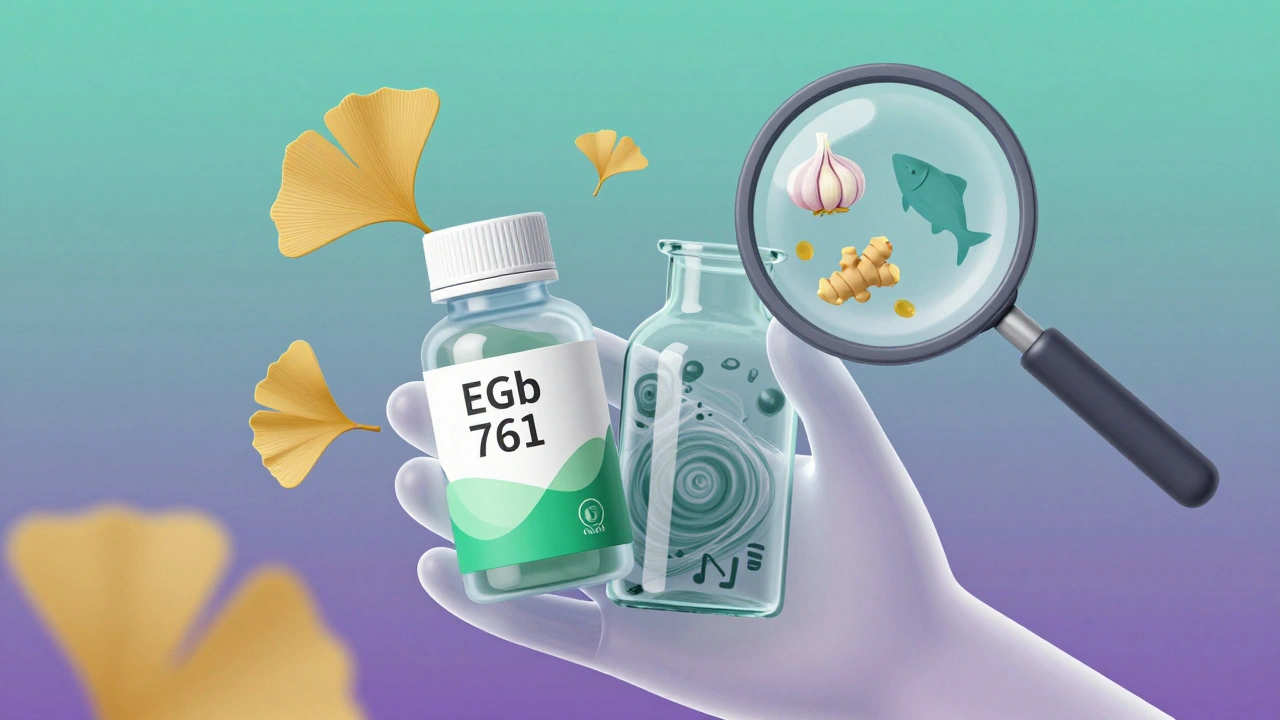
And it’s not just prescription drugs. Ginkgo can also interact with other supplements like garlic, ginger, fish oil, and danshen-all of which can thin your blood too. Take them together? You’re stacking the deck.
What the Experts Actually Say
There’s no consensus. That’s the problem.The Mayo Clinic, Cleveland Clinic, and GoodRx all warn against combining Ginkgo with blood thinners. They say: avoid it. Period.
But the American Society of Health-System Pharmacists and the American College of Chest Physicians say the evidence doesn’t support a strong clinical interaction. They call the risk "theoretical" and say routine discontinuation isn’t necessary.
So why the contradiction? Because the science isn’t settled. Clinical trials are clean. Real life isn’t. People take different doses. Different brands. They might be on multiple supplements. They might have liver issues. Or they’re older, which makes bleeding more dangerous.
Dr. Michael Murray, a respected natural medicine expert, says stop Ginkgo at least 36 hours before surgery. Dr. Tieraona Low Dog, a leading integrative medicine physician, recommends stopping it two weeks before any procedure. The American Society of Anesthesiologists agrees with the two-week rule.
Bottom line: If you’re scheduled for surgery, dental work, or any procedure where bleeding is a concern, don’t wait for your doctor to ask. Stop Ginkgo yourself-at least two weeks out.
What Should You Do?
Here’s what works in real life:- Don’t start Ginkgo without telling your doctor. Even if you think it’s "just a supplement," it’s not harmless. Bring the bottle with you. Let them see the label.
- If you’re already taking both, don’t quit cold turkey. Sudden changes can be risky. Talk to your pharmacist or prescriber about how to adjust safely.
- Check your supplements. Many Ginkgo products don’t say how much active ingredient they contain. Look for "EGb 761" on the label-that’s the tested, standardized version. Avoid anything that doesn’t list it.
- Watch for signs of bleeding. Unusual bruising, nosebleeds that won’t stop, blood in urine or stool, headaches that feel different, or dizziness could mean your blood is too thin.
- Use a medication tracker. Apps or paper lists that include every pill, capsule, and herb you take help your doctor spot risks. Most people forget about supplements.
Pharmacists are your best allies here. A 2022 survey found that 78% of pharmacists routinely warn patients about Ginkgo-blood thinner interactions. If your pharmacist hasn’t brought it up, ask them. Don’t wait.

What About Surgery or Dental Work?
This is where things get urgent.Even if your doctor says Ginkgo is "probably fine," most hospitals and surgical centers treat it like a risk. Epic and Cerner-two major electronic health record systems-now flag Ginkgo when paired with anticoagulants. Some alert only for warfarin. Others flag all blood thinners.
That’s because bleeding during surgery can be deadly. A brain bleed, a spinal hematoma, or uncontrolled bleeding after a tooth extraction isn’t something you want to gamble with.
Plan ahead. If you’re having surgery, stop Ginkgo at least two weeks before. If it’s a minor procedure like a root canal or wisdom tooth removal, stop it at least 7-10 days out. And tell your dentist or surgeon. Don’t assume they’ll ask.
Is There a Safe Way to Use Ginkgo?
Maybe. But only under strict conditions:- You’re not on any blood thinner.
- You’re using a verified EGb 761 product.
- You’re not taking other blood-thinning herbs or supplements.
- You’re not planning any surgery or invasive procedure.
- You’ve told your doctor and they’ve approved it.
If even one of those boxes isn’t checked, the risk isn’t worth it. There are safer ways to support brain health-exercise, sleep, omega-3s, and controlling blood pressure. You don’t need Ginkgo to do that.
Final Thought: It’s Not About Fear. It’s About Control.
You’re not being paranoid. You’re being smart. Supplements aren’t regulated like drugs. Labels lie. Studies conflict. But your body doesn’t.If you’re on a blood thinner, your life depends on your blood clotting at the right level. Ginkgo might nudge that balance. And even a small nudge can lead to a big problem.
So don’t guess. Don’t assume. Don’t rely on a Google search. Talk to your doctor. Show them the bottle. Ask: "Is this safe with what I’m taking?" And if they’re unsure? Play it safe. Stop it.
Can I take Ginkgo biloba if I’m on aspirin?
It’s not recommended. While some studies show no major interaction, others suggest Ginkgo may increase bleeding risk when combined with aspirin. Since both affect platelets, the combined effect could lead to bruising, nosebleeds, or worse. If you’re on aspirin for heart protection, don’t add Ginkgo without talking to your doctor first.
Does Ginkgo biloba thin your blood like warfarin?
No, it doesn’t work the same way. Warfarin blocks vitamin K to slow clotting. Ginkgo affects platelet function and may interfere with how your body processes warfarin. So while it doesn’t thin blood directly, it can make warfarin more powerful-and that’s dangerous. Think of it as a silent amplifier, not a direct thinner.
How long before surgery should I stop Ginkgo biloba?
Most experts recommend stopping Ginkgo at least two weeks before any surgery or invasive procedure. This gives your body time to clear the active compounds and reduces the risk of excessive bleeding during or after the procedure. Even minor procedures like dental extractions warrant stopping it 7-10 days out.
Are all Ginkgo biloba supplements the same?
No. Only standardized extracts like EGb 761 have been tested in clinical trials. Many store brands contain inconsistent or unknown levels of active ingredients. Some even include fillers or contaminants. Always look for "EGb 761" on the label. If it’s not there, you can’t trust the product.
Can I take Ginkgo biloba if I have a history of bleeding?
No. If you’ve had a brain bleed, GI bleed, or any unexplained bleeding episode, Ginkgo biloba is not safe for you. Even if you’re not on blood thinners now, your body’s clotting system may already be compromised. Adding Ginkgo increases the risk of another bleed. Talk to your doctor about safer alternatives for memory or circulation.
Do pharmacists know about Ginkgo-blood thinner interactions?
Yes. A 2022 survey of 500 pharmacists found that 78% routinely counsel patients about this interaction. Pharmacists are trained to spot these risks and are often the first to catch them. Always ask your pharmacist when starting a new supplement-even if your doctor didn’t mention it.







Conor Forde
December 2, 2025 AT 19:28