
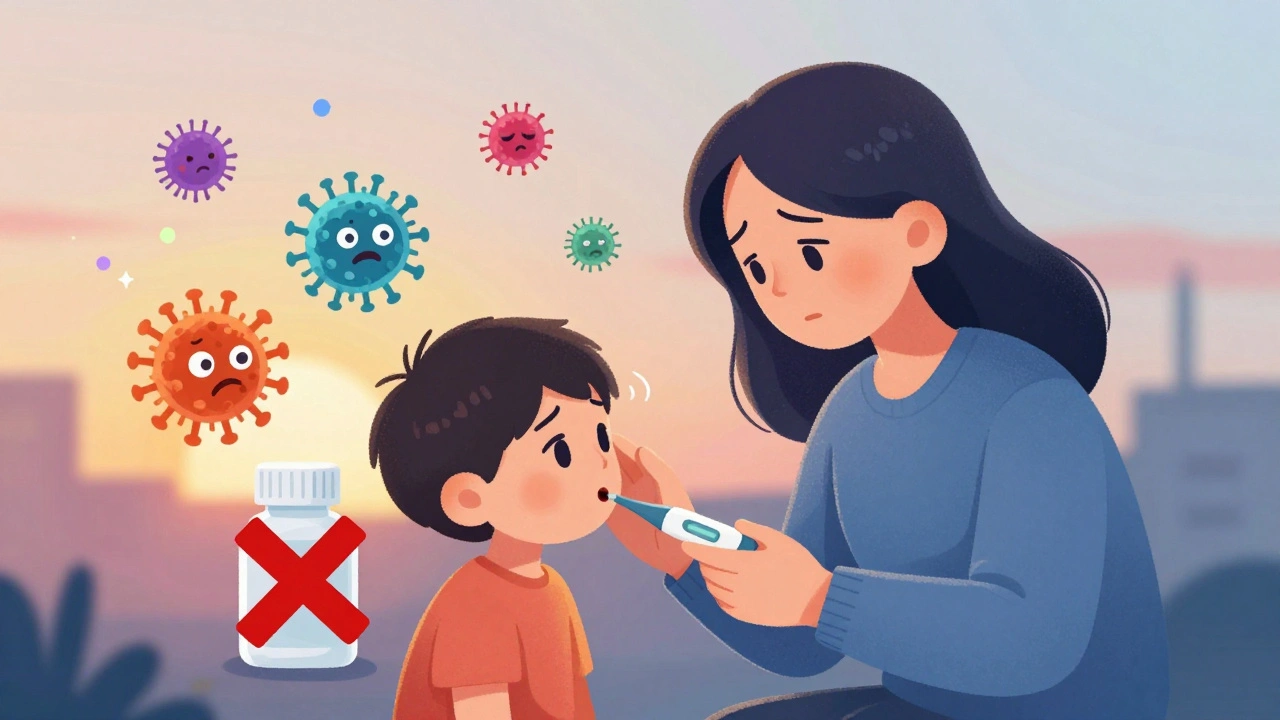
Every parent has been there: your child is feverish, coughing, or has a sore throat, and you’re wondering - should we give them antibiotics? It’s a question that comes up again and again, especially when kids are sick often and you just want them to feel better fast. But here’s the hard truth: antibiotics don’t work for most childhood illnesses. And giving them when they’re not needed can do more harm than good.
Antibiotics Only Work on Bacteria - Not Viruses
Antibiotics are powerful drugs designed to kill or stop the growth of bacteria. They do nothing to viruses. And most childhood illnesses? They’re viral.Think about it: 99% of cases with vomiting and diarrhea are caused by viruses like rotavirus or norovirus. The same goes for colds, coughs, and runny noses. Even when mucus turns yellow or green, that doesn’t mean bacteria are involved. That’s just how your child’s immune system responds - it’s normal in viral infections.
Only about 20% of sore throats are bacterial - strep throat - and even then, you need a rapid test or throat culture to confirm. Same with ear infections: only 10% of pneumonia cases in kids are bacterial. The rest? Viral. And antibiotics won’t touch them.
When you give antibiotics for a virus, you’re not helping your child. You’re exposing them to unnecessary risks and fueling a bigger problem: antibiotic resistance.
Why Antibiotic Resistance Is a Silent Crisis
Antibiotic resistance isn’t something that happens far away in hospitals. It’s happening right now in your child’s body - and in the community around them.Every time antibiotics are used when they’re not needed, bacteria learn how to survive them. Over time, those bacteria become resistant. That means the drugs that once worked easily won’t work anymore.
Here’s what that looks like in real life:
- 47% of Streptococcus pneumoniae - the bacteria behind ear infections and pneumonia - are now resistant to penicillin. That’s up from 35% just ten years ago.
- Community-acquired MRSA (a dangerous antibiotic-resistant staph infection) in kids has jumped 150% since 2010.
- In the U.S., antibiotic-resistant infections cause over 35,000 deaths every year - many of them preventable.
And it’s not just about future infections. Right now, 30% of antibiotic prescriptions for children are unnecessary. That’s nearly one in three kids getting a drug they don’t need, with no benefit - and plenty of risk.
Common Side Effects in Kids - And What to Watch For
Even when antibiotics are used correctly, side effects are common. About 1 in 10 children will have some kind of reaction.The most frequent problems are digestive:
- Diarrhea: affects 5-25% of kids, depending on the antibiotic
- Nausea or vomiting: happens in up to 18% of cases
- Yeast infections: especially in girls, leading to diaper rash or oral thrush
These aren’t always dangerous - but they’re uncomfortable. And one of the scariest complications? Clostridium difficile (C. diff) infection. This severe diarrhea can happen when antibiotics wipe out good gut bacteria, letting harmful ones take over. It accounts for 15-25% of antibiotic-related diarrhea in children.
Some kids get a rash. But here’s the key difference: most rashes aren’t allergies.
Up to 90% of rashes from antibiotics are just side effects - mild, flat, pink spots that don’t itch or spread. They’re not dangerous. But true allergic reactions? That’s different.
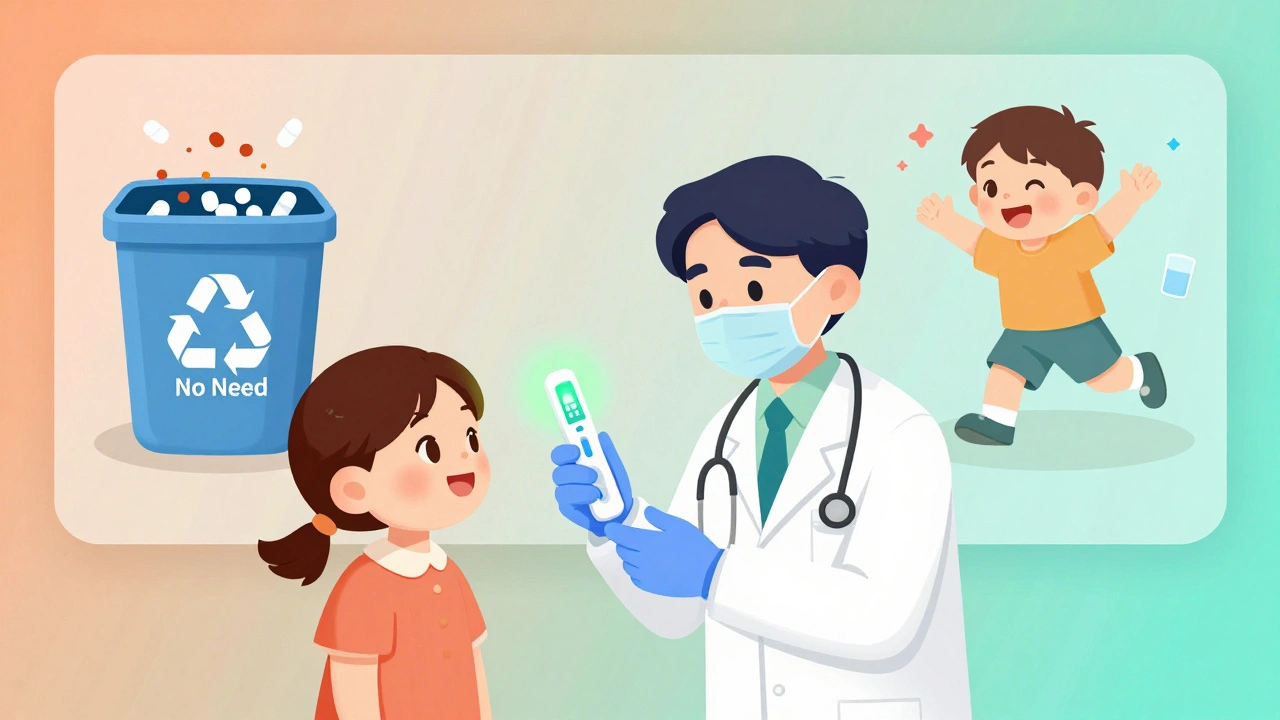
True Allergies vs. Side Effects: What’s the Difference?
Parents often panic if their child gets a rash after antibiotics. But not every rash means allergy.A true antibiotic allergy involves the immune system and can be life-threatening. Signs include:
- Hives (raised, itchy welts)
- Swelling of the lips, tongue, or face
- Wheezing or trouble breathing
- Anaphylaxis - a sudden drop in blood pressure, dizziness, loss of consciousness
If your child has any of these, seek emergency care immediately. These reactions require lifelong avoidance of that antibiotic class.
But here’s the surprising part: most kids labeled “allergic” to penicillin aren’t actually allergic. Studies show that 95% of children with a family history of penicillin allergy - or who had a mild rash as toddlers - can safely take it later. Many are mislabeled because parents assume any rash equals allergy.
That’s dangerous. If your child is wrongly labeled allergic, doctors may use stronger, broader-spectrum antibiotics - which are more likely to cause side effects and drive resistance.
Ask your pediatrician: “Could this be a side effect, not an allergy?” If there’s uncertainty, an allergist can do a simple skin test to confirm.
When Are Antibiotics Actually Needed?
So when should you say yes to antibiotics? Only when there’s clear evidence of a bacterial infection.Here’s what medical guidelines say:
- Strep throat: Only if a rapid test or culture is positive. Symptoms alone (sore throat, fever) aren’t enough - many viruses cause the same thing.
- Ear infections (otitis media): Antibiotics are recommended only if the child is under 2 years old with a confirmed diagnosis, or if they have severe pain, fever over 39°C, or fluid draining from the ear. For older kids with mild symptoms, doctors often recommend waiting 48-72 hours to see if they improve on their own.
- Sinus infections: Only if symptoms last more than 10 days without improvement, or if they get worse after initial improvement.
- Pneumonia: Only if a doctor suspects bacterial pneumonia based on symptoms, exam, and sometimes a chest X-ray.
For most coughs, colds, bronchiolitis, or viral gastroenteritis - antibiotics are not just unnecessary. They’re harmful.
How to Give Antibiotics Correctly
If your child is prescribed antibiotics, getting the dose right matters just as much as knowing when to give them.Here’s what you need to know:
- Finish the full course. Even if your child feels better after two days, keep giving the medicine. Stopping early lets the toughest bacteria survive - and they’ll come back stronger.
- Follow the schedule. Amoxicillin is usually given twice a day, 12 hours apart. Azithromycin is often once a day for 3-5 days. Don’t skip doses.
- Watch for vomiting. If your child vomits within 30 minutes of taking the dose, give the full dose again. If it’s 30-60 minutes later, give half the dose. After an hour, don’t repeat it.
- Watch for improvement. Most bacterial infections start to improve within 48-72 hours. If your child isn’t better by then, call the doctor. The antibiotic might not be working.
Many kids hate the taste of liquid antibiotics. That’s normal. Try mixing a small amount with chocolate syrup, apple sauce, or yogurt - just not a full meal, which can interfere with absorption. Some pharmacies offer flavoring services to make it easier.
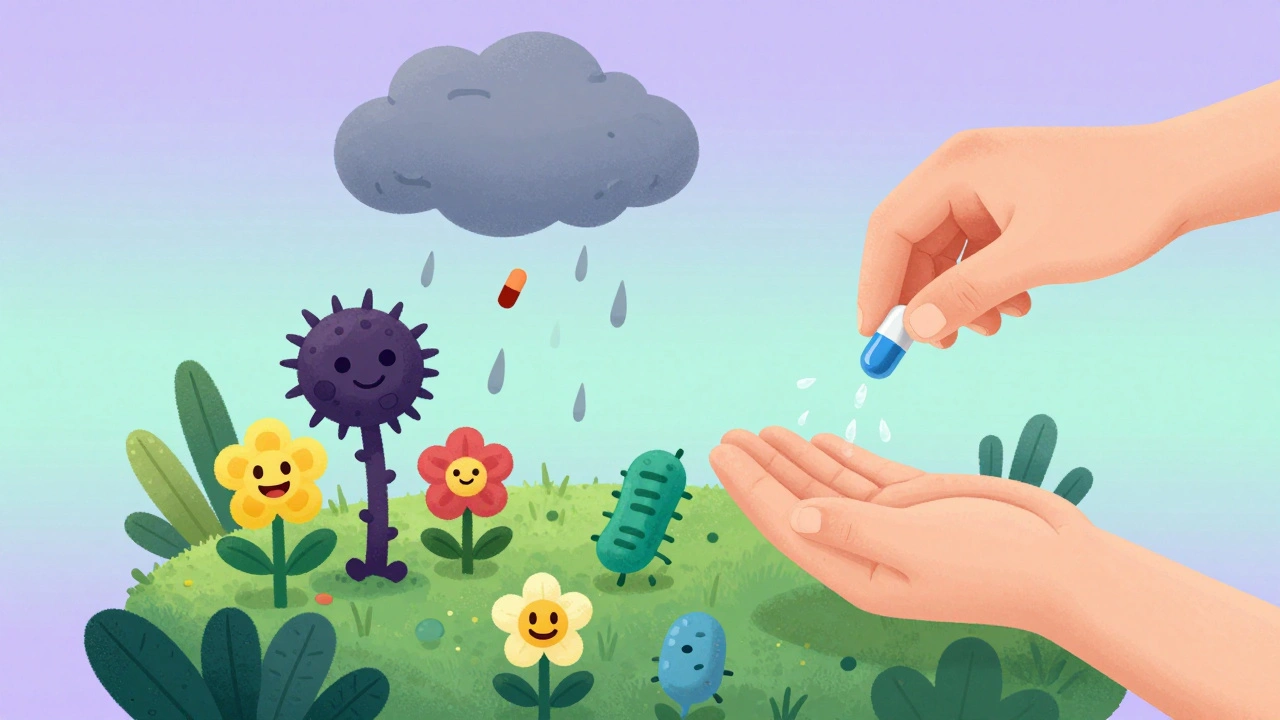
What’s Changing in Pediatric Antibiotic Use
The way doctors treat kids is changing - and it’s for the better.Just last year, the FDA approved a new rapid test that can tell if an infection is bacterial or viral in just six hours. That’s a huge leap from the old 2-3 day wait for lab results. In clinics using this test, antibiotic use dropped by 35%.
Another tool gaining traction? CRP blood tests. They measure inflammation and help doctors decide if an infection is likely bacterial. One 2023 study showed using CRP cut unnecessary antibiotic prescriptions by 85%.
And now, doctors are more willing to wait. For a child 6-23 months with a mild ear infection on one side, guidelines now say: watch for 72 hours. If the fever goes down and the child is eating and playing, antibiotics might not be needed.
Research from the PediCAP study showed that using a blood marker called procalcitonin to guide treatment reduced unnecessary antibiotics by 62% - without increasing complications.
What Parents Can Do Right Now
You don’t need to be a doctor to help protect your child - and the community - from antibiotic resistance.Here’s what works:
- Don’t pressure your pediatrician for antibiotics. If they say “no,” ask why. Most doctors are happy to explain.
- Don’t use leftover antibiotics from a previous illness. Different infections need different drugs.
- Keep your child up to date on vaccines. The pneumococcal and flu shots prevent many infections that used to require antibiotics.
- Teach handwashing. It’s the simplest way to stop germs from spreading.
- Understand that fever lasts days. Most viral illnesses take 7-10 days to run their course. Antibiotics won’t speed that up.
As one pediatric infectious disease specialist says: “The most powerful antibiotic we have for most childhood illnesses is time - and supportive care.”
By using antibiotics only when they’re truly needed, you’re not just helping your child. You’re helping protect the next generation from superbugs that could make even simple infections deadly.
Can I give my child leftover antibiotics from a previous illness?
No. Antibiotics are prescribed for specific infections, bacteria, and dosages. Using leftover medicine can be ineffective, dangerous, or lead to resistance. Never reuse antibiotics without a new diagnosis and prescription.
My child had a rash after amoxicillin. Does that mean they’re allergic?
Not necessarily. Up to 90% of rashes from amoxicillin are side effects, not allergies. True allergies involve hives, swelling, or breathing trouble. If you’re unsure, ask your doctor about an allergy test - many kids outgrow or were mislabeled as allergic.
How long should my child take antibiotics?
Always complete the full course as prescribed, even if symptoms improve. For ear infections, it’s usually 10 days with amoxicillin. For some infections like whooping cough, it’s only 3-5 days with azithromycin. Never stop early unless your doctor says so.
Is it safe to mix antibiotics with food or juice?
Yes, in small amounts. Mixing with a teaspoon of chocolate syrup, apple sauce, or yogurt can help with taste. Avoid large meals or dairy (like milk) with certain antibiotics, as they can reduce absorption. Always check with your pharmacist.
What should I do if my child vomits after taking antibiotics?
If vomiting happens within 30 minutes, give the full dose again. If it’s between 30 and 60 minutes, give half the dose. After an hour, don’t repeat it - wait for the next scheduled dose. Always check with your doctor or pharmacist if you’re unsure.
Can antibiotics cause long-term gut problems?
Yes, in rare cases. Antibiotics can disrupt healthy gut bacteria, leading to diarrhea or even C. diff infection. This is more likely with broad-spectrum antibiotics and longer courses. Probiotics may help reduce risk, but talk to your doctor before using them.
Next Steps: What to Do If Your Child Is Prescribed Antibiotics
If your child is given antibiotics:- Write down the name, dose, frequency, and duration.
- Ask: “Is this definitely bacterial? Could we wait and watch?”
- Set phone reminders for doses.
- Watch for signs of allergic reaction: hives, swelling, trouble breathing.
- Call the doctor if no improvement after 48-72 hours.
- Dispose of leftover medicine properly - don’t flush or save it.
Antibiotics are lifesavers - when used right. But they’re not magic pills. The best thing you can do for your child’s health isn’t always giving medicine. Sometimes, it’s waiting. Watching. And trusting that time, rest, and supportive care are powerful - and safe - treatments too.



Ada Maklagina
December 4, 2025 AT 22:53