
Tyramine Content Calculator
How This Works
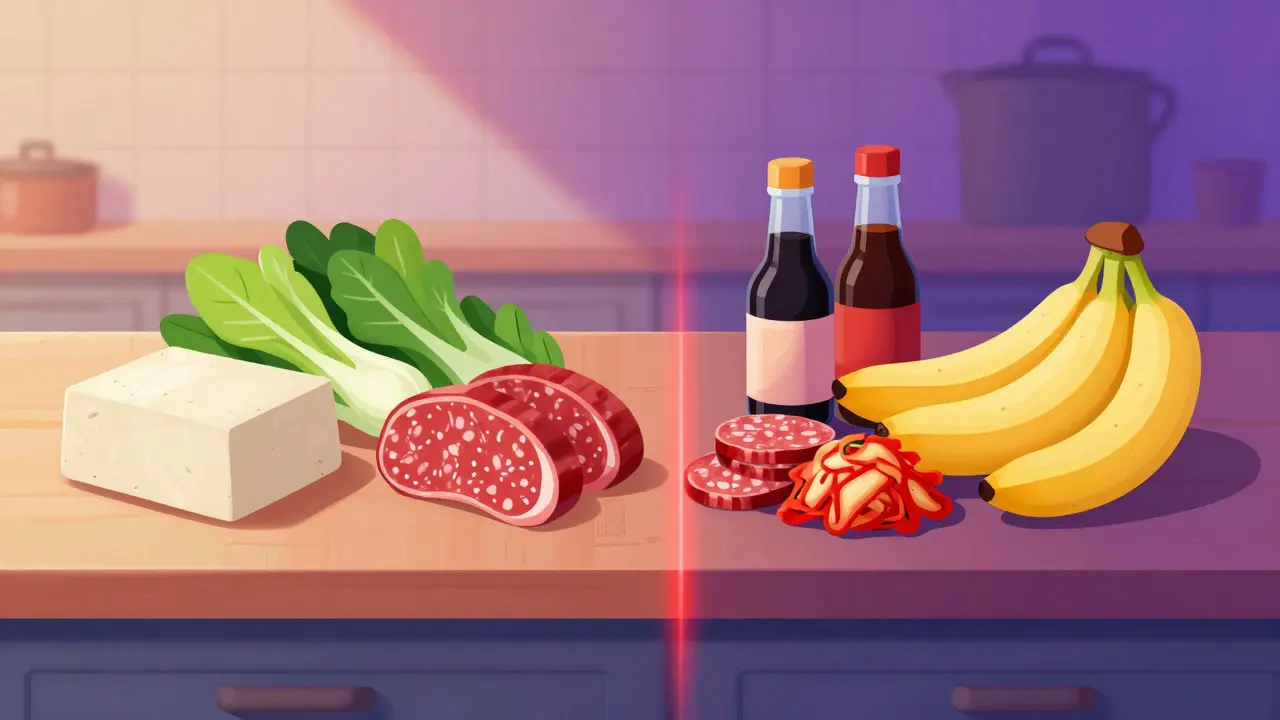
This calculator helps you estimate tyramine intake from common foods while on MAOIs. Tyramine levels vary by food type and preparation. Enter your portions to see total tyramine content and whether it's within safe limits.
Total Tyramine: 0 mg
Enter your portions to see your tyramine risk level.
When you're on an MAOI for depression, cheese isn't the only thing you need to avoid. In fact, it's just the start. Many people think the danger ends with cheddar or blue cheese, but the real risks come from everyday foods you might not even consider dangerous-like soy sauce, pickled vegetables, cured meats, and even certain beers. These aren't rumors or old wives' tales. They're backed by clinical data, emergency room reports, and decades of patient experiences. If you're taking an MAOI like phenelzine or tranylcypromine, ignoring these hidden tyramine sources could lead to a hypertensive crisis-blood pressure spiking above 180 mmHg, with symptoms like pounding headache, chest pain, blurred vision, and nausea. This isn't a rare side effect. It's a well-documented, life-threatening interaction that happens more often than most doctors admit.
What Exactly Is Tyramine, and Why Does It Matter?
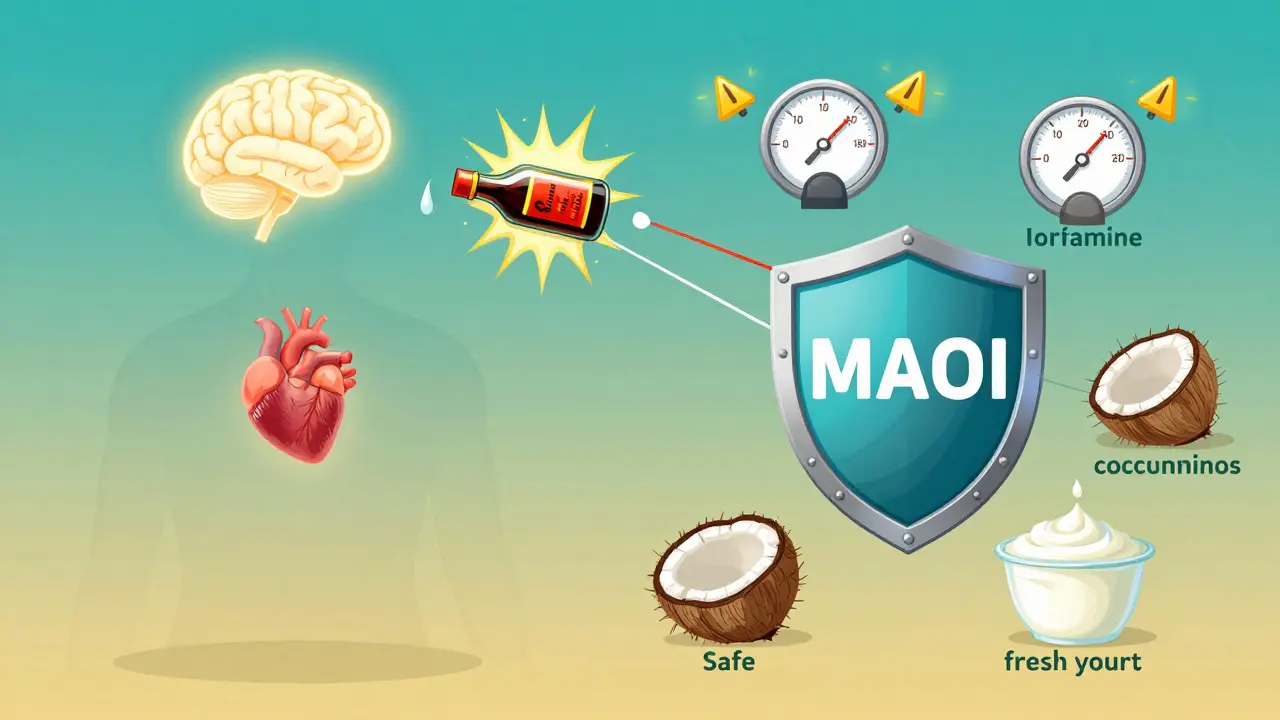
Tyramine is a naturally occurring compound formed when amino acids like tyrosine break down during fermentation, aging, or spoilage. Your body usually handles it fine thanks to an enzyme called monoamine oxidase (MAO). But when you're on an MAOI, that enzyme is blocked. Tyramine builds up in your bloodstream, forcing your body to release huge amounts of norepinephrine. That’s what causes the sudden, dangerous spike in blood pressure. The FDA and Mayo Clinic both warn that systolic pressure above 180 mmHg requires immediate medical attention. In extreme cases, it can trigger stroke, heart attack, or even death.
It’s not just about eating something bad. It’s about how the food was made and stored. A fresh tomato has almost no tyramine. But tomato paste? That’s concentrated, fermented, and aged-tyramine levels jump to 20-35 mg/kg. Same with tofu: fresh out of the package, it’s safe. Left in the fridge for three days? Tyramine can climb to 25 mg/kg. Refrigeration slows down the process, but it doesn’t stop it.
Hidden Tyramine Sources You Probably Didn’t Know About
Let’s be clear: cheese is just one piece of the puzzle. Here’s what else carries serious risk:
- Cured and smoked meats: Dry-aged salami (95-115 mg/kg), pepperoni (80-100 mg/kg), and smoked fish (75-90 mg/kg) are among the most dangerous. A single slice of salami can contain more tyramine than a whole wedge of cheddar.
- Fermented soy products: Miso paste (60-85 mg/kg), soy sauce (45-70 mg/kg), and tempeh (35-60 mg/kg) are common in Asian cuisine but rarely flagged in restaurant menus. One bowl of miso soup has triggered ER visits.
- Pickled and fermented vegetables: Sauerkraut (50-75 mg/kg), kimchi (40-65 mg/kg), and pickled beets (30-55 mg/kg) are staples in many diets. Even homemade versions can be risky if left to ferment too long.
- Fermented condiments: Worcestershire sauce (25-45 mg/kg), fish sauce (35-55 mg/kg), and Marmite (40-60 mg/kg) are sneaky. You might not even realize they’re in your soup, stir-fry, or marinade.
- Alcohol: Draft beer (15-30 mg/L) is riskier than bottled because it’s exposed to air longer. Red wine (20-40 mg/L), sherry (35-55 mg/L), and vermouth (50-75 mg/L) also contain enough tyramine to cause problems. Even a single glass can trigger a reaction in sensitive individuals.
And don’t forget overripe fruits. Bananas, avocados, and figs become dangerous when they’re brown-spotted or mushy. A 2022 survey found that 27.8% of MAOI users had a reaction after eating overripe fruit-often without realizing it was the cause.
Why Restaurant Meals Are a Minefield
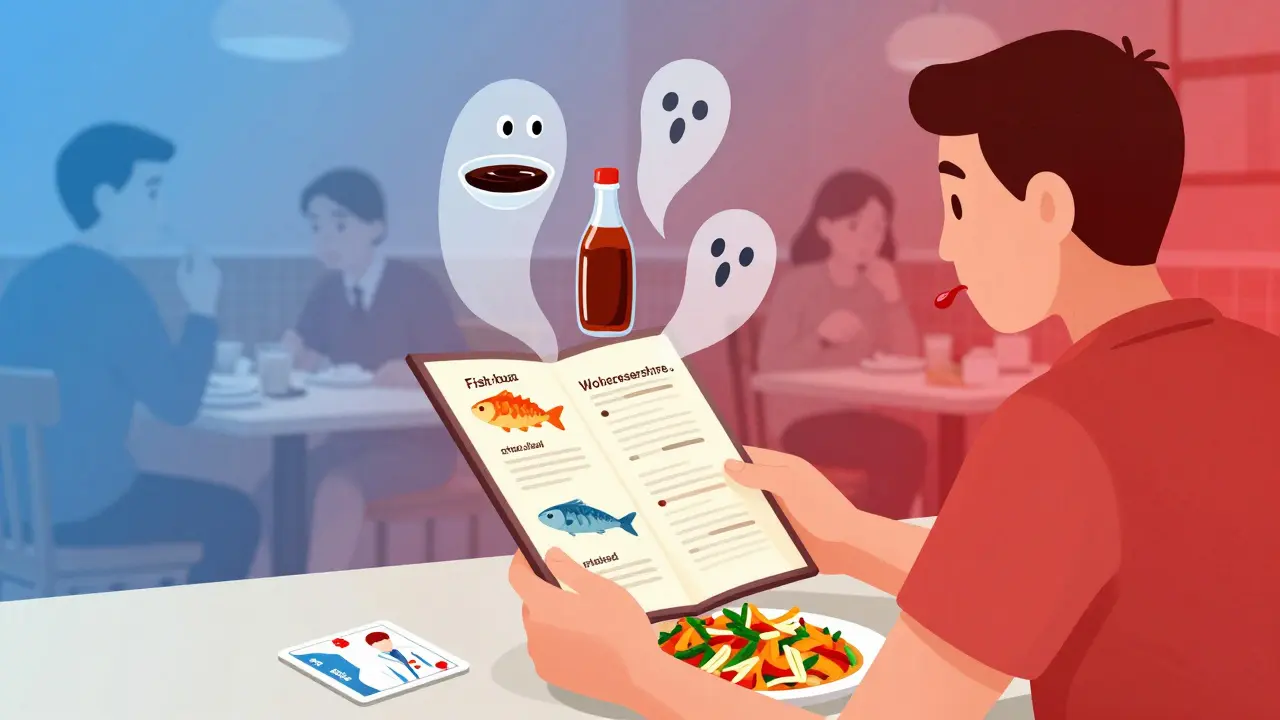
One of the biggest challenges isn’t what’s in your pantry-it’s what’s in your takeout. A 2023 investigation found that 7 out of 10 major chain restaurants couldn’t tell you whether their menu items contained soy sauce, fish sauce, or Worcestershire sauce-even when directly asked. These ingredients are used as flavor enhancers, not listed as allergens. You might order a stir-fry thinking it’s just vegetables and chicken, only to get a heavy dose of fermented soy and salted fish.
Patients on Reddit’s r/antidepressants community share horror stories: “I ate miso soup at a Japanese restaurant. Within 45 minutes, my blood pressure hit 210/115.” Another wrote, “I thought I was safe because I didn’t eat cheese. Then I had a sandwich with pepperoni and ended up in the ER.”
Even “healthy” options can be traps. A salad with pickled beets, a side of sauerkraut, or a dressing made with soy sauce and Worcestershire can push tyramine levels into the danger zone. Many patients report canceling social events because they don’t trust restaurant kitchens to get it right.
What About Soy Sauce? Can You Have Just a Little?
This is one of the most debated topics. Some doctors say any amount of soy sauce is unsafe. Others, like Dr. Brian Staiger, suggest that small portions-like one tablespoon-might be tolerable for some people. But here’s the problem: there’s no way to know if you’re one of those people until it’s too late.
Food labels don’t tell you the exact tyramine content. Two bottles of the same brand can vary wildly depending on batch, fermentation time, and storage. A 2022 study found tyramine levels in soy sauce ranged from 20 mg/kg to 90 mg/kg-same product, different bottles. That’s why experts like Dr. Sarah R. Lieber at Columbia University insist: “The cheese reaction is just the tip of the iceberg.”
If you’re considering testing small amounts, do it under medical supervision. Never assume you’re safe just because you’ve had it before. Sensitivity can change over time.
How to Stay Safe: Practical Steps
Managing this diet isn’t about perfection-it’s about awareness and preparation.
- Read labels carefully. Look for words like: fermented, aged, cured, smoked, pickled, marinated, or brewed. Avoid anything that’s been sitting on the shelf for months.
- Choose fresh over processed. Fresh meat, plain tofu, and raw vegetables are your safest bets. If it’s been sitting in the fridge for more than 48 hours, assume it’s risky.
- Use a food tracker. Apps like MyFitnessPal don’t track tyramine, but you can manually log high-risk foods and note any symptoms. Keep a journal.
- Carry an emergency card. The Psychiatric Times reports that 87% of ER doctors prefer patients to have a printed card that says: “I am on an MAOI. Do not give me stimulants or tyramine-rich foods. I may be having a hypertensive crisis.”
- Communicate clearly. When dining out, say: “I’m on a strict medication diet. Can you confirm this dish has no soy sauce, fish sauce, Worcestershire, or cured meats?” Ask to see the ingredients list.
It’s also helpful to connect with others. The MAOI Support Network on Facebook has over 12,000 members who share safe recipes, restaurant tips, and real-time updates on food recalls. Many users say this community saved their lives.
What About New Treatments?
There’s some hope on the horizon. In 2023, the FDA approved a new enzyme supplement called TyraZyme that reduces tyramine absorption by 58% in clinical trials. It’s not a free pass-doctors still advise caution. But it’s a step toward reducing dietary burden.
Another breakthrough is the selegiline patch (Emsam). Unlike older oral MAOIs, this skin patch allows small amounts of tyramine (up to 10g per day) at the lowest dose. That means you might be able to enjoy a small serving of soy sauce or a glass of wine without risk. But higher doses still require full dietary restrictions.
Researchers are also exploring genetic testing to identify people whose bodies naturally break down tyramine more efficiently. Early pilot studies at Massachusetts General Hospital suggest a subset of patients may tolerate moderate intake. But this is still experimental.
Why This Matters: The Bigger Picture
MAOIs are not first-line drugs for depression. They’re reserved for treatment-resistant cases-when SSRIs and other meds have failed. And they work. Studies show 65-70% effectiveness, compared to 45-50% for SSRIs. For many, they’re the only thing that brings relief.
But the dietary restrictions are brutal. A 2022 survey of 347 MAOI users found that 68.3% had accidentally eaten something risky in their first six months. Over 40% canceled social events because of food fears. One in five considered quitting treatment because of the diet.
That’s why education matters. The Mayo Clinic’s dietary guide scores 4.7/5 from patients. But many clinics still hand out outdated 2010 pamphlets. Primary care doctors often can’t name three non-cheese tyramine sources. That’s a gap that puts lives at risk.
There’s no perfect solution. But awareness, preparation, and community support make it manageable. You don’t have to give up life-you just have to learn how to navigate it differently.
Can I eat yogurt or kefir while on MAOIs?
Yes, plain, fresh yogurt and kefir are generally safe. They’re fermented, but they don’t contain high levels of tyramine because they’re made with different bacteria and aren’t aged. Avoid flavored or sweetened versions that may contain added fermented ingredients like soy or wine-based extracts.
How long do I need to avoid tyramine after stopping MAOIs?
You must avoid high-tyramine foods for at least 14 days after stopping MAOIs. The enzyme takes that long to fully recover. Even if you feel fine, eating aged cheese or salami too soon can still trigger a dangerous reaction. Never assume you’re safe just because you’ve stopped the pill.
Is it safe to eat fermented foods if they’re cooked?
No. Cooking doesn’t destroy tyramine. It’s a stable compound that survives heat. Whether it’s in soup, stir-fry, or baked into a casserole, the tyramine is still there. The risk comes from the food itself, not how it’s prepared.
Are there any safe alternatives to soy sauce?
Yes. Coconut aminos is a popular substitute-it’s made from coconut sap and has no tyramine. It tastes similar and works well in stir-fries and marinades. Tamari made without wheat or fermentation (check the label) can also be safe if labeled as “unfermented” or “fresh.” Always verify ingredients.
What should I do if I accidentally eat something high in tyramine?
Monitor your symptoms closely. If you develop a severe headache, chest pain, rapid heartbeat, blurred vision, or nausea, seek emergency care immediately. Don’t wait. Call 999 or go to the nearest ER. Bring your medication list and mention you’re on an MAOI. Time is critical.





Jeffrey Hu
January 10, 2026 AT 04:57