Oral Appliance Therapy: What It Is and How It Helps Sleep Apnea and Snoring
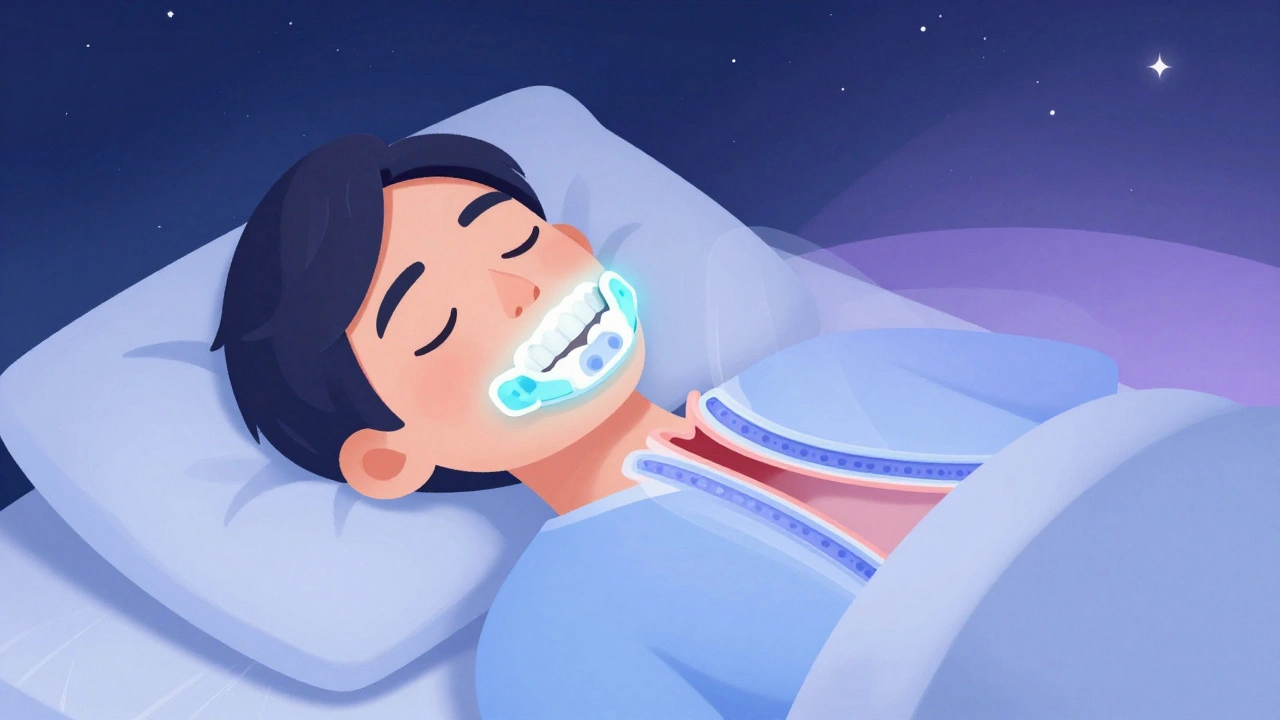
When you hear oral appliance therapy, a non-invasive treatment for sleep-disordered breathing that uses custom-fitted devices worn in the mouth during sleep. Also known as dental sleep medicine, it’s a practical alternative for people who can’t tolerate CPAP machines or prefer something simpler. Unlike surgery or machines that push air into your airway, oral appliances gently reposition your jaw to keep your throat open while you sleep—no tubes, no masks, no noise.
This therapy is most commonly used for obstructive sleep apnea, a condition where the throat muscles relax too much during sleep, blocking airflow, and for chronic snoring, a loud vibration caused by restricted airflow in the upper airway. The main device type is the mandibular advancement device, a custom mouthpiece that pulls the lower jaw forward to prevent airway collapse. These aren’t over-the-counter boil-and-bite gadgets—they’re made by dentists trained in sleep medicine, based on precise impressions of your teeth and jaw structure.
Who’s a good candidate? People with mild to moderate sleep apnea, those who snore loudly but don’t have severe breathing pauses, or anyone who tried CPAP and quit because it felt uncomfortable. Studies show oral appliances work just as well as CPAP for many patients, especially when compliance matters more than maximum pressure. They’re also portable, quiet, and easy to clean—perfect for travel or side sleepers.
But it’s not for everyone. If you have severe sleep apnea, weak jaw muscles, or too many missing teeth, this might not be the right fit. And it’s not a one-size-fits-all fix—some people need adjustments after the first few weeks. That’s why follow-ups with your dentist and a sleep study are key.
Below, you’ll find real-world insights on how these devices are prescribed, what side effects to watch for, how they compare to other treatments, and why some patients stick with them for years while others switch back to CPAP. You’ll also see how insurance coverage, dental expertise, and even the shape of your jaw can make or break your success. This isn’t theory—it’s what people actually experience when they choose oral appliance therapy over the alternatives.
 1 Dec
1 Dec
Oral Appliance Therapy for Snoring: How Mandibular Advancement Works and Who It Helps
Oral appliance therapy with mandibular advancement devices offers an effective, non-invasive solution for snoring and mild sleep apnea. Learn how they work, who benefits most, and how they compare to CPAP and other treatments.
Read More...