Audiometry Testing: Understanding Hearing Assessment and Decibel Levels
December 9 2025
ECG Monitoring: What It Is, Why It Matters, and What You Need to Know
When your doctor says you need an ECG monitoring, a non-invasive test that records the electrical signals in your heart to detect irregular rhythms and other cardiac issues. Also known as electrocardiogram, it's one of the most common tools doctors use to spot problems before they become emergencies. It doesn’t hurt. It doesn’t require needles. You just lie still while a machine picks up tiny electrical pulses from your heart—pulses that tell a story about how well it’s beating.
ECG monitoring isn’t just for people with chest pain. It’s used for anyone with symptoms like dizziness, palpitations, or shortness of breath—and even for people who feel fine but are on medications that can mess with heart rhythm. Drugs like certain antibiotics, antidepressants, or even over-the-counter cold medicines can trigger dangerous changes in your heartbeat. That’s why arrhythmia, an irregular, too-fast, or too-slow heart rhythm is one of the top reasons ECGs are ordered. It’s also why hospitals and clinics use continuous ECG monitoring after heart surgery, during stress tests, or when starting new heart meds.
Not all ECGs are the same. A quick 10-second test in the doctor’s office catches obvious problems. But if your heart skips beats only once in a while, you might need a cardiac monitoring, a device worn for days or weeks that records your heart’s activity during normal daily life. These portable monitors—like Holter or event monitors—catch what a quick ECG misses. They’re especially useful if you’ve had unexplained fainting or if your doctor suspects a rhythm issue tied to stress, sleep, or activity.
What you see on an ECG printout isn’t just lines and spikes. Each part means something. The P wave shows your heart’s upper chambers firing. The QRS complex tells you the lower chambers are contracting. The T wave reflects how your heart is resetting. If any of these look off, it could mean a blockage, an electrolyte imbalance, or even a silent heart attack. And while ECGs don’t show blocked arteries directly, they often hint at them through abnormal patterns that lead to further testing.
People often worry that an abnormal ECG means they’re in danger. But not all irregularities are serious. Some people naturally have a slightly off rhythm that’s harmless. That’s why results always need context—your age, symptoms, meds, and medical history. A 25-year-old athlete might have a slow heartbeat that’s perfectly normal. A 70-year-old with diabetes and high blood pressure? That same pattern could be a red flag.
What you’ll find in the posts below are real-world stories and clear explanations about how ECG monitoring fits into everyday health. You’ll learn how it connects to medications like blood thinners and antiarrhythmics, why it’s used before and after heart procedures, and how it helps catch problems that don’t show up in regular checkups. You’ll also see how ECG results are interpreted in different settings—from ER rooms to home monitoring devices—and what to do if your results come back abnormal. No fluff. No jargon. Just what you need to understand your heart’s rhythm and ask the right questions.
 7 Dec
7 Dec
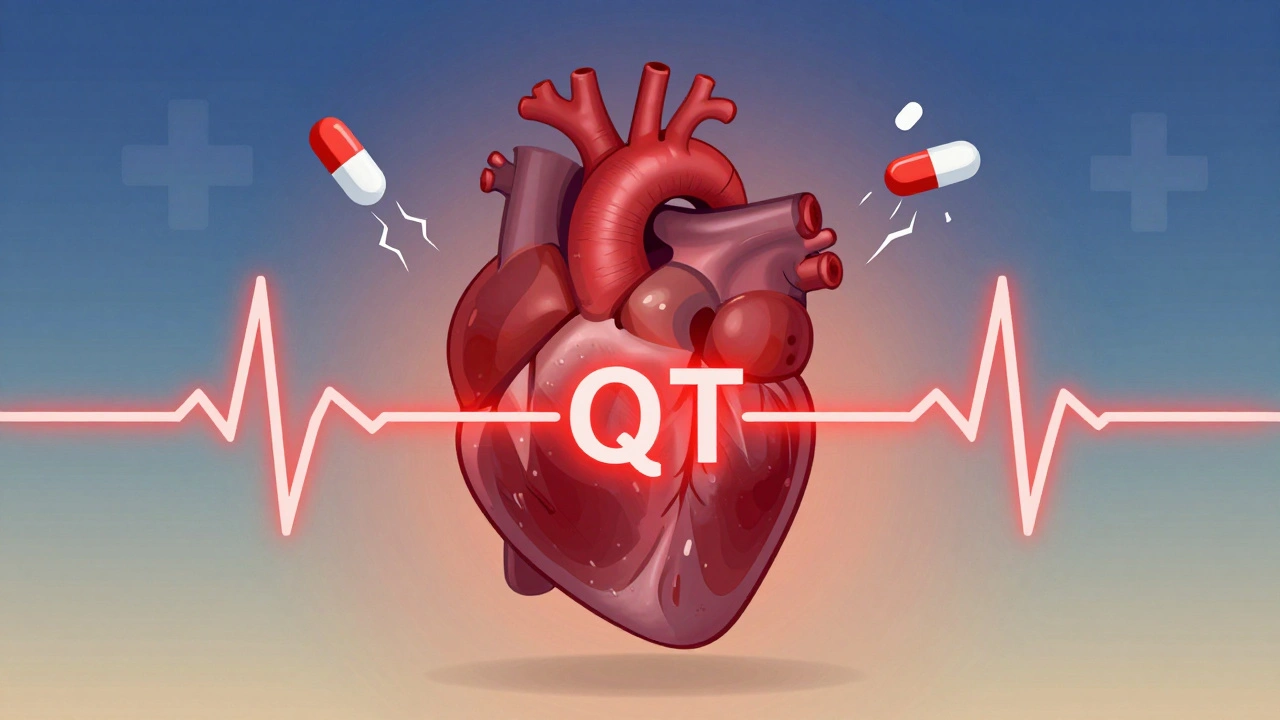
QT Prolongation with Fluoroquinolones and Macrolides: Monitoring Strategies
Fluoroquinolones and macrolides can prolong the QT interval, increasing the risk of life-threatening heart rhythms. Learn who's at risk, how to monitor with ECG, and which antibiotics are safer alternatives.
Read More...POPULAR POSTS