
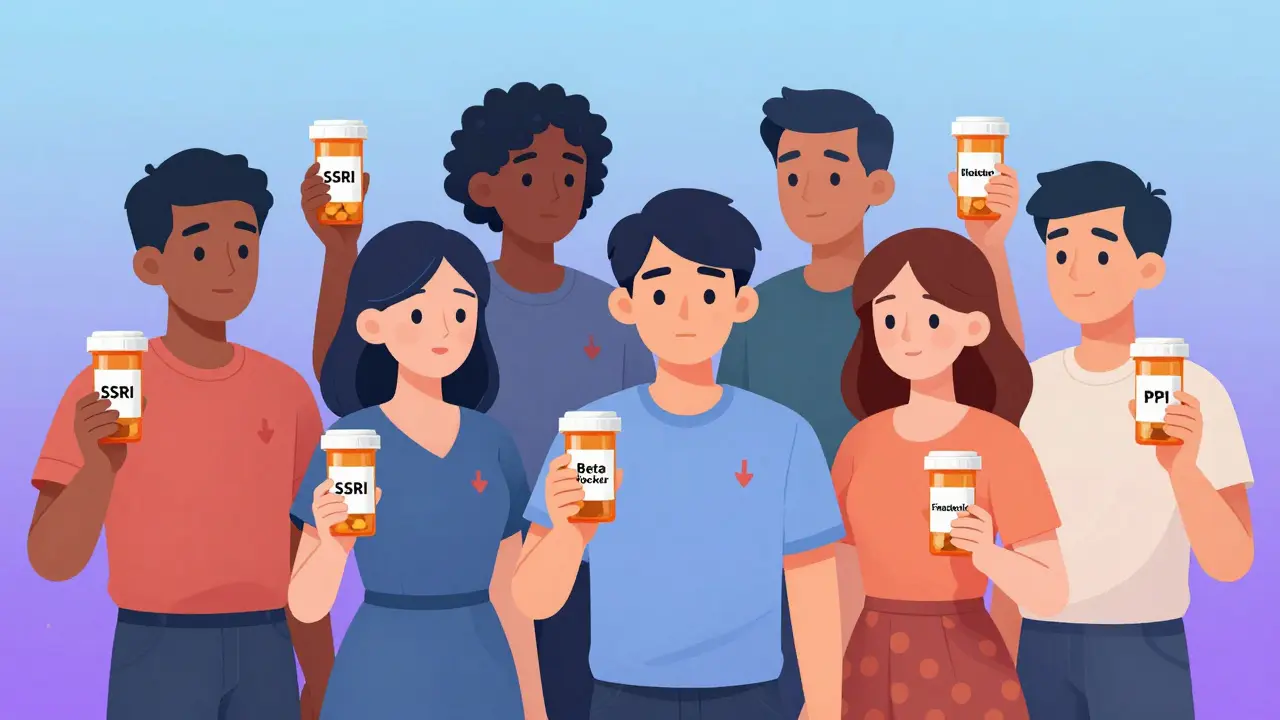
It’s not rare to hear someone say, "I’m taking this pill for my depression, but I don’t want to have sex anymore." Or, "My blood pressure med works great, but I can’t get an erection." These aren’t uncommon complaints - they’re medication side effects that millions live with silently because they don’t know it’s normal, or they’re afraid to bring it up with their doctor.
The truth is, dozens of everyday prescriptions can mess with your sex life. Not just antidepressants - but blood pressure pills, heart meds, even acid reflux drugs. And the impact isn’t just physical. It affects confidence, relationships, and how you feel about yourself. The good news? You’re not stuck with it. There are ways to manage, switch, or reduce these effects - if you know what to look for.
Antidepressants Are the Biggest Culprit
When it comes to sexual side effects, antidepressants lead the list. About 40% of people taking them experience some kind of sexual problem. That’s not a small number - that’s nearly half. Among the most common, SSRIs like fluoxetine (Prozac), sertraline (Zoloft), and paroxetine (Paxil) are the biggest offenders.
Paroxetine has the highest risk - up to 65% of users report sexual dysfunction. That means trouble getting aroused, delayed or absent orgasm, or just losing interest in sex altogether. Fluvoxamine and sertraline aren’t far behind, with rates around 59% and 56%. Even fluoxetine, often seen as "milder," still causes problems in more than half of users.
Why does this happen? SSRIs boost serotonin, which helps with mood - but too much serotonin can shut down sexual response pathways in the brain. It’s like turning down the volume on desire, arousal, and pleasure.
But not all antidepressants are the same. Bupropion (Wellbutrin) and mirtazapine (Remeron) are known for having much lower rates of sexual side effects. In fact, some people report improved libido on bupropion. If you’re struggling with sex and your depression isn’t well-controlled yet, talking to your doctor about switching might be the best move.
Heart and Blood Pressure Medications Can Kill Your Libido
High blood pressure doesn’t just strain your heart - it can strain your sex life too. And the meds meant to fix it? Sometimes they make things worse.
Thiazide diuretics like hydrochlorothiazide (Microzide) are the most common cause of erectile dysfunction among blood pressure drugs. Beta blockers like atenolol and metoprolol also cut into performance, often by reducing blood flow or lowering testosterone. Studies show up to 10% of heart failure patients link their sexual problems directly to these medications.
Women aren’t spared either. Around 41% of women on antihypertensives report decreased desire, and 34% say sex just doesn’t feel as pleasurable. Alpha-blockers like clonidine and prazosin are especially bad for libido.
But here’s a twist: not all blood pressure meds are equal. Angiotensin II receptor blockers like valsartan have actually been shown to improve sexual desire and fantasies in women compared to beta blockers. If you’re on a beta blocker and your sex life is suffering, ask if switching to an ARB might help - without losing blood pressure control.
Prostate Medications: A Trade-Off Many Don’t Expect
Men taking finasteride (Propecia, Proscar) or dutasteride for hair loss or enlarged prostate often don’t realize the sexual side effects are real - and sometimes permanent. These drugs block DHT, a hormone tied to both hair growth and sexual function.
Studies show:
- 5.9-15.8% report lower libido
- 5.1-9.0% develop erectile dysfunction
- 0.8-21.4% have trouble with ejaculation
And then there are antiandrogens like bicalutamide, used in prostate cancer treatment. Nearly all men on these drugs lose libido, struggle with erections, and may even develop breast tissue (gynecomastia). These effects are expected - but still devastating. That’s why doctors now recommend counseling before starting these drugs. Knowing what’s coming helps men prepare emotionally and practically.

Other Surprising Offenders
It’s not just antidepressants and heart meds. A surprising number of everyday prescriptions can affect your sex life:
- Gabapentin and pregabalin (for nerve pain or seizures): These can lower free testosterone and raise sex hormone binding globulin, leading to erectile problems.
- Opioids like oxycodone: They mess with your brain’s hormone system, causing low testosterone and erectile dysfunction - even in young, healthy people.
- Proton pump inhibitors (PPIs) like omeprazole: Some users report lower libido and erectile issues. The exact mechanism isn’t clear, but the link is real enough that doctors are starting to ask about it.
- Birth control pills and hormone therapies: Some women experience reduced desire or arousal, especially with progestin-heavy formulations.
And yes - even some allergy and cold meds can cause dryness or reduced sensation. It’s not always the drug’s main job - it’s just how the body reacts.
What You Can Do About It
Never stop a medication cold turkey. That’s dangerous - especially with antidepressants or blood pressure drugs. But you don’t have to live with sexual side effects either. Here’s what actually works:
- Talk to your doctor. Be specific: "I’m having trouble getting or keeping an erection," or "I don’t feel like sex anymore." Don’t say "I’m fine" just to avoid awkwardness.
- Ask about switching. If you’re on paroxetine, could you try bupropion? If you’re on atenolol, could you try valsartan? Many alternatives exist.
- Try a "drug holiday". For some SSRIs, taking a break on weekends (under medical supervision) can help restore sexual function without worsening depression.
- Time your dose. Taking your SSRI after sex - not before - might reduce interference with arousal and orgasm.
- Consider adding a PDE5 inhibitor. Sildenafil (Viagra) or tadalafil (Cialis) can help with SSRI-induced erectile dysfunction. Studies show 74-95% of men respond well.
- Exercise. Regular physical activity boosts blood flow, lowers stress, and can naturally improve libido and performance - even while you’re on meds.
Some people also find that therapy - especially sex therapy - helps them reconnect with their bodies and partners. It’s not just about the pills. It’s about how you feel about yourself, your relationship, and your body.

Why This Matters More Than You Think
Sexual side effects aren’t just "inconvenient." They’re a major reason people stop taking their meds. One study found that 25-73% of people on SSRIs quit because of sexual problems. That’s not just about sex - it’s about mental health relapse, worsening blood pressure, uncontrolled diabetes.
Doctors are starting to screen for this. The American Urological Association now recommends asking patients on long-term antidepressants, antihypertensives, or prostate meds: "Have you noticed any changes in your sexual function?" If your doctor doesn’t ask - ask them.
The goal isn’t to avoid treatment. It’s to find the right treatment for you. Your mental health, heart health, and sex life all matter. You don’t have to choose one over the others.
When to Worry About Rare Side Effects
Most sexual side effects are annoying, not dangerous. But some need immediate attention:
- Priapism - an erection lasting more than 4 hours. This is a medical emergency, especially with antidepressants or erectile dysfunction drugs.
- Painful ejaculation or penile anesthesia - these are rare but reported with SSRIs and antipsychotics.
- Loss of sensation in the vagina or nipples - sometimes linked to SSRIs or antipsychotics.
If you experience any of these, contact your doctor right away. You might need to switch meds or adjust your dose.
Final Thoughts: You’re Not Alone
Sexual side effects from medications are common, real, and treatable. Too many people suffer in silence because they think it’s just "part of getting older" or "something they have to live with." But that’s not true.
There’s a better way. You can have your meds and your sex life. You just need the right conversation with the right doctor - and the courage to speak up.
Start today. Write down what you’re experiencing. Bring it to your next appointment. Ask: "Is there another option?" Most doctors want to help - they just need you to tell them what’s going on.
Can antidepressants cause permanent sexual side effects?
For most people, sexual side effects from antidepressants go away after stopping the medication. But in rare cases - especially with long-term SSRI use - some men and women report persistent issues like low libido or difficulty orgasming, even after quitting. This is called Post-SSRI Sexual Dysfunction (PSSD). It’s not common, but it’s documented in medical literature. If you’re concerned, talk to your doctor before starting or stopping any medication.
Do all SSRIs cause the same sexual side effects?
No. While all SSRIs carry some risk, they vary significantly. Paroxetine has the highest rate of sexual side effects (up to 65%), followed by fluvoxamine and sertraline. Fluoxetine tends to be slightly less likely to cause problems, and escitalopram (Lexapro) often has a lower risk profile. Bupropion isn’t an SSRI - it’s an NDRI - and is known for having minimal sexual side effects, making it a common alternative for people who struggle with this issue.
Can blood pressure meds cause low libido in women?
Yes. Up to 41% of women on antihypertensives report decreased sexual desire, and 34% say sex is less pleasurable. Thiazide diuretics and beta blockers are the biggest culprits. However, some blood pressure meds like valsartan have actually been linked to improved sexual desire in women compared to others. If you’re a woman on blood pressure meds and your libido has dropped, ask your doctor about switching to an ARB or ACE inhibitor.
Is it safe to take Viagra with antidepressants?
Yes, for most people. Sildenafil (Viagra) and tadalafil (Cialis) are commonly used to treat erectile dysfunction caused by SSRIs. Studies show 74-95% of men respond well to this combination. However, never take these without your doctor’s approval - especially if you’re on nitrates for heart conditions or have low blood pressure. Your doctor will check for interactions and recommend the right dose.
What’s the best antidepressant for someone with sexual side effect concerns?
Bupropion (Wellbutrin) is the most commonly recommended antidepressant for people concerned about sexual side effects. It doesn’t work the same way as SSRIs - it targets dopamine and norepinephrine instead of serotonin - which means it rarely causes low libido or orgasm problems. Mirtazapine (Remeron) is another good option with low sexual side effect rates. Always discuss alternatives with your doctor - switching meds should be done carefully and gradually.
Can exercise help with medication-induced sexual dysfunction?
Yes. Regular physical activity improves blood flow, reduces stress, boosts testosterone, and enhances mood - all of which help counteract sexual side effects. Even 30 minutes of brisk walking five times a week can make a difference. Exercise isn’t a cure-all, but it’s one of the safest, most effective tools you can use alongside medication adjustments.
Are there any new medications being developed to avoid sexual side effects?
Yes. Researchers are actively working on antidepressants and antihypertensives that target mood or blood pressure without affecting sexual function. Some new SSRIs in clinical trials are designed to release serotonin more slowly or selectively, reducing impact on sexual pathways. Pharmaceutical companies are now required by the FDA to track sexual side effects in trials, so better options are on the horizon. In the meantime, existing alternatives like bupropion and ARBs offer effective, lower-risk choices.



Nader Bsyouni
December 21, 2025 AT 20:53