
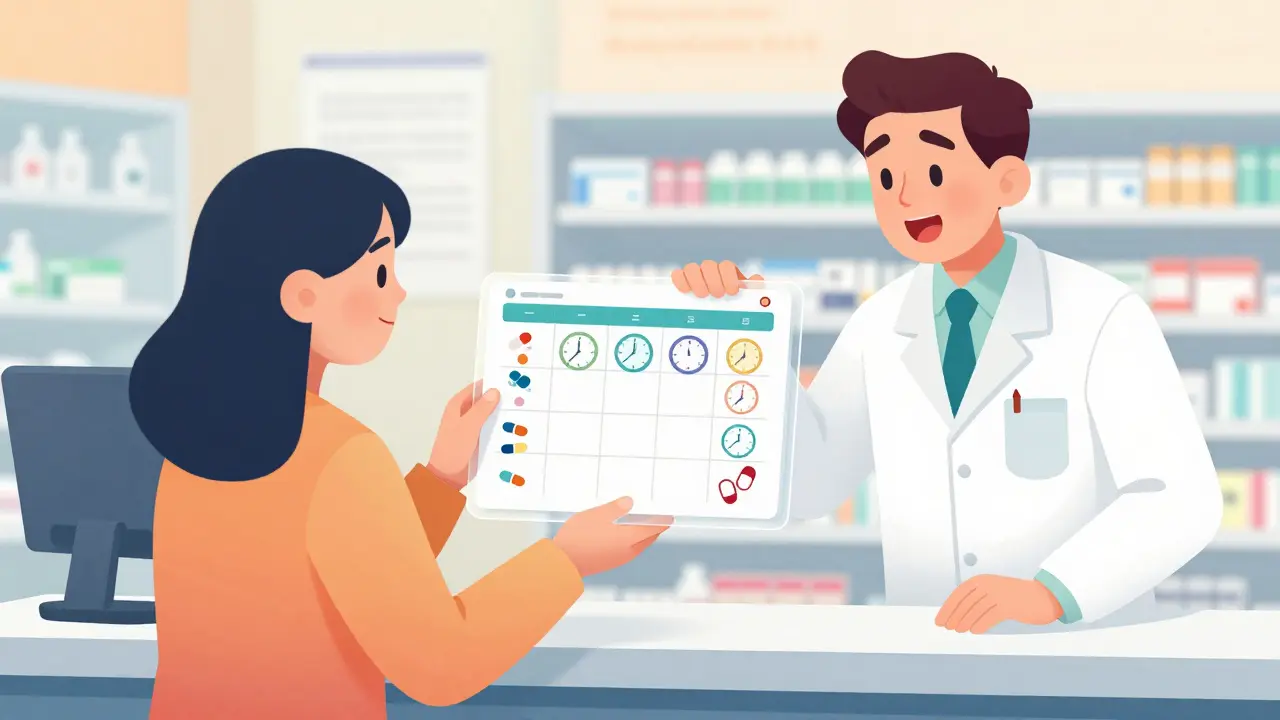
Getting a prescription filled shouldn’t feel like solving a puzzle. Yet millions of people leave the pharmacy with a pill bottle and a tiny label full of medical jargon they can’t read - or worse, misunderstand. If you’ve ever stared at your medication instructions and thought, “What does this even mean?”, you’re not alone. And more importantly, you have the right to do something about it.
You Have a Legal and Ethical Right to Understand Your Medications
The truth is, no one should be expected to guess what “take one tablet by mouth twice daily” really means. Especially if you’re managing diabetes, heart disease, or multiple medications. The American Medical Association (AMA) clearly states that patients have the right to receive information in a way they can understand. This isn’t just good advice - it’s a professional standard. The same goes for pharmacy chains, hospitals, and clinics. They’re required by their own patient rights documents to explain your treatment clearly. Look at it this way: if your doctor prescribed a new drug, they’re ethically bound to make sure you know how to take it safely. The same rule applies to the pharmacist. Tennessee Oncology, AmerisourceBergen, and Vivo Health Pharmacy all list this right in their official patient documents: “Receive information in a manner, format, and/or language that is easily understood.” That includes written instructions. If they hand you a sheet of fine print in 10-point font, you’re not being served - you’re being sidelined.Why Most Written Instructions Fail
Most pharmacies still use generic labels. They’re designed for speed, not clarity. A 2022 analysis from the University of Florida found that even major chains like CVS and Walgreens use instructions with reading levels between 6th and 11th grade - and that’s not good enough. If you’re over 65, have limited English, or struggle with reading, you’re likely falling into the 63% of patients who make medication errors because instructions are too confusing. Here’s what you usually get: a tiny slip of paper with abbreviations like “PO,” “QD,” “BID,” and “PRN.” No definitions. No examples. No visuals. Just a list of terms that look like code. Even worse, some pharmacies give you a full 2-page leaflet full of side effects, warnings, and contraindications - none of which answer the simple question: “When and how do I take this?” Compare that to Canada or the UK, where law requires plain-language instructions at a 6th-grade reading level. In the U.S., it’s a lottery. One pharmacy gives you a picture schedule. Another gives you a paragraph written by a lawyer. You shouldn’t have to win the pharmacy lottery just to take your medicine safely.Five Proven Steps to Get Clear Written Instructions
You don’t have to accept confusion. Here’s how to get what you’re entitled to - backed by real data and patient success stories.- Ask to speak directly to the pharmacist - not the pharmacy tech. Technicians are trained to fill prescriptions fast. Pharmacists are trained to explain them. A 2022 study found that 73% of chain pharmacies require techs to escalate complex questions to a pharmacist. Don’t settle for a quick “yes” from the window. Walk to the counter and say, “I’d like to speak with the pharmacist about my new prescription.”
- Use exact language from patient rights documents - this changes everything. Instead of saying, “Can you make this easier to read?” say: “I’m exercising my right under the AmerisourceBergen Patient Rights document to receive education in a language I understand.” Or: “I have the right to receive information in a manner that is easily understood, as stated in Tennessee Oncology’s Patient Bill of Rights.” Studies show patients who cite these exact phrases are 3.7 times more likely to get help.
- Request a specific format - don’t just ask for “clearer” instructions. Be specific. Ask for: a one-page summary, a visual schedule with pictures of pills and times, or a checklist. A 2023 study in the Annals of Internal Medicine showed that patients using visual schedules improved adherence by 42%. If you take five pills a day at different times, a chart with clocks and pill icons is worth more than 100 words.
- Do a read-back - after they give you instructions, repeat them back in your own words. “So, I take this blue pill at 8 a.m. with food, and the white one at 8 p.m. without food?” This simple trick cuts errors by 63%, according to Johns Hopkins Medicine. Pharmacists are trained to catch misunderstandings here - use it.
- Say you’re documenting this for your medical records - this triggers a policy shift. A 2023 survey found that 58% of pharmacies will provide better written instructions when patients mention documentation. It makes the request feel official. It’s not sneaky - it’s smart.
Timing Matters - Ask at the Right Moment
Don’t wait until you’re picking up a refill. The best time to ask is during your first prescription setup. Pharmacists have more time then. A 2022 study showed 87% of pharmacists report having enough time to explain new medications - but only 29% do so for refills. When you’re getting a new drug, use that window. If you’re already on a medication and it’s confusing, go back. Say: “I’ve been taking this for a while, but I still don’t fully understand how to take it. Can we go over it again?”Language Barriers? You Have Federal Protections
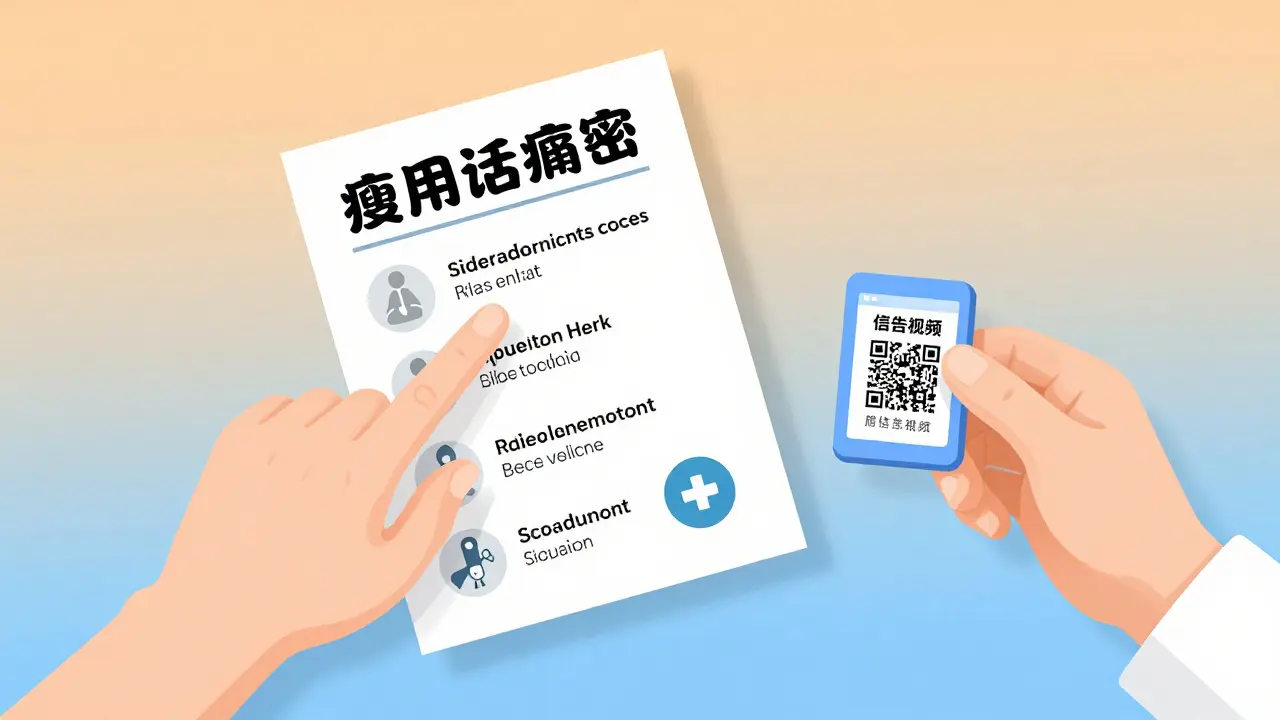
If English isn’t your first language, federal law (Title VI of the Civil Rights Act of 1964) requires pharmacies to provide translation services. You don’t need to ask politely - you can state it as a right. Say: “I need medication instructions in Spanish, per federal law.” A 2023 CMS report found that 92% of pharmacies comply when asked this way. Some pharmacies now offer QR codes that link to videos in 20 languages - ask if they have them.
What to Do If They Say No
Sometimes, you’ll get pushback. “We don’t do that here.” “It’s not our policy.” That’s not a legal answer. You can:- Ask for a supervisor or manager - they’re more likely to know the rules.
- Request a printed copy of their patient rights document - many have it posted or available on request.
- Call the pharmacy’s corporate office. Chain pharmacies like CVS and Walgreens have national patient service lines. They track complaints.
- File a complaint with your state pharmacy board. Most have online forms. You don’t need a lawyer.
The Bigger Picture: Change Is Coming
You’re not alone in pushing for better instructions. A new federal bill, H.R. 1173 - the Patients’ Right to Know Their Medication Act - has 147 bipartisan co-sponsors. It would require every prescription to come with a one-page, FDA-approved, plain-language guide. Walgreens and CVS are already rolling out QR codes and pictogram-based instructions. The American Pharmacists Association aims to have all pharmacies using health-literate formats by 2027. This isn’t just about convenience. Poor medication understanding costs the U.S. healthcare system $528 billion a year in avoidable hospital visits. And 30% of those are directly tied to confusing instructions.Your Health Is Worth the Ask
You don’t need to be loud. You don’t need to be angry. You just need to be clear. Say what you need. Cite your rights. Ask for a picture. Repeat it back. Document it. If you’ve ever missed a dose because you weren’t sure, or taken too much because you misunderstood, this matters. Your life depends on it. And you have the power to change how you get your instructions - one pharmacy visit at a time.Can I ask for medication instructions in a language other than English?
Yes. Under Title VI of the Civil Rights Act of 1964, pharmacies receiving federal funds (which includes nearly all U.S. pharmacies) must provide language assistance at no cost. You can say: “I need my medication instructions in [language], per federal law.” A 2023 CMS report found that 92% of pharmacies comply when asked this way. Some now offer QR codes linking to video instructions in 20 languages.
What if the pharmacist says they don’t have time to explain?
Politely insist: “I understand you’re busy, but this medication is important to my health. Can we take just five minutes to make sure I understand how to take it?” If they refuse, ask to speak with a supervisor. Most pharmacies have policies requiring pharmacists to provide counseling on new prescriptions. You can also schedule a time to return later - many pharmacists offer phone consultations.
Are there tools I can use at home to understand my meds better?
Yes. Apps like Medisafe, MyTherapy, and MyMedicationRights.org let you upload your prescription and generate simple, visual schedules. Some pharmacies now use digital systems like Medi-Simplify that create personalized, pictogram-based instructions. You can also ask your pharmacist if they offer printed visual guides or if they’ll email you a simplified version. Keep a list of your meds and times in your phone or wallet - it’s a backup when instructions get lost.
Can I request a printed copy of my medication instructions?
Absolutely. You have the right to receive written information in a format you can understand. If the pharmacy gives you a digital link or a tiny label, say: “I’d like a printed, easy-to-read version for my records.” Most pharmacies will print it. If they say no, ask for a supervisor. You can also request a copy be sent to your primary care provider - they’re required to keep your medication list updated.
Why do some pharmacies give better instructions than others?
Large chains like CVS and Walgreens have standardized systems and corporate policies that require clearer instructions. Independent pharmacies vary widely - some use templates, others just write notes by hand. Hospitals and clinics often follow stricter guidelines because they’re audited. But no matter the setting, your rights remain the same. Use the five-step method to get what you need - it works everywhere.







Tom Bolt
March 13, 2026 AT 00:15