
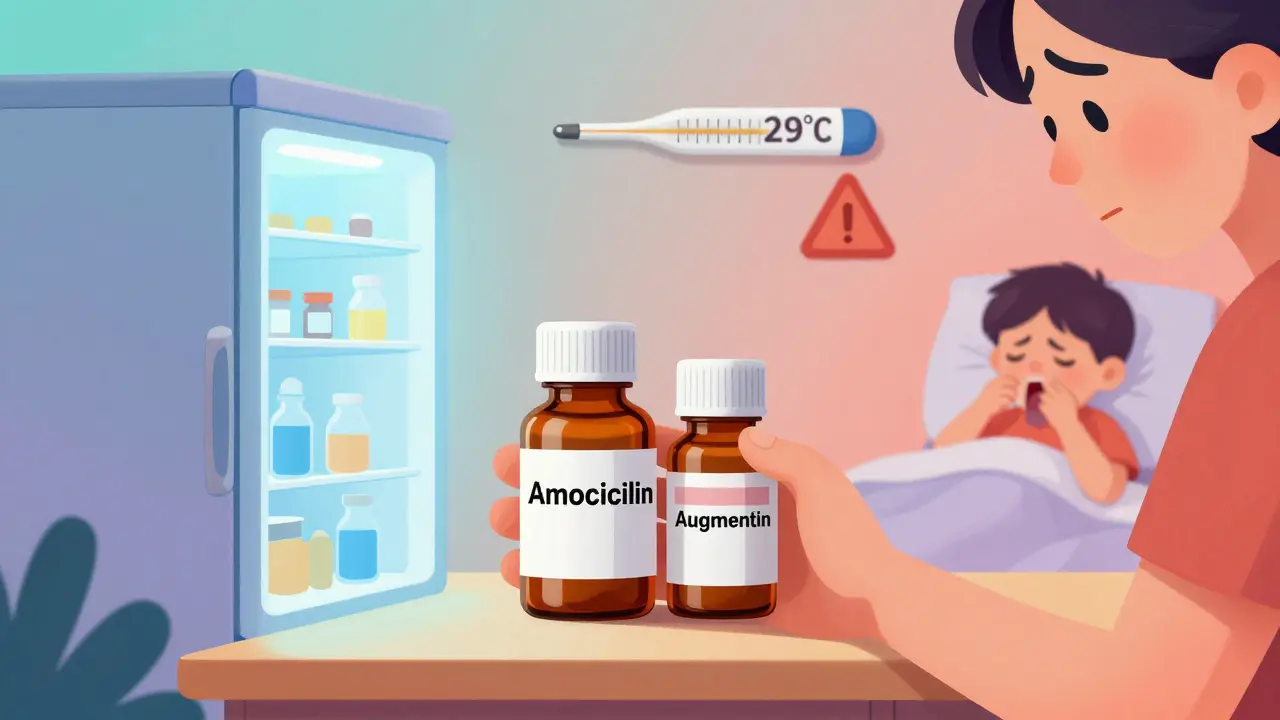
When your child is sick and needs antibiotics, the last thing you want is for the medicine to lose its power-or worse, make them sicker. Liquid antibiotics for kids are common, but they’re not like pills you can just toss in a cabinet. How you store them matters. Wrong storage can mean the medicine doesn’t work, leading to longer illness, resistant bacteria, or even hospital visits. And it’s not just about keeping it cold or at room temperature-it’s about knowing which antibiotic needs what, and for how long.
Why Storage Matters More Than You Think
Antibiotic suspensions are specially made for children because they can’t swallow pills. These liquids come as powder you mix with water at the pharmacy. Once mixed, they don’t last forever. The FDA and the Infectious Diseases Society of America say improper storage contributes to 15% of treatment failures in kids. That means your child might still be sick after finishing the bottle-not because the infection is stubborn, but because the medicine degraded.
Parents often assume all liquid antibiotics work the same way. They don’t. Some must be refrigerated. Some must NOT be refrigerated. Some last two weeks. Others need to be thrown away after just 10 days. If you guess, you risk giving your child medicine that’s too weak to fight the infection-or worse, one that’s spoiled.
Amoxicillin: The Most Common, But Not Simple
Amoxicillin is the most prescribed antibiotic for kids, making up over a third of all pediatric antibiotic use. And it’s also the most confusing.
You might hear conflicting advice: “Keep it cold,” “It’s fine at room temperature,” or “It tastes better chilled.” All of these can be true-but only if you know the details.
Amoxicillin suspension can be stored either in the refrigerator (2-8°C / 36-46°F) or at room temperature (20-25°C / 68-77°F). It stays effective for exactly 14 days no matter which way you store it. But here’s the catch: if you leave it at room temperature in a warm kitchen or near a window, you might be exceeding 25°C. In summer, or in homes without AC, room temperature can hit 29°C or higher. That’s too hot. Heat speeds up breakdown.
Some pharmacies label it “refrigerate” as a preference. Others say “store at room temperature.” The truth? Both are acceptable. But if you’re unsure, refrigerating it is the safest bet. It slows down degradation and often makes it taste better for kids.
Amoxicillin/Clavulanate (Augmentin): Strict Rules Apply
This one’s different. Augmentin combines amoxicillin with clavulanate to fight tougher infections. But clavulanate is unstable. If you leave it at room temperature, it starts losing strength after just 5 days. By day 10, it’s down by nearly 15%-enough to let bacteria survive and grow resistant.
Unlike plain amoxicillin, Augmentin must be kept refrigerated at 2-8°C. No exceptions. Even if your child hates cold medicine, you can’t skip this. The FDA and IDSA updated guidelines in 2023 to make this clear: discard Augmentin after 10 days, even if it looks fine. Don’t wait for it to change color or smell bad. By then, it’s already too weak.
One study found that 43% of parents store Augmentin at room temperature because they think it’s the same as amoxicillin. That’s a dangerous mistake.
Azithromycin (Zithromax): Keep It Warm
Azithromycin is another top choice for kids, especially for ear infections or walking pneumonia. But here’s the twist: do not refrigerate it.
When chilled, azithromycin thickens up like syrup. Kids hate it. A 2023 taste study showed 37% of children refused to take it when cold. Even worse, the thickened texture makes it harder to draw up the right dose with the syringe.
Store azithromycin at room temperature (20-25°C). It stays stable for 10 days. No need to fuss with the fridge. In fact, putting it in the fridge does more harm than good.

Other Antibiotics That Shouldn’t Go in the Fridge
It’s not just azithromycin. Several other common pediatric antibiotics also lose quality or become unpalatable if refrigerated:
- Clarithromycin - Thickens and separates
- Clindamycin - Loses taste and texture
- Sulfamethoxazole/Trimethoprim - Forms clumps
- Cefdinir - Changes color and taste
Always check the label. If the pharmacy didn’t write “Refrigerate,” assume it should stay out. If you’re not sure, ask the pharmacist before leaving the pharmacy.
How Long Do These Last? The Discard Date Rules
Here’s a simple cheat sheet based on 2023 guidelines:
| Antibiotic | Storage | Shelf Life After Mixing |
|---|---|---|
| Amoxicillin | Refrigerated or Room Temp | 14 days |
| Amoxicillin/Clavulanate (Augmentin) | Refrigerated Only | 10 days |
| Azithromycin | Room Temperature Only | 10 days |
| Clarithromycin | Room Temperature | 10 days |
| Clindamycin | Room Temperature | 14 days |
| Sulfamethoxazole/Trimethoprim | Room Temperature | 14 days |
| Cefdinir | Room Temperature | 14 days |
Never use antibiotics past these dates-even if they look fine. A 2022 CDC study found that 37% of parents keep and reuse old antibiotics, often because they think “it’s still clear, so it’s fine.” But potency drops silently. You can’t see it. You can’t taste it. But your child’s body can.
How to Tell If It’s Gone Bad
While you shouldn’t rely on appearance alone, here are signs that the medicine might be spoiled:
- Discoloration - Turns yellow, brown, or cloudy
- Strange smell - Sour, chemical, or “off” odor
- Clumps or sediment - Won’t mix back in after shaking
- Changed taste - Bitterer, metallic, or unnatural
If you see any of these, throw it out. Don’t give it to your child. Even if you’re out of medicine, using a bad dose can make the infection worse.
Practical Tips to Get It Right
Here’s what works in real life:
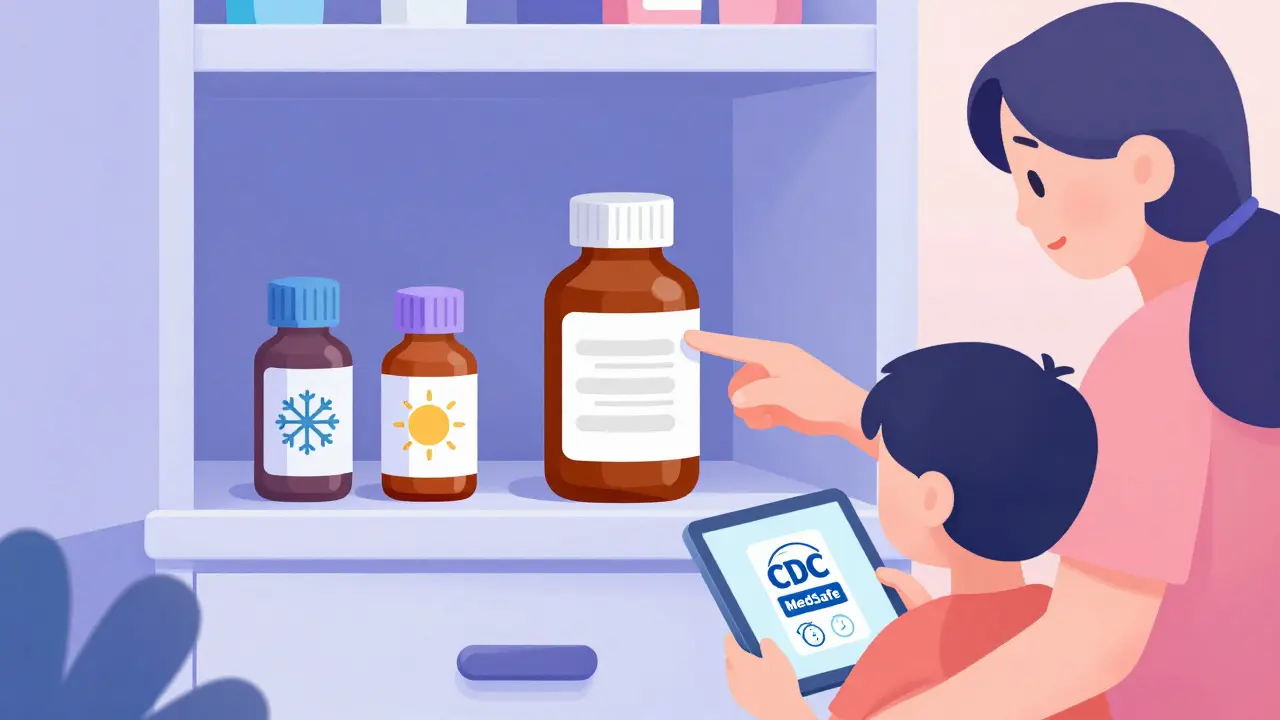
- Ask the pharmacist - When you pick up the medicine, ask: “Should this go in the fridge? How long can we use it?” Write it down.
- Use the discard sticker - Pharmacies often include a sticker with the discard date. Put it on the bottle in big letters. If they didn’t, write it yourself in permanent marker.
- Keep it out of reach - Store all medicines up and away, even if they’re in the fridge. Over 60,000 children under 5 are treated each year for accidental poisoning.
- Don’t store in the bathroom - Heat and moisture from showers degrade medicine. A kitchen cabinet away from the stove is better.
- Use a mini-fridge if needed - Some parents use a small fridge just for meds. One study showed this cut treatment failures by 75%.
- Download the CDC’s MedSafe app - It sends reminders when it’s time to throw out the bottle.
What If You Made a Mistake?
It happens. You left Augmentin on the counter for 3 days. You refrigerated azithromycin. You used it past the date. Don’t panic. Don’t double-dose. Just stop.
If you’re unsure whether the medicine is still good, call your pediatrician or pharmacist. They’ll tell you whether to toss it or if it’s still safe. Never guess.
Most importantly: don’t save leftover antibiotics for next time. Bacteria change. The next infection might be different. Using old medicine can delay proper treatment and encourage drug-resistant bugs.
Final Thought: When in Doubt, Check the Label
The most reliable source isn’t a blog, a Reddit thread, or even your memory. It’s the label on the bottle. Pharmacies are required to include storage instructions. If it says “Refrigerate,” do it. If it says “Store at Room Temperature,” leave it out. If it’s unclear, call the pharmacy. They’re trained to answer this exact question.
Proper storage isn’t about being perfect. It’s about avoiding the mistakes that make kids sicker. A little attention to detail-knowing which antibiotic needs what, and when to throw it away-can make all the difference in your child’s recovery.






Matthew Brooker
February 27, 2026 AT 07:19