

Every time you pick up a prescription at the pharmacy, there’s a hidden system deciding whether your generic drug is covered - and at what price. It’s not random. It’s not arbitrary. It’s a carefully engineered process built around money, science, and regulation. And if you’ve ever been surprised that your doctor’s prescribed generic wasn’t covered, you’re not alone. Here’s how insurers actually choose which generics to cover.
The Core System: Pharmacy & Therapeutics Committees
Behind every insurance plan’s drug list is a group of experts called a Pharmacy & Therapeutics (P&T) committee. These aren’t insurance salespeople. They’re usually pharmacists, doctors, and sometimes patient advocates who meet regularly to review which drugs get added or removed from the formulary. Their job? To balance safety, effectiveness, and cost. They don’t decide based on what’s newest or what a drug company pushes. They decide based on evidence. The FDA approves generics as bioequivalent to brand-name drugs - meaning they work the same way in the body. But insurers don’t just take that at face value. P&T committees dig deeper. They look at real-world data: How often do patients stop taking it? Are there more side effects in certain groups? Does it actually improve outcomes compared to other generics?Three Rules That Decide Everything
There are three non-negotiable criteria every generic must pass to make it onto a formulary:- Clinical Effectiveness: Does it work as well as the brand or other generics for the condition? For example, if two generics for high blood pressure have similar results, but one has fewer reports of dizziness, that one wins.
- Safety: Even if it works, is it safe? A generic might be cheaper, but if it’s linked to more hospital visits or bad reactions, it gets rejected. Insurers track adverse event reports from pharmacies and patient complaints.
- Cost-Effectiveness: This is where most decisions are made. If two generics are equally safe and effective, the cheaper one gets covered. Sometimes, even if a drug is slightly more expensive, it’s included if it reduces overall costs - like preventing an ER visit or hospital stay.
Tiers: Why Your Copay Is $5 Instead of $80
Insurers don’t just say “yes” or “no.” They organize drugs into tiers. Think of it like a pricing ladder:- Tier 1: Preferred generics - usually $0 to $15 for a 30-day supply.
- Tier 2: Non-preferred generics or low-cost brands - $20 to $40.
- Tier 3: Higher-cost brand-name drugs - $50 to $100+.
- Tier 4 and 5: Specialty drugs - sometimes hundreds or thousands.

Therapeutic Substitution: When the Pharmacist Changes Your Prescription
Here’s something most patients don’t realize: your pharmacist might swap your prescription without asking. In 78% of commercial insurance plans, pharmacists are allowed to substitute a generic if it’s on the formulary and legally permitted. This is called therapeutic substitution. It saves money - and it’s legal. But it’s not always smooth. A 2023 Drug Topics survey found that 31% of patients reported adverse effects after being switched to a different generic. One man on Reddit shared that his seizure medication was swapped to a cheaper generic - and he had his first seizure in two years. He had to fight for weeks to get the original back. Insurers defend this practice by saying generics are equivalent. But as Dr. Aaron Kesselheim from Harvard points out, “Overemphasis on cost sometimes ignores real differences in how patients respond.” That’s why some patients need to appeal.How to Fight a Denial - And Win
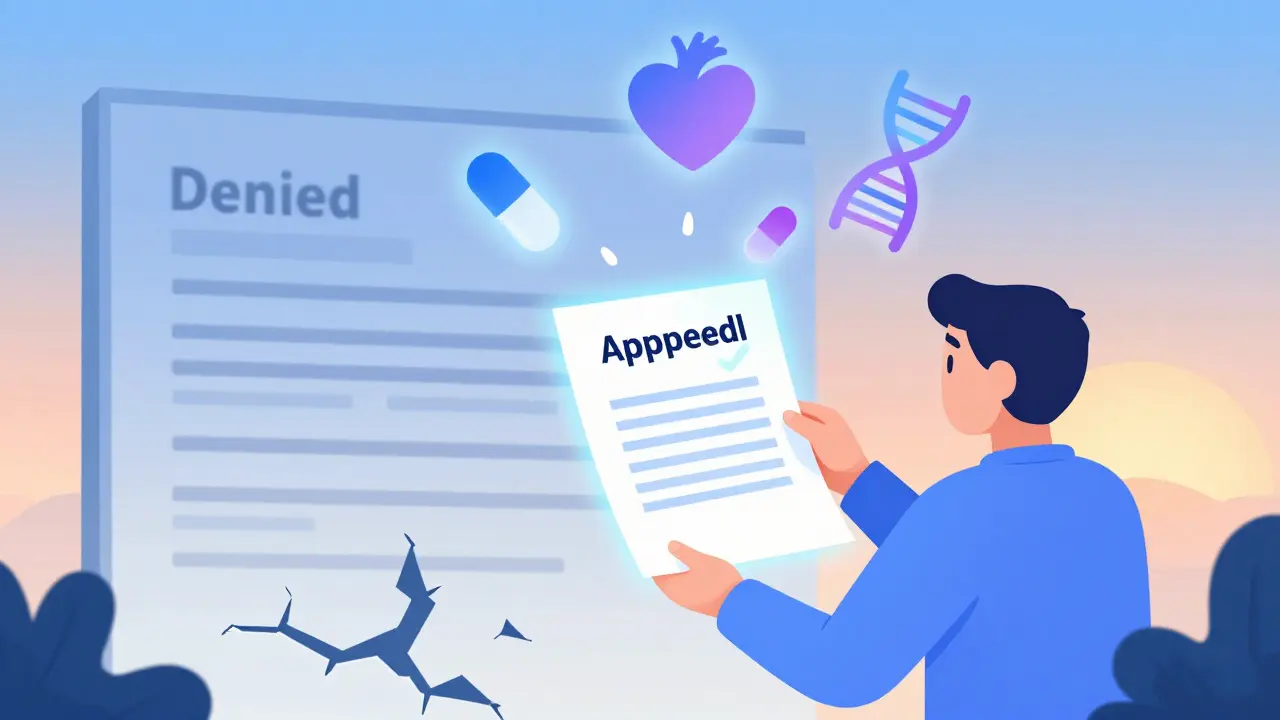
If your generic isn’t covered, or your doctor prescribed a brand and it was denied, you’re not stuck. You can file an exception request. Here’s how it works:- Your doctor writes a letter explaining why the generic won’t work for you - maybe you had side effects, or it didn’t control your condition.
- You or your doctor submits it to the insurer.
- The insurer must respond within three business days (one day for urgent cases).
- If they don’t respond? Automatic approval.
Why Some Generics Get Left Out
Not every generic makes the cut. Sometimes, it’s because:- The drug is new - P&T committees wait for more real-world data.
- There’s a shortage - if a generic is hard to get, insurers might avoid it to prevent disruptions.
- The manufacturer doesn’t pay rebates - insurers often negotiate discounts. If a company won’t give a good deal, the drug gets pushed to a higher tier or excluded.
- It’s a complex generic - like an inhaler or insulin - and the FDA hasn’t fully approved it yet.



Lethabo Phalafala
January 14, 2026 AT 05:03