
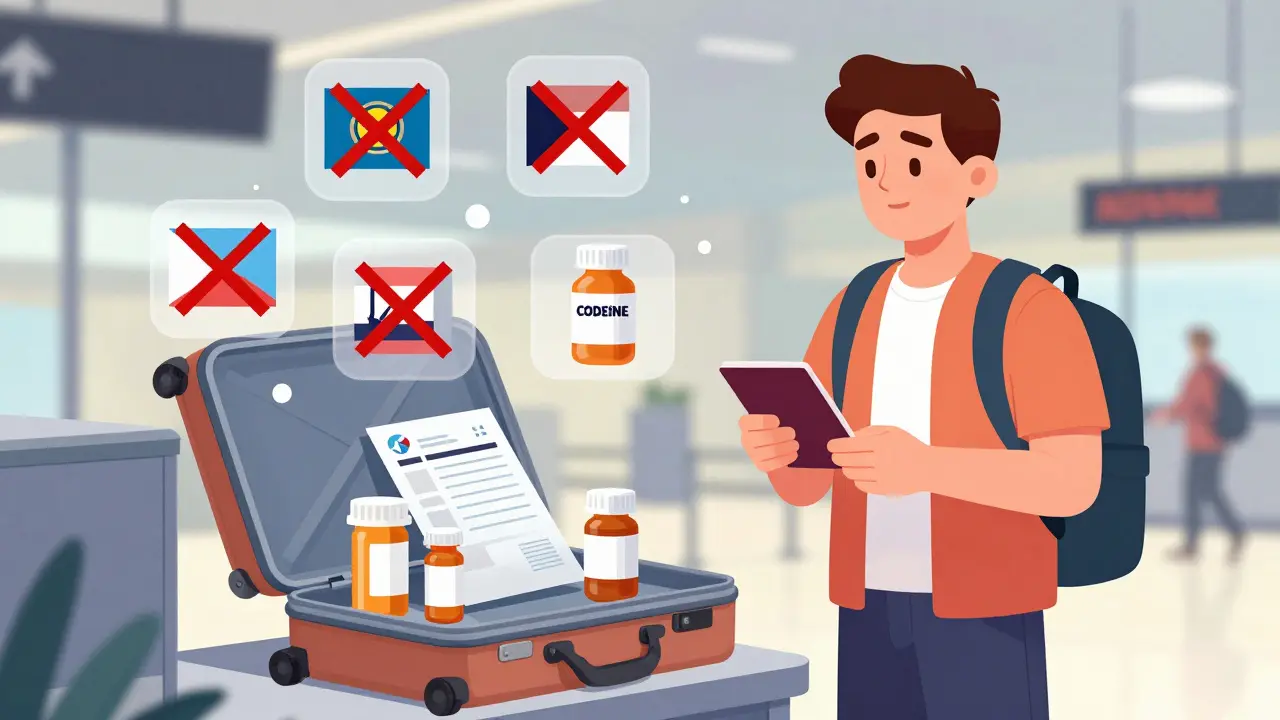
Traveling with medication isn’t just about packing your pills. It’s about understanding what’s legal, what’s available, and what could land you in trouble halfway across the world. I’ve seen people get detained in Dubai for carrying a bottle of Xanax. I’ve heard from students in Japan who couldn’t refill their ADHD meds because the local pharmacy didn’t recognize the prescription. And I’ve talked to travelers in Thailand who were shocked to find their painkillers were completely banned. This isn’t rare. It’s routine.
Why Your Prescription Doesn’t Travel Well
Not all drugs are created equal around the world. What’s over-the-counter in Mexico might be a controlled substance in Australia. What’s legal in the U.S. could be illegal in Singapore. The problem isn’t just about availability-it’s about classification. Countries use different systems to rank drugs by risk. Hydrocodone is Schedule II in the U.S. but totally banned in Japan. Codeine is sold without a prescription in Mexico, but in Australia, you need a special permit even for small amounts. The World Health Organization says 56% of low- and middle-income countries don’t have enough pain meds for their own citizens. That means even if you’re carrying the right medicine, the pharmacy abroad might not have it.What You Need Before You Leave
Don’t wait until you’re at the airport. Start planning at least 8 to 12 weeks before your trip. Here’s what actually works:- Original prescription bottles - with your name matching your passport. 97% of countries require this. If your name is on the bottle but not on your ID? You’re at risk.
- A doctor’s letter - on official letterhead, with your diagnosis (using ICD-11 codes), generic drug names, dosage, and quantity. Not a note saying “my patient needs meds.” This needs to be specific.
- Notarized translations - if you’re going to a non-English-speaking country. Germany doesn’t require it, but the UAE does. And if you don’t have one? Your meds might get tossed.
- Quantity limits - most countries allow a 90-day supply. Japan? 30 days. Singapore? 14 days. Exceed that? You’re not just out of luck-you might be arrested.
And here’s a hard truth: if you’re taking benzodiazepines like Xanax, Valium, or Ambien, you’re already in the high-risk group. The CDC says 43% of all medication-related travel incidents involve these drugs. They’re banned outright in Malaysia. Restricted in Thailand. Require pre-approval in the UAE. And yes, people get detained over them every single month.
How to Check the Rules for Your Destination
The World Health Organization and the International Narcotics Control Board (INCB) maintain a database of country-specific rules. As of October 2025, only 68 countries have officially published their regulations. That means 124 countries? No public info. So what do you do?Step 1: Go to your destination country’s embassy website. Look for “travel health advisories” or “medication import rules.” If it’s not there, email them directly. Ask for the Ministry of Health’s official stance on your specific medication. Don’t rely on forums or blogs. Get it in writing.
Step 2: Check the INCB’s Country Regulations database. It’s not user-friendly, but it’s the most reliable source. Search by drug name and country. If your drug isn’t listed, assume it’s restricted.
Step 3: Talk to your doctor. Not just any doctor - someone who understands international travel. Ask them to write a letter that includes the generic name, dosage, and why you need it. If you’re on opioids, stimulants, or sedatives, they should also mention your diagnosis code (ICD-11). Many doctors don’t know this. Be prepared to educate them.
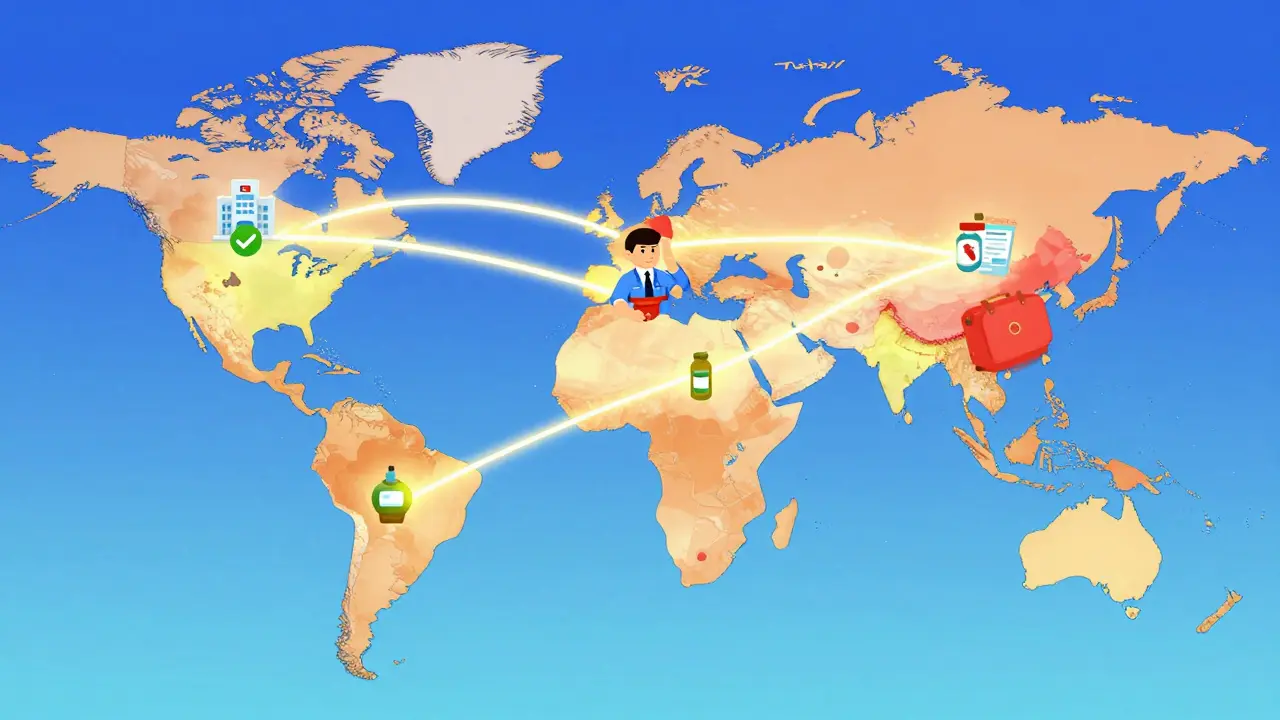
What Happens at the Airport
TSA and other airport security agencies now allow medically necessary liquids over 3.4 ounces if you declare them. But here’s the catch: you still need to have your meds in original containers. No pill organizers. No ziplock bags labeled “pain meds.” That’s a red flag. Security officers aren’t trained to know what’s legal in 190 countries. They’re trained to spot suspicious packaging.When you go through security, tell the officer: “I have prescription medication that requires special handling.” They’ll likely take you aside for a manual check. Have your doctor’s letter and prescription ready. Don’t argue. Don’t get angry. Just be calm and polite. You’ll get through faster.
And if you’re flying into the UAE, Japan, or Singapore? Prepare for extra scrutiny. These countries have automated systems that flag controlled substances. If your prescription doesn’t match their rules exactly? You’ll be detained. No warning. No second chance.
What to Do If You Run Out Abroad
You didn’t plan ahead. You lost your meds. Or they were confiscated. Now what?First, don’t panic. Don’t try to buy something off the street. Don’t ask strangers. Go to a hospital or clinic. In many countries, you can get a local prescription if you have:
- Your original prescription bottle
- Your doctor’s letter
- Your passport
Some countries, especially in the EU, have systems that let you transfer prescriptions. A German e-prescription can be filled in France, Italy, or Spain within hours. But outside the EU? It’s hit or miss. Thailand allows it for most medications. Malaysia? No benzodiazepines, ever. Australia? You can’t refill a U.S. prescription at all.
If you’re stuck, contact the International Association for Medical Assistance to Travellers (IAMAT). They have a network of 1,400 verified clinics worldwide. They know which pharmacies will accept foreign prescriptions. They can help you find a doctor who speaks English. They’ve helped thousands.
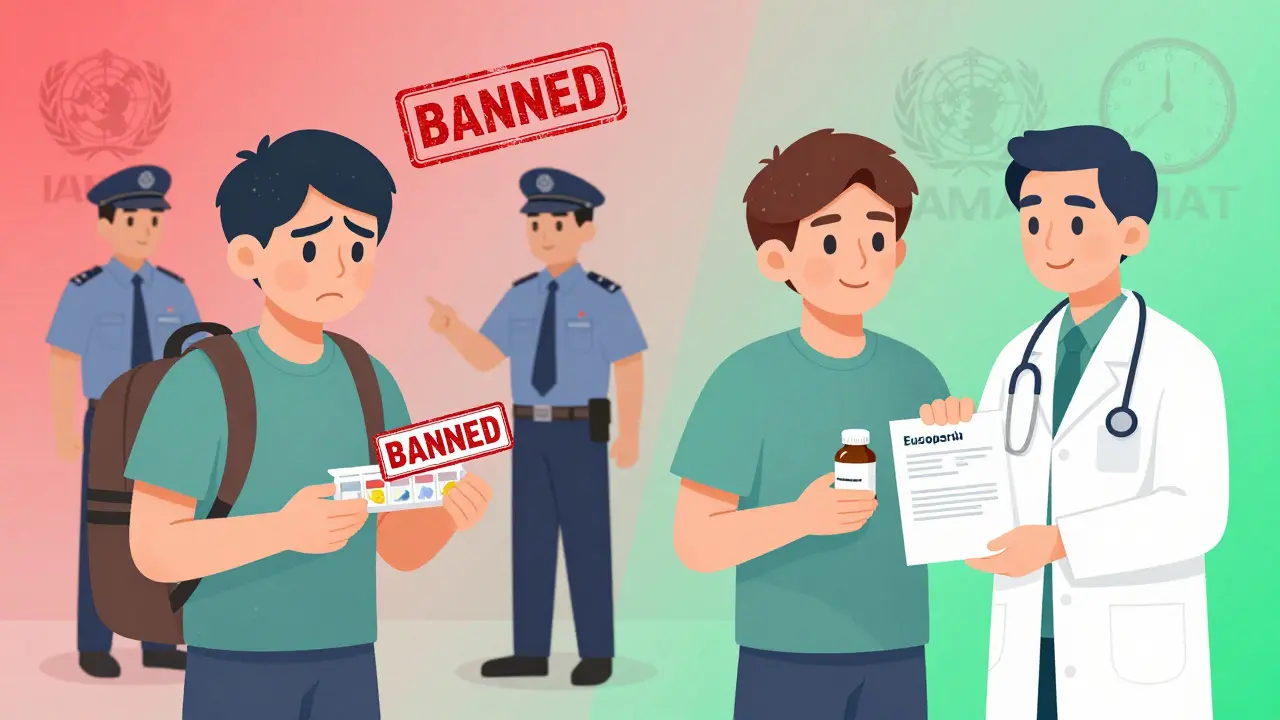
What’s Changing in 2026
Good news: things are slowly improving. The WHO introduced a new international medication documentation template in May 2025, and it’s set to roll out in 2026. This means doctors will soon be able to issue a single form that’s recognized across borders. It won’t solve everything, but it’s the biggest step forward in 15 years.The U.S. is also moving. The Affordable and Safe Prescription Drug Importation Act of 2025 allows Americans to legally import 90-day supplies from certified pharmacies in Canada, the UK, the EU, and Switzerland. Phase 1 starts May 1, 2026. That means if you’re going to Europe, you might be able to refill your meds there legally - if you plan ahead.
Telemedicine is growing too. By September 2025, 41 countries allowed tourists to get prescriptions via video call. If you’re in Europe or Canada, you might be able to hop on a Zoom call with a local doctor and get a new prescription within 24 hours.
What You Should Never Do
- Never carry meds in a pill organizer - even if they’re yours. Always keep them in original containers.
- Never rely on Google. A Reddit post from 2023 isn’t current. Regulations change fast.
- Never assume your insurance covers you abroad. Most don’t.
- Never try to mail meds to yourself. Customs will seize them.
- Never ignore the rules for pseudoephedrine. It’s legal in the U.S., but banned in Australia, New Zealand, and the UAE. 387 bottles were confiscated at Sydney Airport in Q1 2025 alone.
Real Stories from Real Travelers
One traveler from Sydney got stuck in Dubai for three days because her Ambien was confiscated. She had a doctor’s note, but it wasn’t notarized. She missed her connecting flight. Lost her hotel booking. Had to pay $2,000 in emergency medical fees just to get a local prescription. Another student from Texas couldn’t get her Adderall in Germany. Her U.S. prescription was rejected. She ended up going to a local clinic, showing her original bottle and doctor’s letter, and got a German prescription within two hours. She’s now using the EU system to refill across five countries.There’s no one-size-fits-all solution. But the ones who make it through without a hitch? They plan. They double-check. They carry paper copies. And they never assume anything.
Can I bring my prescription meds in a pill organizer when traveling?
No. Almost every country requires medications to be in their original containers with pharmacy labels. Pill organizers look suspicious to customs and security. Even if you’re carrying your own pills, you’ll risk having them confiscated. Always keep them in the bottle they came in, with your name and the pharmacy’s label visible.
What if my medication isn’t available in the country I’m visiting?
If your medication isn’t available, you may be able to get a local prescription. Bring your original prescription, doctor’s letter, and passport to a hospital or clinic. In many places, especially in Europe, they can issue a new prescription based on your documentation. For high-risk medications like opioids or stimulants, contact IAMAT - they have a global network of clinics that know which drugs are accessible and how to get them.
Are over-the-counter drugs safe to bring abroad?
Not always. Many common OTC drugs contain ingredients that are controlled abroad. Pseudoephedrine (found in Sudafed) is banned in Australia, New Zealand, and the UAE. Codeine is OTC in Mexico but restricted in Australia. Even something as simple as a cold medicine can get you into trouble. Always check the active ingredients and compare them to your destination’s drug laws before packing.
Do I need a doctor’s letter for every medication?
For controlled substances - yes. That includes opioids, stimulants, benzodiazepines, and sedatives. For antibiotics or blood pressure meds? A letter isn’t always required, but it’s still smart to carry one. It speeds up customs checks and prevents misunderstandings. A good letter includes your name, diagnosis (using ICD-11 codes), drug name (generic and brand), dosage, quantity, and prescribing doctor’s contact info.
Can I refill my prescription in another country?
In the European Union, yes - if you have a valid prescription and documentation. Many EU countries accept prescriptions from other member states. Outside the EU, it’s complicated. Some countries allow it if you have your original prescription, doctor’s letter, and passport. Others won’t touch a foreign prescription. Always check with the country’s embassy before you go. Never assume you can refill just because you’re in a big city.





Serena Petrie
March 14, 2026 AT 16:59