
When you pick up a prescription, you might see two options: the name you recognize, or a cheaper version with a different label. That cheaper version is a generic drug. Millions of people use them every day. But do they work just as well? The short answer is: yes, most of the time. But it’s not that simple. Clinical studies have looked at this for decades, and what they show isn’t just a yes-or-no answer-it’s a detailed picture of when generics shine, when they’re nearly identical, and when a few patients might notice a difference.
How Generic Drugs Are Proven to Work
The U.S. Food and Drug Administration (FDA) doesn’t just accept a generic drug because it looks similar. It demands proof. Every generic must contain the same active ingredient, in the same strength, and delivered the same way-as a pill, injection, inhaler, or patch-as the brand-name version. That’s called pharmaceutical equivalence. But that’s only half the story. The real test is bioequivalence.
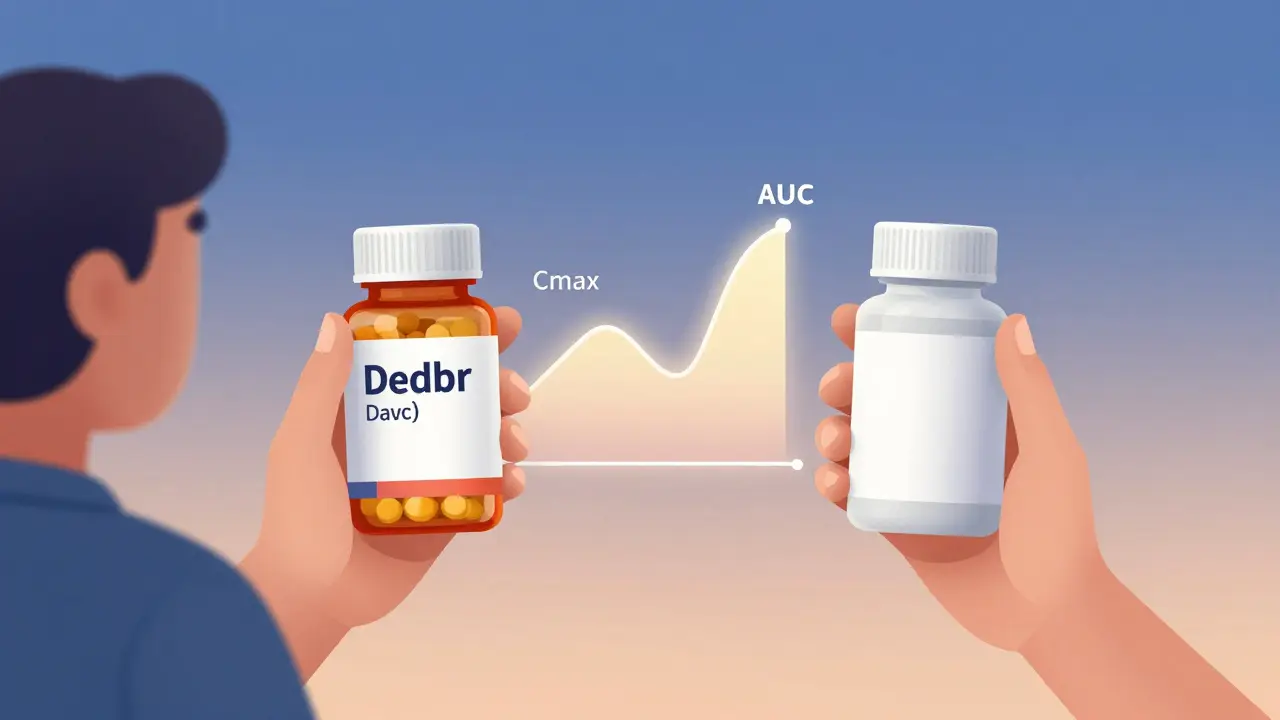
Bioequivalence means your body absorbs the drug at the same rate and to the same extent. To prove this, manufacturers run studies with 24 to 36 healthy volunteers. These are crossover studies: one group takes the brand-name drug first, then switches to the generic. The other group does the reverse. Researchers measure two key numbers: the maximum concentration of the drug in the blood (Cmax) and how much of the drug enters your system over time (AUC). The FDA requires that these numbers for the generic fall within 80% to 125% of the brand-name drug’s values. That’s not a wide gap. It’s tight enough that even small differences in absorption are caught.
Between 1996 and 2007, researchers analyzed over 2,000 of these bioequivalence studies. The result? Almost no meaningful difference between generics and brand-name drugs. The FDA’s own data, reviewed in 2022, confirms that generics meet these standards consistently. If a drug passes this test, it’s rated as “A” in the FDA’s Orange Book-meaning it’s considered therapeutically equivalent.
What Real-World Studies Say About Outcomes
Lab tests are one thing. Real patients using these drugs over years? That’s another. A landmark 2020 study published in Scientific Reports looked at nearly every person in Austria covered by public insurance between 2007 and 2012. They compared outcomes for 17 different drugs-used for conditions like high blood pressure, diabetes, and heart failure. The researchers didn’t just check if people took their meds. They tracked deaths and major heart events.
The findings were surprising. In 10 out of the 17 drugs, patients on generics had fewer deaths. In 11, they had fewer serious heart problems. After adjusting for age, income, and other health factors, the five-year survival rate for people on generics was 82.7%. For those on brand-name drugs, it was 79.8%. That’s not a small difference. It’s a meaningful one.
Another large study in 2019 looked at 3.5 million patients in the U.S. and Canada. It focused on common drugs like amlodipine (for high blood pressure), glipizide (for diabetes), and escitalopram (for depression). The results? No difference in heart attacks, hospitalizations, or control of blood sugar and mood. In fact, for amlodipine and amlodipine-benazepril, the generic versions were linked to slightly lower cardiovascular risk. That’s not a fluke. It’s data from millions of real prescriptions.
When Things Don’t Go as Planned
Not every story is a success. Some patients report problems after switching. A 2013 study found that 30% of patients saw no change, 30% felt better, 10% had new side effects, and 30% stopped taking the drug altogether because they thought it wasn’t working. That’s not because the drug is broken-it’s because perception matters.
One case involved a man on generic levofloxacin (Ranbaxy® 500mg). His infection didn’t clear. When he switched back to the brand-name version (Tavanic®), his symptoms vanished within 10 days. That’s rare, but it happens. The same study documented patients with epilepsy who had breakthrough seizures after switching between different generic versions of lamotrigine. Even though bioequivalence tests passed, something in the real world didn’t match up.
Why? Some drugs have what’s called a narrow therapeutic index. That means the difference between a dose that works and one that’s toxic is very small. Levothyroxine (for thyroid conditions) is one. Warfarin (a blood thinner) is another. Even tiny changes in how the body absorbs the drug can throw things off. That’s why doctors often recommend sticking with one manufacturer for these drugs. And why pharmacists are trained to alert prescribers if a switch might be risky.
What Patients Actually Experience
Surveys tell us a lot. A 2021 Medicare survey found that 68% of seniors using generic heart meds said they felt no difference compared to the brand. Another 22% had minor side effects that went away after a few weeks. But 10% said they noticed a clear drop in effectiveness. Reddit threads and pharmacy forums are full of similar stories. One user wrote: “I tried three different generics for Synthroid. Only one kept my thyroid levels stable.”
GoodRx reviews show 4.2 out of 5 stars for generic medications. Nearly 80% of 12,450 reviews say they work just as well as the brand-only cheaper. But those who report problems? They’re loud. And their experiences aren’t imaginary. They’re real, even if they’re rare.
The problem isn’t always the drug. It’s the switch. Going from one generic to another generic-even if both are FDA-approved-can cause issues. That’s because inactive ingredients (like fillers, dyes, or coatings) can vary. For some people, those changes affect how the drug is absorbed. It’s not about quality. It’s about consistency.
Doctors, Pharmacists, and the System
Most doctors trust generics. A 2020 study found that 87% of physicians are confident in their effectiveness. But specialists-like neurologists treating epilepsy or cardiologists managing heart failure-tend to be more cautious. They’ve seen the exceptions. And they know: for some drugs, consistency matters more than cost.
Pharmacists are the ones who actually make the switch. In the U.S., unless the doctor writes “dispense as written,” the pharmacist is legally allowed to substitute a generic. That happens in over 96% of cases. But when patients complain, pharmacists often hear it first. A 2021 survey found that 42% of pharmacists say patients worry about generic quality-even though the science says otherwise.
Education helps. The FDA’s website has clear explanations. The American Pharmacists Association offers training modules. But most patient handouts from CVS or Walgreens just say “save money.” They don’t explain bioequivalence. That leaves people confused.
The Bigger Picture
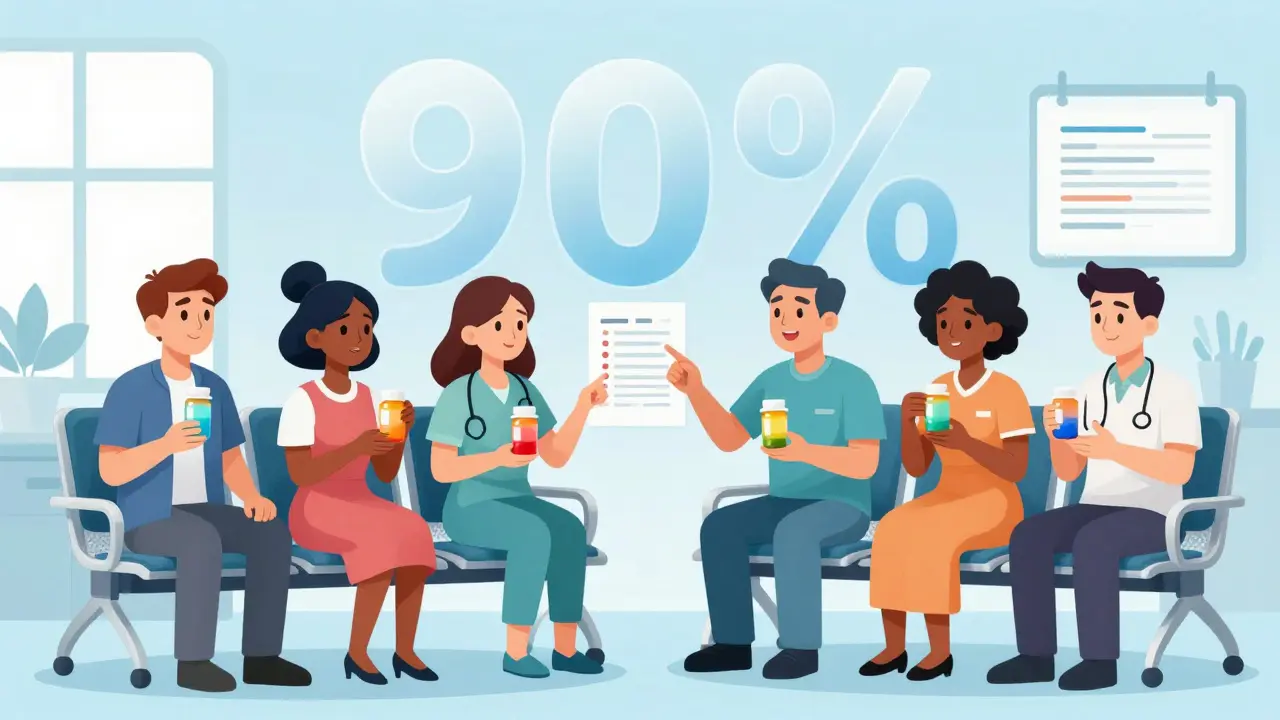
Generics aren’t just cheaper. They’re essential. In the U.S., they make up 90% of all prescriptions but only 23% of drug spending. Since 2012, they’ve saved the healthcare system over $600 billion. Medicare saved $1.67 trillion between 2006 and 2020 just by using generics. Globally, the market is worth over $400 billion and growing.
But challenges remain. Some generic manufacturers rely on single suppliers for active ingredients. When those suppliers have quality issues-like the 2021 valsartan recall due to cancer-causing impurities-hundreds of generic versions get pulled. That’s not about efficacy. It’s about contamination. The FDA is now requiring stricter oversight for complex generics, like inhalers and topical creams, with new testing rules coming by 2025.
For now, the evidence is clear: for the vast majority of people, generics work just as well as brand-name drugs. They’re not a compromise. They’re a smart, safe choice. But if you’re on a drug with a narrow therapeutic index-if you’ve had problems before-or if you notice a change after switching, talk to your doctor. Don’t assume it’s all the same. Your body might notice what the lab tests don’t.
Are generic drugs as effective as brand-name drugs?
Yes, for the vast majority of drugs and patients. The FDA requires generics to prove they deliver the same active ingredient at the same rate and amount as the brand-name version. Studies involving millions of patients show no meaningful difference in outcomes for drugs like blood pressure medications, diabetes treatments, and antidepressants. However, for drugs with a narrow therapeutic index-like levothyroxine or warfarin-small changes in absorption can matter, and some patients may need to stick with one manufacturer.
Why do some people say generics don’t work for them?
There are a few reasons. One is switching between different generic manufacturers. Even though both are FDA-approved, differences in inactive ingredients (like fillers or coatings) can affect how the drug is absorbed in sensitive individuals. Another is psychological: if a patient believes generics are inferior, they may notice side effects more or feel like the drug isn’t working. Finally, for drugs with a narrow therapeutic index-even tiny changes in blood levels can cause symptoms to return or worsen. If you notice a change after switching, talk to your doctor before stopping the medication.
Can pharmacists switch my brand-name drug to a generic without asking me?
Yes, in most cases. In the U.S., pharmacists are allowed to substitute a generic unless the doctor writes “dispense as written” on the prescription. This happens in over 96% of cases. The law is designed to save money and increase access. But if you’ve had issues with generics before, ask your doctor to specify “no substitution” on your prescription. You can also request to stay on a specific generic manufacturer if you’ve found one that works for you.
Are there any drugs where generics are not recommended?
The FDA does not ban generics for any drug, but for medications with a narrow therapeutic index-such as levothyroxine, warfarin, phenytoin, and some anti-seizure drugs-doctors often recommend sticking with one formulation. Small differences in how the drug is absorbed can lead to under- or over-treatment, which can be dangerous. The FDA rates these drugs in the Orange Book, and pharmacists are trained to flag substitutions for these. If you’re on one of these drugs, ask your doctor or pharmacist if you should avoid switching.
How can I tell if a generic is FDA-approved?
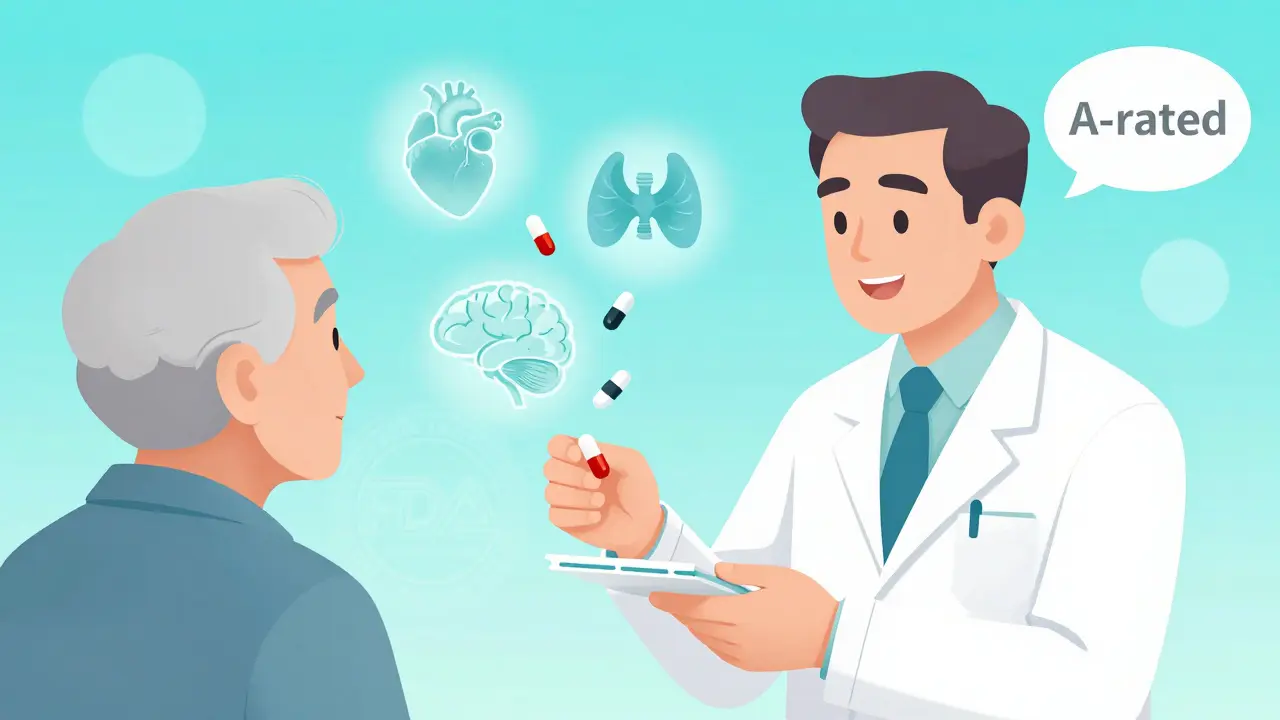
All legally sold generics in the U.S. must be FDA-approved. You can check the FDA’s Orange Book online, which lists approved drugs and their therapeutic equivalence ratings. A-rated generics are considered equivalent to the brand. Look for the generic name on the label-like “amlodipine” instead of “Norvasc”-and confirm it matches the active ingredient. If you’re unsure, ask your pharmacist. They can tell you if the generic you’re getting is rated as therapeutically equivalent.
What to Do Next
If you’re taking a generic drug and feel fine-no side effects, no change in how you feel-you’re likely fine. Stick with it. You’re saving money without sacrificing effectiveness.
If you’ve switched and noticed a change-worse symptoms, new side effects, or a return of your condition-don’t assume it’s all in your head. Talk to your doctor. Ask if you’re on a drug with a narrow therapeutic index. Ask if switching between manufacturers might be the issue. Ask if you can try the brand-name version again, even temporarily, to see if it makes a difference.
And if you’re considering switching to a generic for the first time? Ask your pharmacist: “Is this rated as A by the FDA?” If yes, you’re safe. If it’s B-rated (which is rare), ask why. Most generics are A-rated. And for those, the science is clear: they work.





Aisling Maguire
March 1, 2026 AT 19:18