
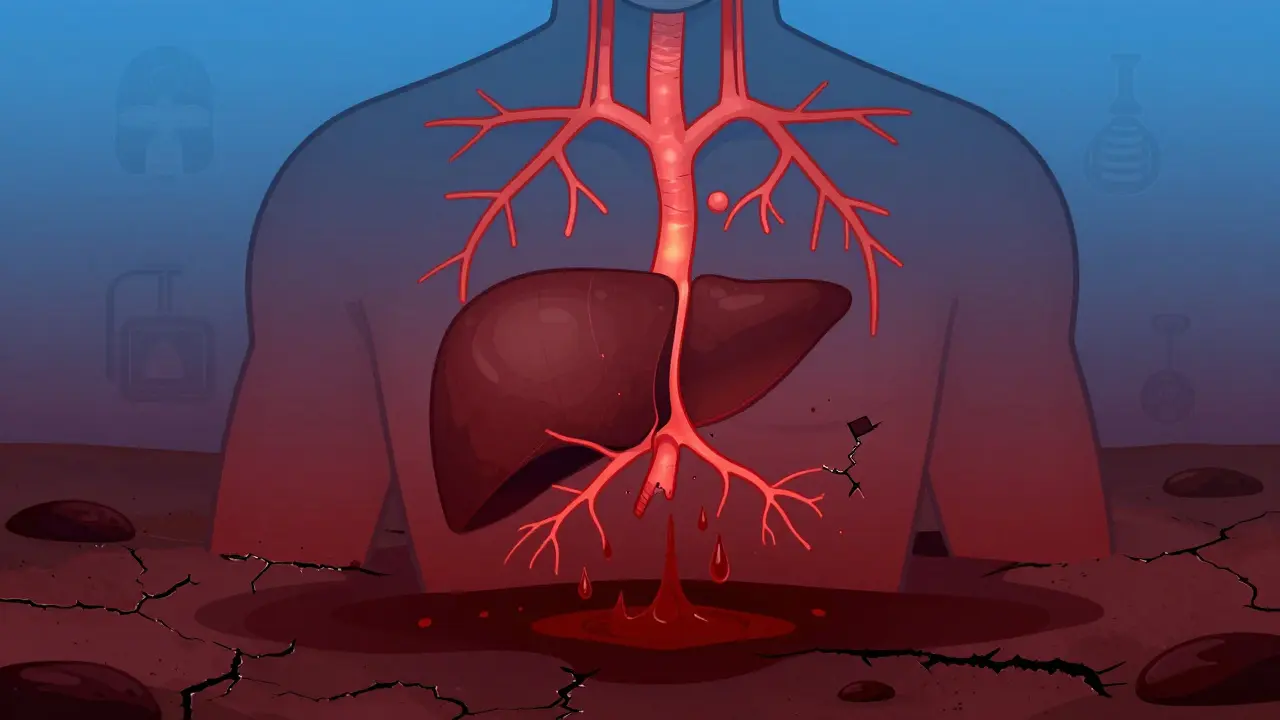
When your liver starts to fail, your body doesn’t just feel tired-it starts to break down in ways you can’t ignore. One of the most dangerous consequences is portal hypertension, a hidden pressure buildup in the veins that carry blood from your gut to your liver. It doesn’t show up on a routine blood test. You won’t feel it until something serious happens: vomiting blood, your belly swelling like you’re six months pregnant, or your mind getting foggy. By the time these signs appear, the damage is already advanced. But here’s the truth: if you catch it early and manage it right, you can avoid the worst outcomes.
What Exactly Is Portal Hypertension?
Portal hypertension isn’t a disease on its own-it’s a warning sign. It happens when blood can’t flow easily through the liver. Normally, portal vein pressure sits between 5 and 10 mmHg. When it climbs above 10 mmHg, or when the hepatic venous pressure gradient (HVPG) hits 5 mmHg or more, you’ve crossed into portal hypertension. The most common cause? Cirrhosis. About 9 out of 10 cases come from long-term liver damage, usually from alcohol, hepatitis, or fatty liver disease. The rest? Rare conditions like blood clots in the portal vein or rare liver disorders.
Here’s how it works: scar tissue in a cirrhotic liver squeezes the tiny blood vessels inside. Blood backs up. Then, your body tries to compensate by widening other vessels in the gut. This makes even more blood rush toward the liver-but the liver can’t handle it. The result? Pressure builds. And that pressure forces blood to find new, weaker paths. Those paths? They become varices.
Varices: The Time Bomb in Your Esophagus
Varices are swollen, fragile veins that form in the esophagus or stomach. They’re not normal veins. They’re stretched thin by pressure, like overinflated balloons. About half of people with cirrhosis develop them within 10 years. And here’s the scary part: 5 to 15% of those with medium-to-large varices will bleed each year. A bleed isn’t just unpleasant-it’s deadly. Up to 20% of people who bleed from varices die within six weeks.
Doctors don’t wait for bleeding to happen. If you have cirrhosis, you get an endoscopy to check for varices. If they’re found, treatment starts immediately. The gold standard? Non-selective beta-blockers like propranolol. These drugs lower heart rate and reduce blood flow to the liver, cutting your risk of first-time bleeding by nearly half. But they’re not perfect. Many people feel dizzy, tired, or get cold hands. One study found 65% of patients on beta-blockers report these side effects.
If varices are already large or you’ve bled before, band ligation is the next step. During this procedure, a doctor uses a tiny camera to place rubber bands around the varices. It’s not fun, but it works. After three sessions, rebleeding drops from 60% to under 30%. The trick? You need to do it right. Studies show a doctor needs at least 50 supervised procedures to become skilled. That’s why not every hospital can do it well.
Ascites: When Your Belly Swells for No Reason
Ascites is fluid buildup in the abdomen. It’s not just bloating. It’s heavy. Painful. Makes breathing hard. Six out of ten people with cirrhosis develop it within a decade. The cause? Same pressure problem. Blood backs up. Fluid leaks out of tiny vessels into the belly. Your kidneys then hold onto salt and water, making it worse.
The first line of defense? Cut salt. No more than 2,000 mg a day. That means no processed food, no canned soups, no soy sauce. Then, diuretics-spironolactone and furosemide. These pills help your body pee out the extra fluid. For most people, this works. But if your belly keeps filling up even with high doses? You’ve got refractory ascites. That’s when doctors turn to paracentesis: draining the fluid with a needle. Each session removes 4 to 6 liters. It feels like a miracle-until it happens again in a few weeks.
Here’s what patients say: "It’s like having a tire iron in your abdomen," one wrote in the American Journal of Gastroenterology. Another, a nurse, quit her job because she couldn’t stand for more than 20 minutes without pain and breathlessness.
For those with frequent recurrences, TIPS (transjugular intrahepatic portosystemic shunt) is an option. A metal tube is placed inside the liver to create a shortcut for blood. It’s effective-95% of cases work technically. But 20 to 30% of patients develop hepatic encephalopathy afterward. That’s when toxins build up in the brain and cause confusion, memory loss, or even coma. It’s a trade-off: less swelling, but a foggy mind.
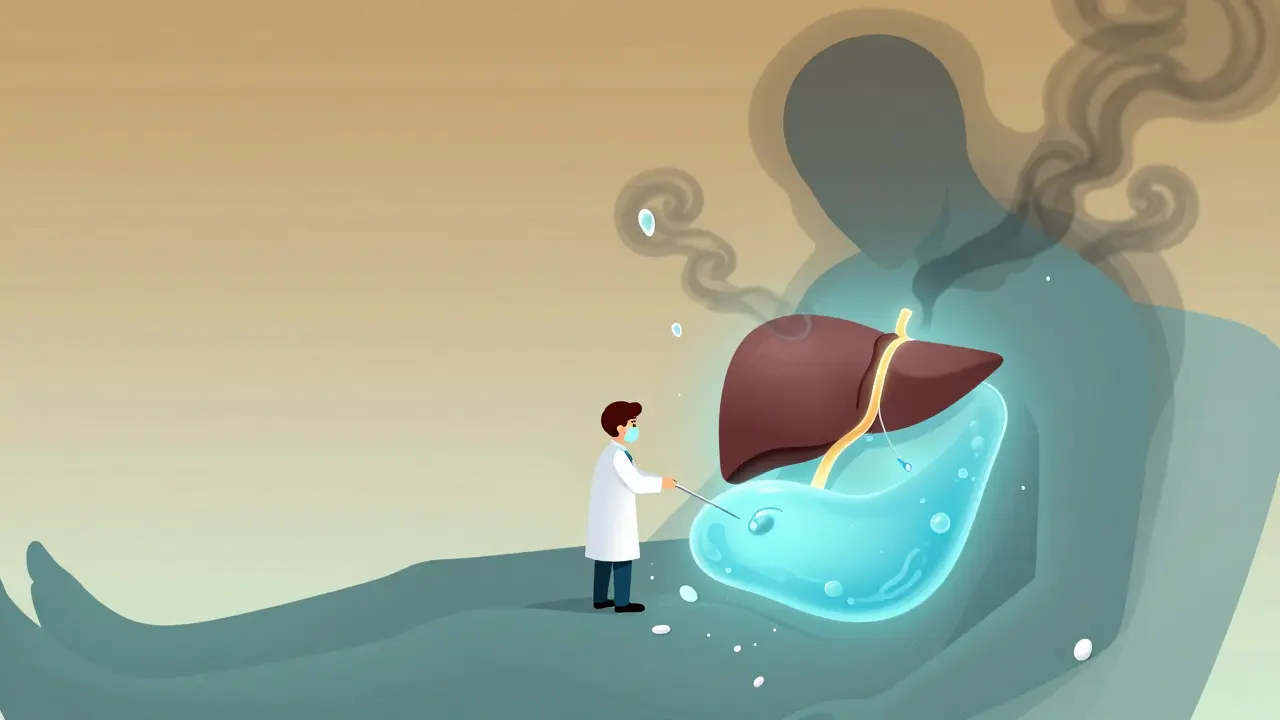
The Hidden Complications You Can’t See
Portal hypertension doesn’t just cause varices and ascites. It sets off a chain reaction.
Hepatic encephalopathy affects 30 to 45% of cirrhotic patients. It’s caused by toxins the liver can’t filter. Lactulose and rifaximin are used to clear them. But many patients don’t realize their memory lapses or mood swings are symptoms-not just aging.
Hepatorenal syndrome is even deadlier. It’s kidney failure caused by liver disease, not direct kidney damage. Eighteen percent of hospitalized cirrhotic patients with ascites develop it. Survival without a transplant? Less than 50% at six months.
And then there’s the emotional toll. A 2022 study using patient-reported outcomes found people with portal hypertension complications scored 35 to 40 points lower on quality-of-life scales than healthy peers their age. Fear of bleeding. Shame from bloating. Loss of independence. These aren’t side effects-they’re part of the disease.
New Tools, New Hope
Things are changing. In 2023, the FDA approved the Hepatica SmartBand-a wearable device that estimates portal pressure using skin sensors. No needles. No catheters. Just a band you wear on your arm. Early results show 82% accuracy compared to the old gold standard, HVPG.
AI is helping too. Mayo Clinic’s algorithm predicts variceal bleeding with 92% accuracy by analyzing liver scans, blood tests, and patient history. That means doctors can spot high-risk patients before they bleed.
And new drugs are coming. Simtuzumab, a monoclonal antibody, showed a 35% drop in portal pressure in early trials for non-cirrhotic cases. It’s now in phase 3. If it works, it could be the first drug that actually lowers pressure-not just treats symptoms.
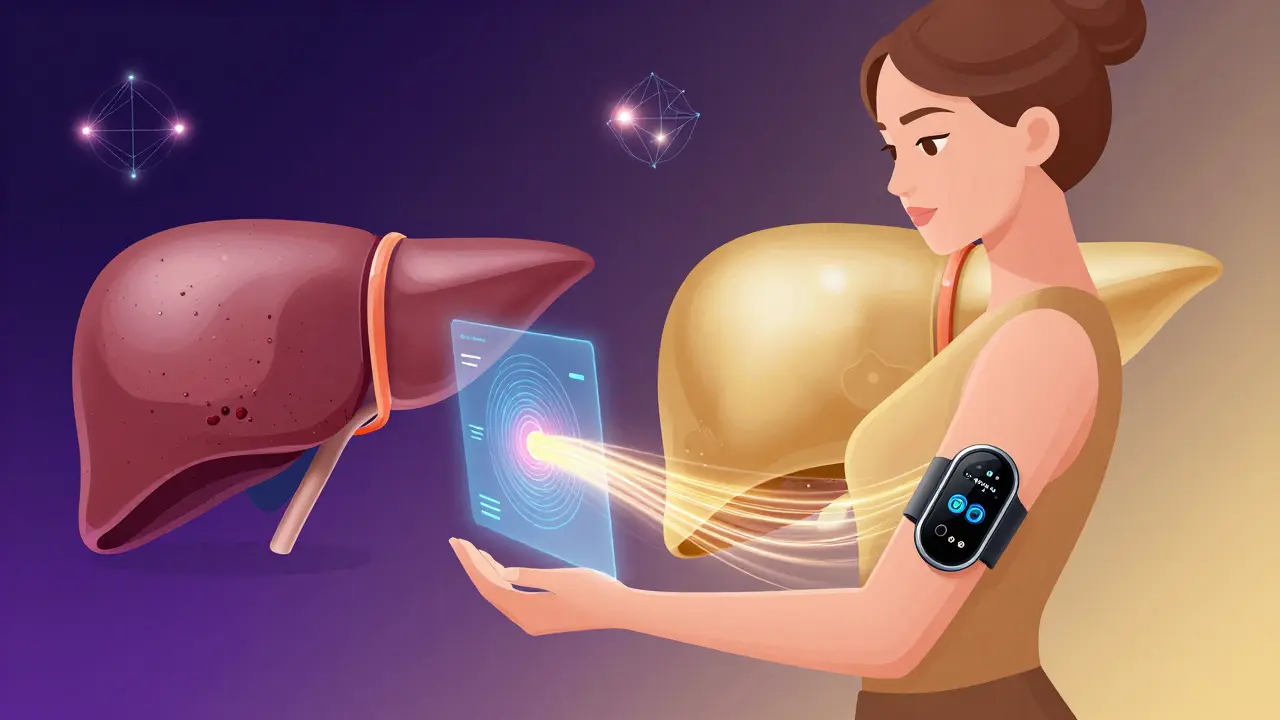
What You Can Do Right Now
If you have cirrhosis or are at risk:
- Get screened for varices with an endoscopy. Don’t wait for symptoms.
- If you’re on beta-blockers, don’t stop them without talking to your doctor-even if you feel side effects.
- Track your salt intake. Use a food scale for a week. You’ll be shocked how much sodium is hidden.
- Ask about HVPG testing. It’s not available everywhere, but if your center offers it, it’s the best way to measure how bad your pressure is and whether treatment is working.
- Know the signs of bleeding: black, tarry stools; vomiting bright red blood; sudden dizziness.
- Know the signs of encephalopathy: confusion, forgetfulness, slurred speech, hand tremors.
And if you’re a caregiver: learn how to monitor weight daily. A 2-pound gain in 24 hours could mean fluid is building up. Call your doctor before it becomes a crisis.
The Hard Truth
There’s no cure for portal hypertension yet. The only permanent fix is a liver transplant. But the waiting list is long-14 months on average in the U.S. Until then, management is about survival. It’s about controlling pressure, preventing bleeding, draining fluid, and keeping your brain clear.
Doctors are getting better. New tools are emerging. But the most powerful tool you have? Awareness. If you know what to watch for, you can act before it’s too late. Portal hypertension doesn’t announce itself. You have to listen for the warning signs-and then fight back.
What is the main cause of portal hypertension?
Cirrhosis is the main cause, accounting for about 90% of cases. It’s caused by long-term liver damage from alcohol, hepatitis B or C, or non-alcoholic fatty liver disease (NAFLD). The scar tissue blocks blood flow, leading to increased pressure in the portal vein.
Can portal hypertension be cured?
There’s no cure unless you get a liver transplant. All other treatments focus on managing complications-like stopping bleeding from varices, reducing fluid buildup, and preventing brain fog. Medications and procedures lower pressure and reduce risk, but they don’t reverse liver damage.
How do you know if you have varices?
You won’t feel them until they bleed. That’s why screening is critical. If you have cirrhosis, your doctor should perform an upper endoscopy to check for swollen veins in your esophagus or stomach. This is a routine test, not something you wait for symptoms to trigger.
Is ascites dangerous?
Yes. Ascites isn’t just uncomfortable-it’s a sign your liver disease is progressing. It can lead to infection (spontaneous bacterial peritonitis), kidney failure, and severe breathing problems. If you notice sudden belly swelling, weight gain, or shortness of breath, contact your doctor immediately.
What’s the difference between TIPS and a liver transplant?
TIPS is a procedure that creates a bypass inside the liver to reduce pressure. It helps with ascites and bleeding but doesn’t fix the liver itself. A liver transplant replaces the damaged liver with a healthy one. It’s the only cure for cirrhosis and portal hypertension, but it requires a donor and a long wait. TIPS is a bridge-not a solution.
Can non-invasive tests replace HVPG?
Not yet fully, but they’re getting close. Spleen stiffness measurement via elastography and new devices like the Hepatica SmartBand can predict clinically significant portal hypertension with 80-85% accuracy. They’re useful for screening and monitoring, but HVPG remains the gold standard for diagnosis and treatment decisions.
What lifestyle changes help manage portal hypertension?
Stop alcohol completely. Limit salt to under 2,000 mg per day. Avoid NSAIDs like ibuprofen-they hurt the kidneys and raise pressure. Get vaccinated for hepatitis A and B if you haven’t already. Maintain a healthy weight. And never skip follow-ups-even if you feel fine.
Why do beta-blockers make me feel tired?
Beta-blockers like propranolol slow your heart rate and reduce blood flow to the liver, which lowers pressure. But they also reduce blood flow to muscles and the brain, causing fatigue, dizziness, and cold extremities. If side effects are severe, talk to your doctor about adjusting the dose or switching to nadolol, which may be better tolerated.






amanda s
December 17, 2025 AT 15:11