Opioid Pruritus Treatment Comparison Tool
Compare the efficacy and pathways of different treatments for opioid-induced itching.
Treatment Name
PathwayPlease select a treatment from the dropdown menu to view its properties.
| Aspect | Key Detail |
|---|---|
| Common Areas | Face, neck, and upper torso |
| Primary Trigger | Mu Opioid Receptor (MOR) activation |
| Most Common Route | Intrathecal/Spinal administration (up to 100% incidence) |
| Most Effective Treatment | Low-dose opioid antagonists or Kappa agonists |
Why do opioids make you itch?
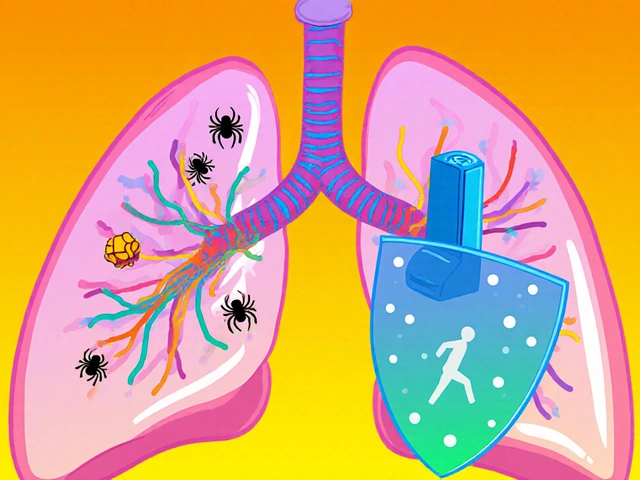
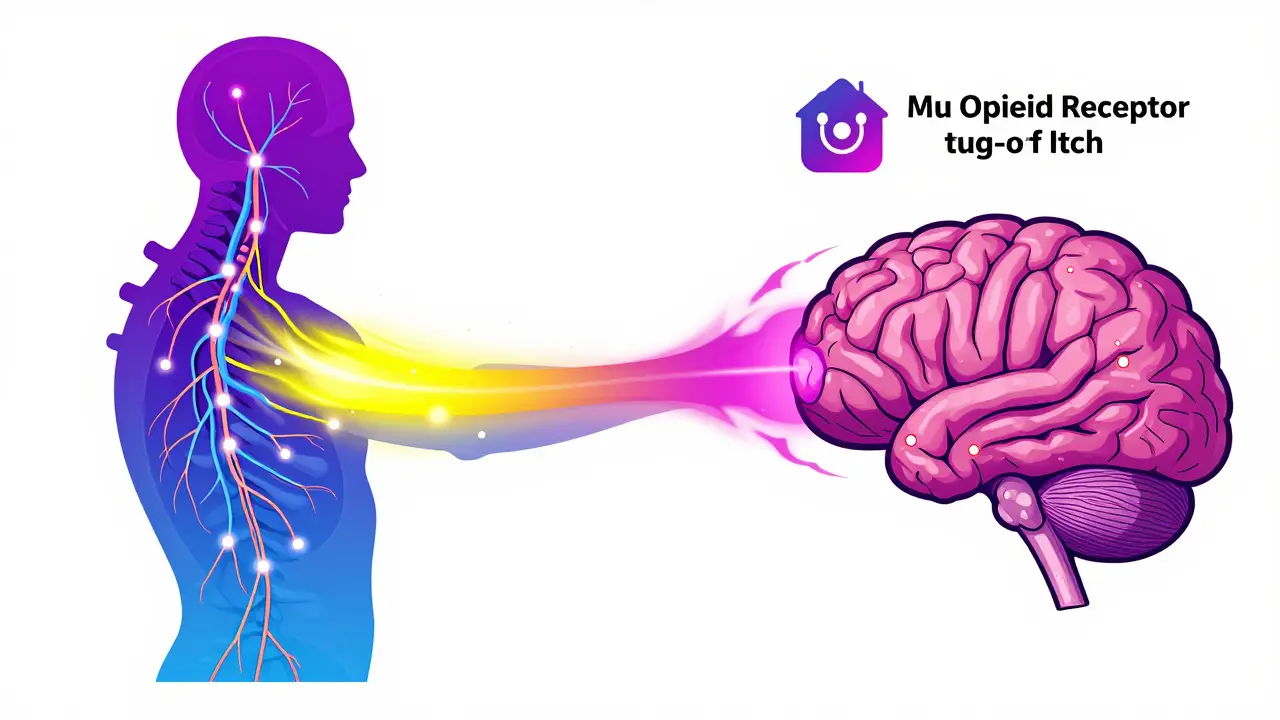
For a long time, doctors thought this itch was caused by a simple mistake in the immune system. The old theory centered on Histamine is a compound released by mast cells during allergic reactions that causes blood vessels to dilate and triggers itching . Certain opioids, like morphine and codeine, can trigger mast cells to dump histamine into your system without any actual allergy being present. This is why you might see hives or redness accompanying the itch. However, modern research shows that histamine is only part of the story. In many cases, the itch is actually "neural." It happens because the Mu Opioid Receptor is the primary protein target for most opioid pain medications, located in the brain, spinal cord, and peripheral nerves (MOR) is activated. When these receptors are triggered in specific nerve fibers-specifically those expressing the TRPV1 protein in the dorsal root ganglion-it sends an "itch" signal directly to the brain. This explains why some people itch even when their histamine levels are normal. It's not an allergy; it's a direct communication between the drug and your nervous system. Because these two pathways (histamine and neural) can happen simultaneously, treating the itch requires a targeted approach depending on which pathway is dominant.How different delivery methods affect the itch
Not all opioid experiences are the same. The way the drug enters your body drastically changes how likely you are to feel this sensation. When a drug is delivered directly into the spinal fluid (intrathecal), it hits the nerve roots with high intensity. In these cases, up to 100% of patients report itching. Conversely, if you take an opioid pill, the drug is processed by the liver and diluted in the bloodstream, meaning only 10-30% of people experience pruritus. Intravenous (IV) administration sits in the middle, affecting roughly 30-50% of users. This is why you'll often see a higher rate of itching in maternity wards after spinal blocks than in a general clinic where oral medications are more common.Treatment options: What actually works?
If you've ever tried an over-the-counter allergy pill for this sensation, you know they often don't work. First-generation antihistamines like diphenhydramine have a low success rate, often helping only 20-30% of patients. This is because they target the histamine pathway, but they do nothing for the neural pathway triggered by the Mu receptors. To really stop the itch, doctors have to target the receptors themselves. Here are the primary strategies used in clinical settings today:- Low-dose Naloxone: Naloxone is a potent opioid antagonist used to reverse the effects of opioids is typically used to treat overdoses, but in tiny, controlled doses (around 0.25 mcg/kg/min), it can block the itch receptors without taking away the pain relief.
- Kappa Opioid Agonists: Drugs like Nalbuphine is a mixed opioid agonist-antagonist that provides analgesia while blocking certain itch-inducing receptors are often more effective than pure blockers. They act on the Kappa receptors, which can effectively "turn off" the itch signal. In some studies, nalbuphine showed an 85% efficacy rate.
- Non-Opioid Alternatives: IV lignocaine is sometimes used, providing about 70% relief, though it requires closer heart monitoring.
| Treatment | Target Pathway | Estimated Efficacy | Main Trade-off |
|---|---|---|---|
| First-Gen Antihistamines | Histamine | 20-30% | Causes drowsiness |
| Low-dose Naloxone | Mu Receptor | 60-80% | Risk of reducing pain relief |
| Nalbuphine | Kappa Receptor | ~85% | Requires clinical monitoring |
| IV Lignocaine | Neural/Sodium Channels | ~70% | Cardiac monitoring needed |
The real-world impact on recovery
It's easy for some medical professionals to dismiss itching as a "minor nuisance," but for the patient, it can be debilitating. In postpartum recovery, for instance, severe itching can interfere with the crucial first hours of mother-infant bonding. When a mother is fighting an overwhelming urge to scratch her face and chest, she can't focus on her newborn. Moreover, this side effect often leads to patients stopping their medication too early. Some people find the sensation so distressing-describing it as "fire ants under the skin"-that they would rather endure the physical pain of surgery than the psychological torture of the itch. This puts them at a higher risk for chronic pain if the initial acute pain isn't managed correctly.How to manage it effectively
If you or a loved one are dealing with this, timing is everything. The most effective window for intervention is within the first 5 to 10 minutes of the itching starting. Once the sensation becomes systemic and severe, it's much harder to dial back. One of the biggest dangers in a hospital setting is misdiagnosis. About 32% of clinicians initially mistake severe opioid itching for anaphylaxis (a life-threatening allergic reaction). This can lead to the unnecessary administration of epinephrine, which can cause heart palpitations and anxiety. The key difference is that opioid-induced itching usually lacks the airway swelling or drastic drop in blood pressure associated with true anaphylaxis. For those in a clinical setting, using a multimodal approach-combining a mixed antagonist (like nalbuphine) with a low-dose mu-blocker-is currently considered the gold standard. The goal is to find the "sweet spot" where the itch disappears, but the pain medication remains effective.
What's next in treatment?
We are moving toward a future of "receptor-subtype selective modulation." Instead of using broad drugs that affect the whole body, new medications are being developed to target only the peripheral nerves. One example is difelikefalin, a peripherally restricted kappa agonist that aims to stop the itch without ever crossing the blood-brain barrier, meaning it doesn't cause the central nervous system side effects that older drugs might. By 2028, it's expected that most major medical centers will move away from simple antihistamines and toward these precise receptor-targeted therapies. This shift will likely make the experience of postoperative recovery much more comfortable for millions of patients.Is opioid-induced itching an allergic reaction?
No, in most cases it is not a true allergy. While it involves histamine release from mast cells, it is a pharmacological side effect of the drug. It is a direct result of the drug interacting with your receptors, not an immune system overreaction to a foreign substance.
Why don't Benadryl or other allergy meds work?
Standard antihistamines only block the histamine pathway. However, opioid itching is often driven by a neural pathway involving the Mu Opioid Receptors. Since the allergy meds don't touch these receptors, they fail to stop the signal that's actually causing the itch.
Can you treat the itch without losing the pain relief?
Yes, but it requires precise dosing. Low-dose naloxone infusions or the use of kappa-agonists like nalbuphine can block the itch signals without completely neutralizing the pain-blocking effects of the original opioid.
Where is the itching usually felt?
It is most commonly felt in the face, neck, and upper torso. This is because the Mu Opioid Receptors, which trigger the itch, are found in high densities in these areas.
Which opioids are most likely to cause this?
Morphine, codeine, and meperidine are among the most common culprits, especially when delivered via spinal or epidural routes.
Next Steps and Troubleshooting
Depending on your situation, the approach to handling this varies:- If you are a patient currently experiencing this: Alert your nursing staff or doctor immediately. Specify that the itching is widespread and doesn't respond to scratching, as this helps them differentiate it from a local skin irritation.
- If you are a caregiver: Look for signs of facial itching or restlessness in a patient who cannot communicate. Early detection allows the medical team to administer receptor-blockers within the critical 10-minute window.
- If you are managing long-term pain: Discuss a "multimodal" pain plan with your doctor. This means combining lower doses of opioids with non-opioid pain relievers to reduce the overall load on your Mu receptors, lowering the chance of pruritus.