
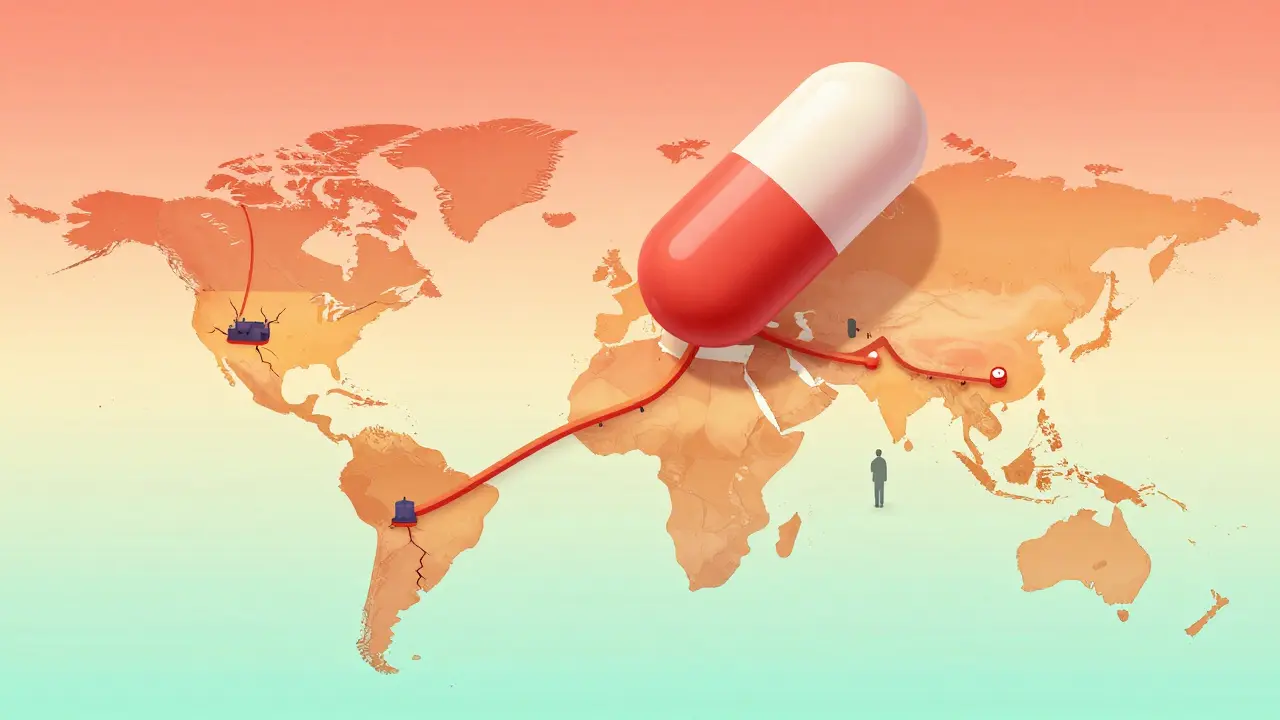
When you pick up your prescription, you probably don’t think about where that pill came from. But more than 80% of the active ingredients in the medicines Americans take are made overseas-mostly in China and India. And right now, that’s a problem. In 2024, the U.S. saw its worst wave of drug shortages in over a decade. Insulin, antibiotics, cancer drugs-some ran out for weeks. Hospitals had to ration. Patients delayed treatment. It wasn’t a glitch. It was a system built for cheapness, not safety.
How We Got Here: The Cost-Cutting Machine
The global pharmaceutical supply chain was designed over decades to cut costs, not reduce risk. Companies moved production overseas because labor was cheaper, regulations looser, and taxes lower. By 2025, 94% of multinational drugmakers rely on foreign suppliers for raw materials, according to the National Foreign Trade Council. China alone produces 40% of the world’s active pharmaceutical ingredients (APIs). India makes another 30%. Together, they supply nearly every pill, injection, and inhaler in the U.S. and Europe. This setup worked fine as long as shipping was fast, borders were open, and no one questioned the trade-offs. But when the pandemic hit, when China locked down ports, when U.S.-China tariffs spiked, when a single factory in India had a quality control failure-it all unraveled. One broken link in the chain meant millions of patients couldn’t get their meds.The Numbers Don’t Lie: What’s Really at Stake
In 2025, the average lead time for a shipment of APIs from China to the U.S. is 50% longer than it was in 2019. That’s not just a delay-it’s a bottleneck. U.S. logistics costs hit $2.3 trillion last year, or 8.7% of the entire national GDP. And it’s not just money. It’s time. Time patients don’t have. McKinsey found that companies using single-source suppliers-especially those tied to one factory in Asia-faced 120-day average disruptions during 2024 port closures. Companies that diversified their suppliers? They saw disruptions drop to 45 days. That’s a 62% improvement. And yet, only 40% of pharmaceutical firms had fully adopted multi-shoring by the end of 2025. Most are still waiting.Why Reshoring Isn’t the Easy Fix
You might think: just make the drugs here. But it’s not that simple. Manufacturing APIs in the U.S. costs 4.8 times more than in China, according to Professor Richard Baldwin of IMD Business School. Labor, energy, environmental compliance, and infrastructure-all add up. Building a new API plant in the U.S. takes 18 to 24 months and costs 22% of a company’s annual procurement budget. That’s why some companies are turning to nearshoring. Mexico is now a major player. Plante Moran’s 2025 analysis shows shipping from Mexico to the U.S. cuts transportation costs by 30-40% compared to shipping from Asia. It’s faster. More reliable. And politically safer. One Fortune 500 medical device maker boosted its on-time delivery to 99.2% after shifting critical components to Mexican factories. But nearshoring isn’t a magic bullet. Labor in Mexico is still cheaper than in the U.S.-but 15-20% more expensive than in India. And you still need skilled workers. There’s a shortage. One-third of global trade management roles are unfilled in 2025, according to industry surveys.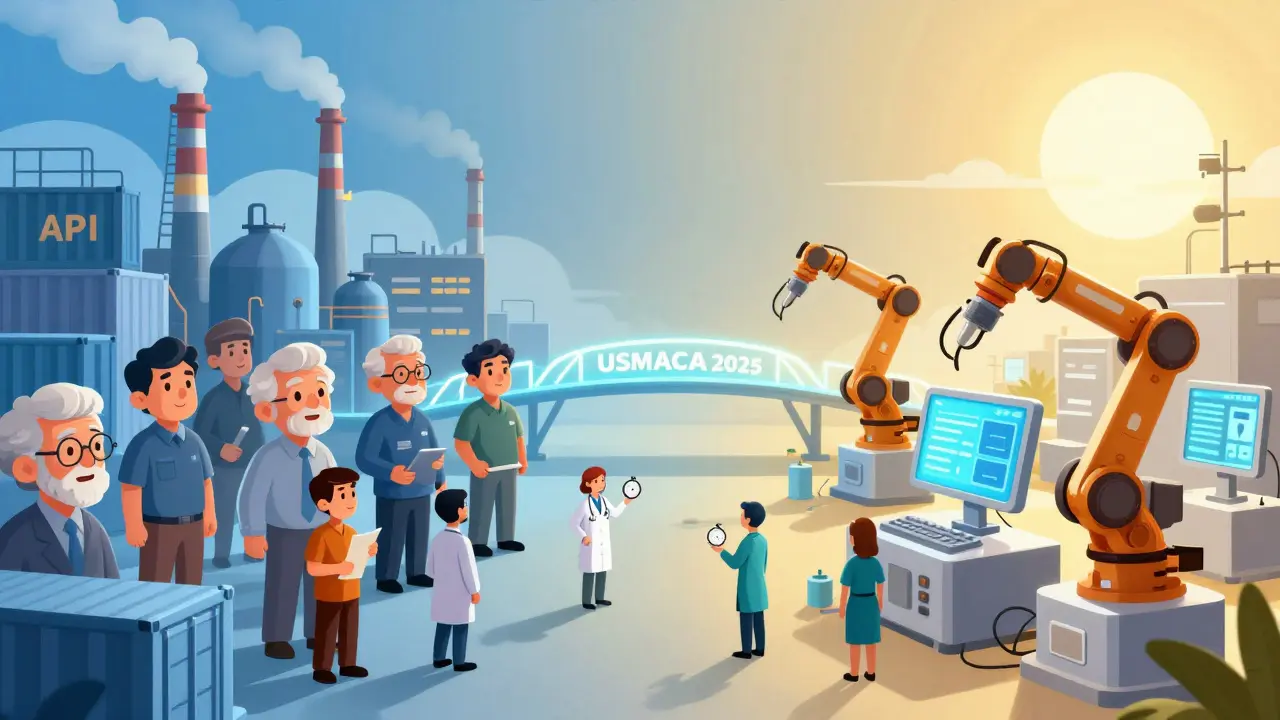
The New Rules: Diversify, Digitize, Prepare
The companies surviving today aren’t the ones betting on one country. They’re the ones betting on flexibility.- Dual-sourcing: One manufacturer saved 37% on critical components by using two suppliers-one in India, one in Germany. But it took 18 months and $2.3 million to set up.
- Digital twins: AI-powered models now simulate supply chain shocks before they happen. Companies using them reduced forecast errors by 35%, according to Supply & Demand Chain Executive.
- Inventory buffers: Just-in-time is dead. Just-in-case is in. Stockpiles of key drugs have grown 15% since 2022. The FDA now requires manufacturers to report inventory levels quarterly.
- Blockchain verification: To stop fake or substandard APIs from entering the system, companies are using blockchain to track every batch from factory to pharmacy. It cuts quality disputes by 65%-but raises IT costs by 30%.
Who’s Getting Left Behind?
Small and mid-sized manufacturers are getting crushed. They don’t have the cash to build dual-sourcing networks. They can’t afford AI systems or blockchain tracking. And they’re not big enough to get priority when ports are backed up. That’s dangerous. SMEs make up over 90% of global businesses and more than half of all jobs in the pharmaceutical sector, according to the World Economic Forum. When they fail, the whole system weakens. In 2024, 56% of companies reported cutting back on product lines or delaying new drug launches because they couldn’t secure materials. That’s not just a business problem-it’s a public health crisis.
What’s Next? The 2025 Reality Check
The U.S. government added 12 new tariff categories in 2024-2025, hitting $340 billion in imports. That’s pushed more companies to rethink where they source. The renegotiated USMCA trade deal, launched in early 2025, is already helping stabilize supply lines with Mexico and Canada. But the biggest shift isn’t political-it’s technological. AI-driven forecasting is now used by 68% of major manufacturers, up from just 22% in 2020. Digital twins, IoT sensors on shipping containers, real-time customs tracking-these aren’t futuristic ideas anymore. They’re survival tools. The OECD warns that global GDP growth in 2025 is now forecast at 2.9%, down from 3.3%, largely because of trade friction. If supply chains keep fracturing, drug shortages won’t be rare events. They’ll be the norm.What You Can Do
You’re not powerless. If you rely on a medication that’s been in short supply:- Ask your pharmacist if there’s an alternative brand or generic version available.
- Sign up for alerts from the FDA’s Drug Shortages page-they post updates in real time.
- Don’t hoard. Stockpiling makes shortages worse for everyone.
- Support policies that fund domestic API production and incentivize supply chain diversity.
Why are so many drugs made overseas?
Drug manufacturing moved overseas over the past 30 years because it was cheaper. Labor costs in China and India are a fraction of those in the U.S. or Europe. Regulations were also less strict, and companies could scale production faster. Over time, this became the norm. Today, 80-90% of active ingredients in U.S. medications come from abroad, mostly from just two countries: China and India.
Can the U.S. make its own drugs again?
Yes, but it’s expensive and slow. Building a single API manufacturing plant in the U.S. costs over $200 million and takes 2 years. Labor costs are nearly 5 times higher than in China. The government has started offering tax credits and grants to encourage domestic production, but progress is still slow. Most experts agree: the goal isn’t to make everything at home-it’s to have multiple reliable sources around the world.
What’s the biggest risk to drug supply chains right now?
The biggest risk is over-reliance on a few countries-especially China. A single port closure, political dispute, or natural disaster can cut off half the world’s supply of a critical drug. Cyberattacks on logistics systems, workforce shortages in global trade, and rising tariffs are all compounding the problem. In 2025, 60% of manufacturers say cybersecurity is a top concern in their supply chains.
How does nearshoring to Mexico help?
Shipping from Mexico to the U.S. takes 3-5 days instead of 3-4 weeks from Asia. Transportation costs drop by 30-40%. It’s also politically stable and under the same trade agreement as the U.S. (USMCA). Companies like Pfizer and Johnson & Johnson are already shifting critical components to Mexican factories. The trade-off? Labor costs are higher than in Asia, but the reliability and speed make it worth it for life-saving drugs.
Are drug shortages getting worse?
Yes. After peaking in 2022, shortages dipped slightly in 2023, but returned with force in 2024 and 2025. The FDA recorded over 200 active drug shortages in 2025-the highest number since 2012. The difference now? More people are aware. More hospitals are preparing. And more companies are finally changing how they source. But without systemic reform, shortages will keep happening.
What role does AI play in fixing supply chains?
AI helps predict disruptions before they happen. It can analyze weather patterns, port congestion, political unrest, and even social media trends to flag potential delays. Companies using AI-driven forecasting have reduced supply chain errors by 35%. It also helps optimize inventory-so you’re not overstocking or running out. In 2025, 68% of major drugmakers use AI in their supply chain operations, up from just 22% in 2020.







Jeffrey Frye
December 23, 2025 AT 09:47