
Running out of medication while traveling isn’t just inconvenient-it can be dangerous. Imagine landing in Bangkok with a severe infection, only to realize your prescription won’t be recognized. Or waking up sick in Rome with no idea where to buy the right medicine. This happens to thousands of travelers every year. The good news? You don’t have to guess your way through a foreign healthcare system anymore. Modern travel apps can find you a pharmacy, clinic, or even a doctor who speaks your language-all within minutes.
Why You Need More Than a Google Search
A Google search for "pharmacy near me" in a foreign country often leads to dead ends. Street names change. Medications have different brand names. Pharmacists might not speak English. Even if you find a store, they might not carry the exact drug you need. In Mexico, for example, amoxicillin is sold as "Amoxil," but in Brazil, it’s "Amoxicilina." In Japan, the same pill might have three different brand names depending on the manufacturer. These aren’t just translation issues-they’re medical mismatches that can delay treatment or cause harmful reactions. That’s where specialized travel health apps come in. Unlike general maps or directories, these apps are built by pharmacists and doctors specifically for travelers. They know which drugs are equivalent across countries, which clinics accept foreign insurance, and which ones have English-speaking staff. They don’t just point you to a location-they help you understand what you’re getting.Top Apps for Finding Medications and Clinics
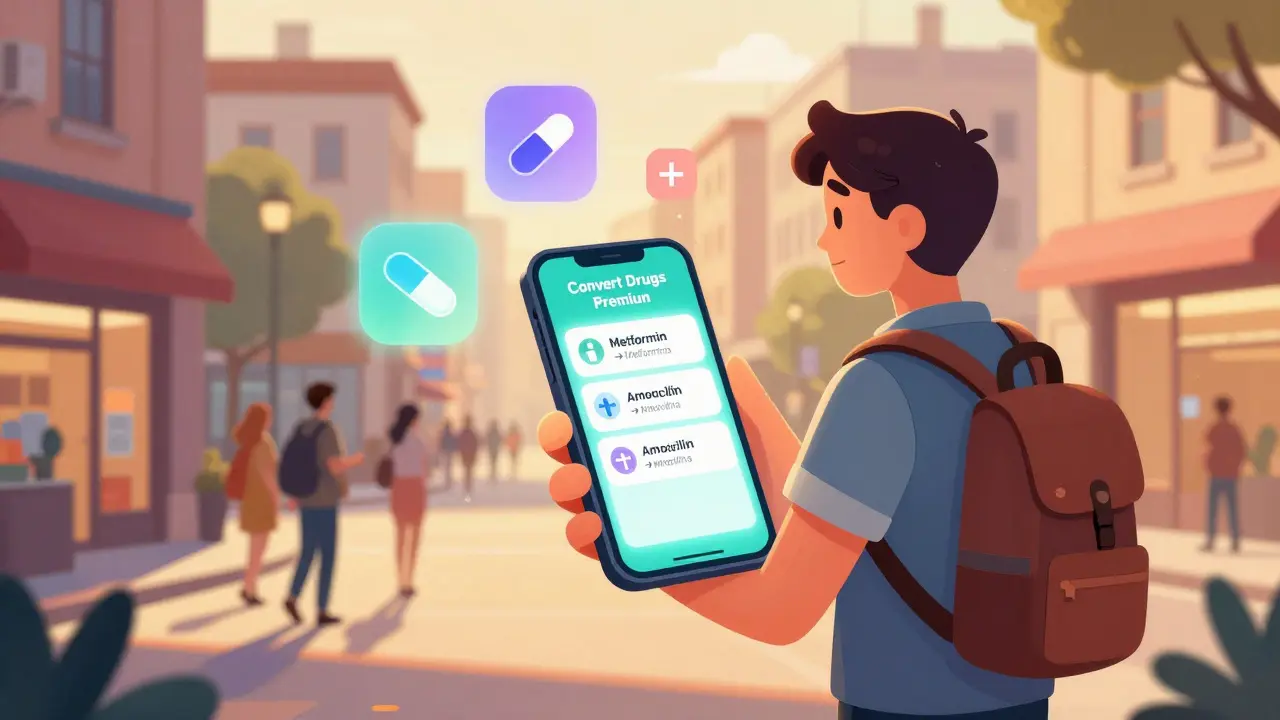
There are eight major apps designed for this purpose. Here’s what they actually do-and who they’re best for.- Convert Drugs Premium: This app is the gold standard for medication matching. It translates over 15,000 drugs across 220 countries. If your doctor prescribed you metformin in Sydney, it’ll tell you the exact equivalent in Thailand, Egypt, or Chile-even if it’s sold under a completely different name. It’s iOS-only, costs $7.99, and doesn’t need Wi-Fi to check drug names if you’ve downloaded the dictionary ahead of time. Travelers with chronic conditions like diabetes or hypertension rely on this one above all.
- Air Doctor: If you need to talk to a doctor right now, this is your best bet. It connects you to over 25,000 verified clinics and doctors in 195 countries via video call. You can upload your symptoms, show a photo of your pill bottle, and get a diagnosis within minutes. It works on both iOS and Android. Consultations cost $49-$79, but many users say it’s worth it when you’re stranded in a country with no local contacts. The AI symptom checker in its latest version cuts misdiagnosis rates by 22%.
- mPassport: This app focuses on booking appointments. It lets you schedule a visit to a local clinic or pharmacy in advance-something you can’t do with Google Maps. It covers 35,000+ facilities in major cities across 100+ countries. It’s especially useful in places like Spain or South Korea, where clinics often require appointments even for walk-in care. It also shows which pharmacies stock your medication by brand name and generic equivalent.
- TravelSmart: Built by Allianz Global Assistance, this app is tied to their travel insurance. But even if you don’t have their policy, you can still use its massive medication dictionary (5,000+ translations) and emergency clinic locator. The catch? Full features like claims filing and telemedicine require insurance. Still, its offline medication database is the most comprehensive on the market.
- Epocrates: Used by over a million doctors in the U.S., this app is powerful-but not ideal for most travelers. It has a huge drug database, but it doesn’t translate brand names outside the U.S. and Canada. One Reddit user reported it failed to recognize a French e-prescription in Paris. Great for U.S. medical professionals, but not for the average tourist.
- Find-ER: This one is simple: it finds emergency hospitals. No medication lookup. No telemedicine. Just vetted ERs in 129 countries. If you’re hiking in Nepal or diving in Indonesia, this app could save your life. It’s free and works offline.
How to Set Up Before You Leave
Don’t wait until you’re sick to download these apps. Here’s how to prepare properly:- Download 2-3 apps at least two weeks before your trip. The International Society of Travel Medicine recommends using at least two: one for medication matching, one for clinic location.
- Enter your medications into Convert Drugs Premium or TravelSmart. Type in the generic name (e.g., "ibuprofen") and the dosage. The app will show you local equivalents.
- Download offline content. Apps like TravelSmart and Pepid let you save medication lists and clinic maps for use without internet. Do this while you’re still on Wi-Fi at home.
- Save a physical copy. Print out your medication list with generic names and dosages. Carry it in your wallet. In some countries, pharmacists won’t dispense anything without a written prescription-even if the app says it’s safe.
- Check insurance compatibility. If you’re using TravelSmart, confirm whether your insurer is linked. If not, you’ll pay out-of-pocket for telemedicine.

What to Do When You’re Sick Abroad
You’re in a foreign city. You feel awful. Your head is spinning. Here’s what to do step by step:- Open Convert Drugs Premium or TravelSmart. Search your medication. Note the local brand name and dosage.
- Open mPassport or Air Doctor. Find the nearest clinic or pharmacy that accepts foreign patients.
- Call or message the clinic using the app’s built-in translator. Say: "I need [drug name] for [condition]. I have a prescription from [your country]."
- If they don’t have it, ask: "Do you have an equivalent?" Show them the app’s result.
- If you need a doctor, use Air Doctor. Upload your symptoms and your medication list. Get a diagnosis and prescription sent to a nearby pharmacy.
- Pay with credit card. Most clinics accept international cards. Keep the receipt for insurance.
Real Stories from Travelers
A woman from Toronto lost her diabetes medication in Lisbon. She used Convert Drugs Premium and found that "Glucophage" was sold as "Metformina" in Portugal. She bought it at a local pharmacy without a prescription-because the app confirmed it was safe and identical. A backpacker in Vietnam got food poisoning. He opened Air Doctor, described his symptoms, and was connected to a doctor who spoke English. The doctor prescribed an antibiotic. The app then directed him to a pharmacy 500 meters away that had it in stock. He was back on his feet in three hours. Another traveler in Italy had a severe allergic reaction. She used Find-ER and was taken to a hospital that had an English-speaking ER team. She didn’t need an app for medication-she needed fast access to emergency care.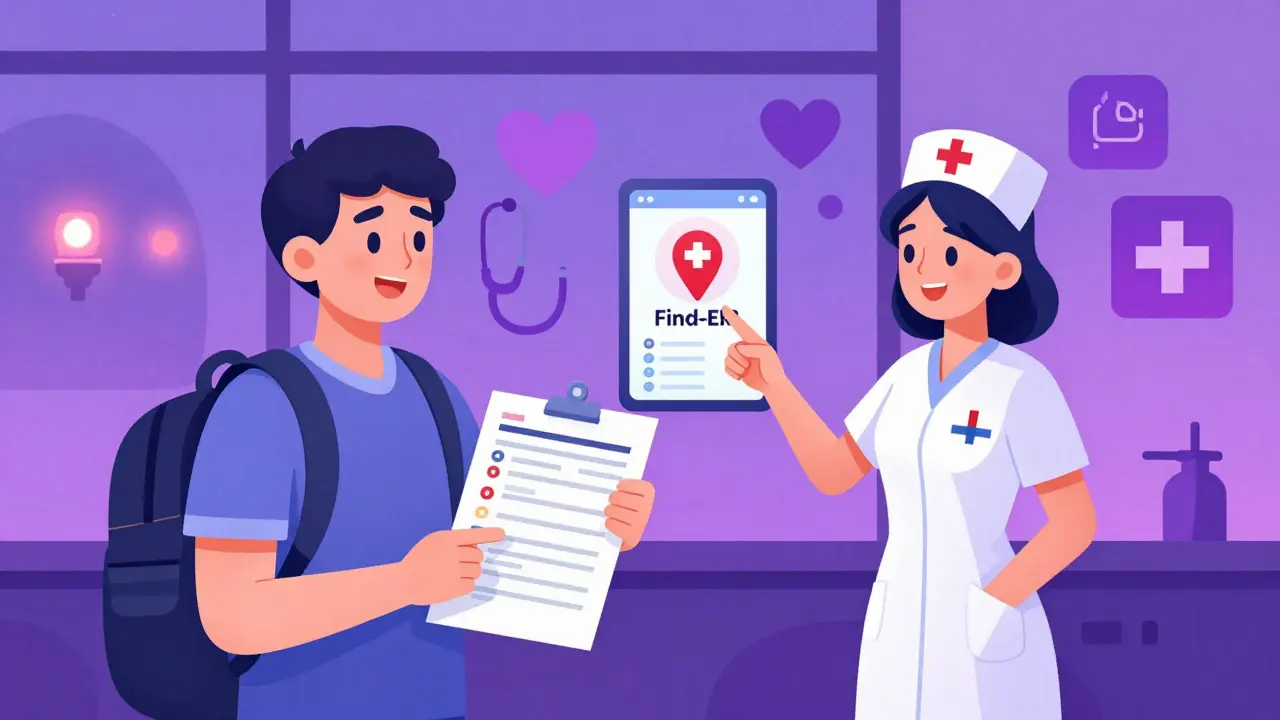
Limitations and Risks
These apps are powerful, but they’re not magic. They can’t replace a pre-travel doctor’s visit. If you have a chronic condition, complex medication regimen, or are pregnant, you still need to consult a travel medicine specialist before you go. Also, rural areas are often not covered. In parts of India, Indonesia, or Africa, even the best apps might show "no nearby facilities." That’s why carrying physical copies of your prescriptions and a basic first-aid kit is still essential. Some apps require internet. Others charge for consultations. And not all pharmacies stock the exact drug-even if the app says they do. Always verify with the pharmacist in person.What’s Coming Next
The next big shift? Integration. By 2026, the top apps will combine medication matching, clinic location, telemedicine, and insurance billing into one platform. Convert Drugs Premium is launching an Android version in late 2024. Air Doctor is adding AI-driven symptom tracking. And the EU is rolling out a digital health certificate that will let you share e-prescriptions across member states-making medication equivalence apps less critical in Europe. For now, the best strategy is simple: use two apps. One for drugs. One for clinics. Download them before you leave. Test them at home. Know what they can and can’t do. And always carry backup paper copies.Traveling shouldn’t mean risking your health. With the right tools, you can walk into any pharmacy abroad and feel confident you’re getting the right medicine-no guesswork, no panic, no language barrier.
Can I use these apps without internet access?
Some apps, like TravelSmart and Convert Drugs Premium, let you download medication databases and clinic maps for offline use. But features like telemedicine, live location tracking, and appointment booking require internet. Always download offline content before leaving home.
Do I need travel insurance to use these apps?
No. Most apps work without insurance. But TravelSmart and Air Doctor offer discounted or free telemedicine and claims processing only if you have their partnered insurance. You can still use their maps and medication databases for free.
Are generic drugs safe to use abroad?
Yes-if they’re confirmed equivalent by a trusted app like Convert Drugs Premium. Generic drugs contain the same active ingredients as brand-name versions. The only differences are fillers and packaging. These apps verify therapeutic equivalence, so you’re not risking your health.
What if the pharmacy doesn’t recognize the drug name?
Show them the app’s result on your phone. Most pharmacists in tourist areas are familiar with these tools. If they still don’t understand, ask for the generic name (e.g., "amoxicillin") instead of the brand name. If all else fails, go to a hospital pharmacy-they’re more likely to have international stock.
Are these apps reliable in developing countries?
Coverage is spotty in rural areas and low-income countries. Apps like Find-ER and Air Doctor still list emergency facilities, but availability may be limited. Always carry a physical backup of your medications and have a local contact if possible.
Which app is best for someone with a chronic illness?
Convert Drugs Premium is the top choice. It covers 220 countries and 15,000+ medications with verified therapeutic equivalence. Pair it with Air Doctor for telemedicine access if you need a doctor’s advice while traveling. Always carry your original prescription and a letter from your doctor too.
Can I use these apps to refill prescriptions?
Not directly. No app can legally refill a prescription without a doctor’s authorization. But apps like Air Doctor and mPassport can connect you to a local doctor who can issue a new prescription if your condition requires it. Always check local laws-some countries require in-person visits for controlled substances.


George Bridges
January 12, 2026 AT 01:47