
Biosimilars are not generics. They’re not cheaper copies of pills you’ve taken for years. They’re highly complex, living-cell-based medicines designed to match expensive biologic drugs - like those used for cancer, rheumatoid arthritis, and diabetes - with no clinically meaningful difference in safety or effectiveness. But while Europe has been using them for nearly two decades, the United States only started catching up recently. Why? And what does that mean for patients, doctors, and healthcare costs?
Europe: The Pioneer in Biosimilar Adoption
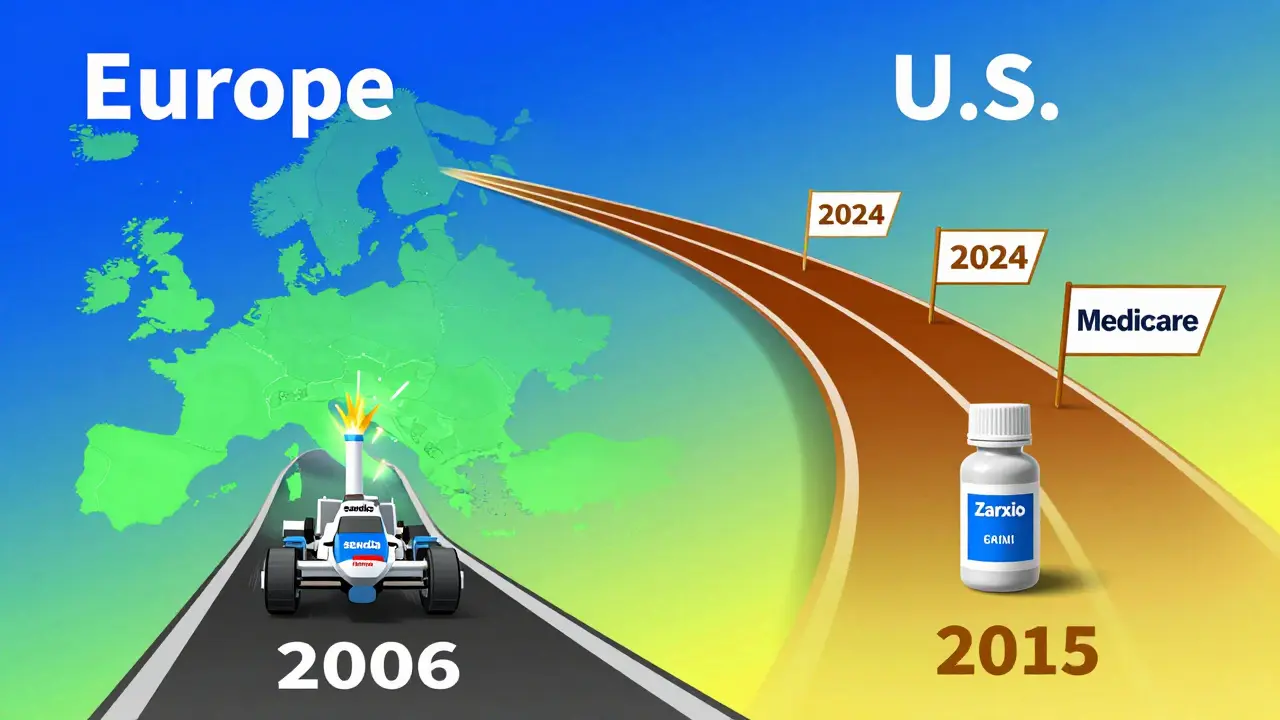
Europe didn’t just lead the way - it built the playbook. The European Medicines Agency (EMA) approved the first biosimilar, Omnitrope, in 2006. That was 9 years before the U.S. approved its first, Zarxio. And it wasn’t a fluke. Europe didn’t wait. It created a clear, science-based path for approval: focus on rigorous analytical testing, non-clinical studies, and targeted clinical data. No need for massive, expensive trials just to prove the drug works the same. The EMA’s ‘totality-of-evidence’ approach trusted the science.
By 2024, Europe’s biosimilar market hit $13.16 billion in revenue, according to Precedence Research. Germany, France, and the UK led the charge. Hospitals there use centralized tenders - bulk purchasing systems - that automatically favor biosimilars if they meet quality and cost targets. In countries like Germany, biosimilars for rheumatoid arthritis and cancer drugs like infliximab and rituximab now hold over 80% of the market. That’s not just adoption. That’s dominance.
Why does it work so well? Three things: clear rules, predictable pricing, and trust. Doctors know what they’re prescribing. Pharmacists can substitute biosimilars without extra approval. Payers - whether public or private - actively encourage them because they save 20-30% per dose. And with over 100 biosimilars approved since 2006, Europe’s ecosystem is mature. Companies like Sandoz, Fresenius Kabi, and Amgen built manufacturing hubs here. Germany alone became a global biosimilar production powerhouse.
The United States: Slow Start, Fast Catch-Up
The U.S. passed the Biologics Price Competition and Innovation Act (BPCIA) in 2009. Sounds like progress, right? But the law came with hidden traps. Patent thickets. Litigation. The so-called ‘patent dance’ - a legal back-and-forth that let originator companies delay biosimilar entry for years. By 2015, when Zarxio finally launched, Europe had already approved 50+ biosimilars. The U.S. had one.
For nearly a decade, adoption stayed low. Why? Payers didn’t push. Doctors were hesitant. Patients didn’t know what biosimilars were. And the FDA required switching studies - trials where patients were taken off the original drug and put on the biosimilar - just to get interchangeable status. That meant extra time, extra cost, and fewer options on the market. As of 2024, the U.S. had only approved 12 biosimilars. Europe had over 100.
But 2024 changed everything. In June, the FDA dropped the switching study requirement for interchangeable biosimilars. It was a game-changer. Suddenly, the U.S. regulatory path looked a lot more like Europe’s. And the market responded. By early 2026, over 20 biosimilars were approved in the U.S., with new ones hitting shelves every month. The Inflation Reduction Act of 2022 helped too - by closing the Medicare Part D coverage gap, it made biosimilars more attractive to seniors and insurers.
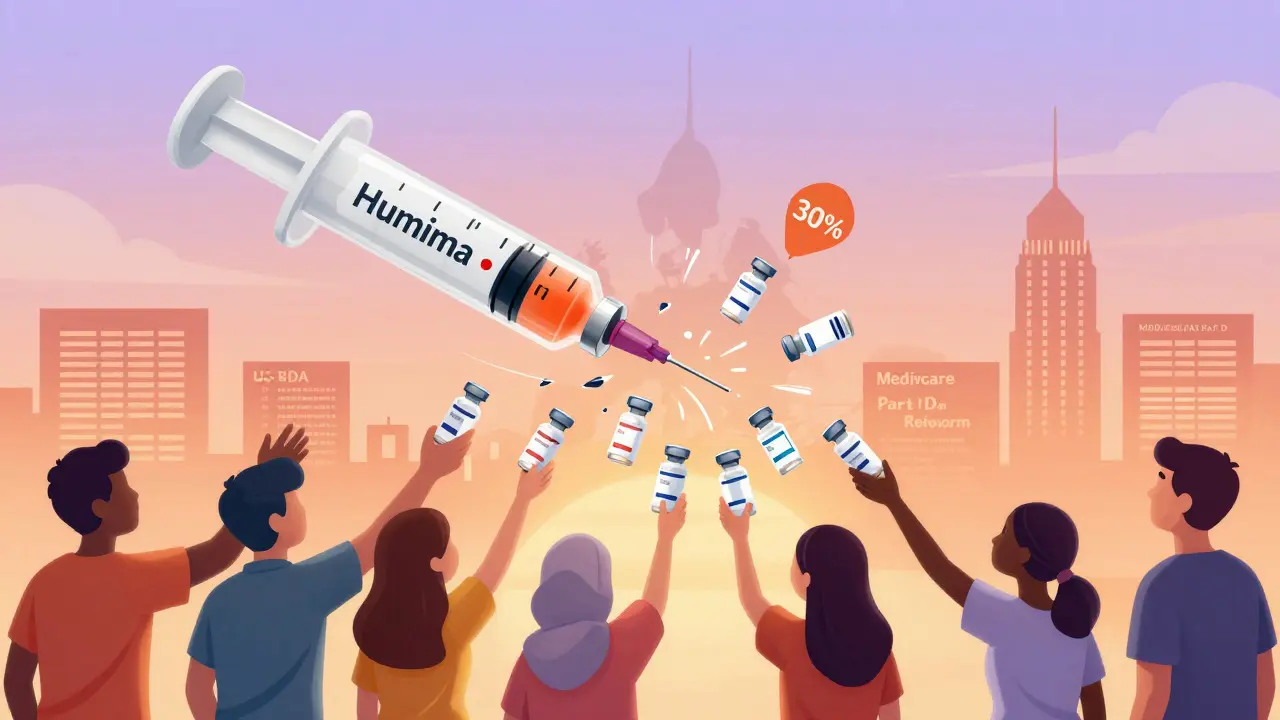
Now, the U.S. market is growing fast. Alira Health reports it hit $10.9 billion in 2024, up from $7.1 billion in 2020. IMARC Group projects it’ll hit $30.2 billion by 2033. That’s an 18.5% annual growth rate. Why? Because the biologics cliff is here. Humira, the world’s best-selling drug, lost its patent in 2023. Fourteen biosimilars were approved for it - six are now on the market. And dozens more high-cost biologics for cancer, autoimmune diseases, and diabetes are set to expire between 2025 and 2034. That’s a $232 billion opportunity, according to IQVIA.
Key Differences: Regulation, Adoption, and Cost
Here’s how the two markets stack up:
| Factor | Europe | United States |
|---|---|---|
| First Biosimilar Approved | 2006 (Omnitrope) | 2015 (Zarxio) |
| Total Biosimilars Approved (as of 2025) | Over 100 | Over 20 |
| Regulatory Pathway | Totality-of-evidence; minimal clinical trials | Now aligned; switching studies no longer required |
| Interchangeable Status | Not formally defined; substitution allowed | New guidelines enable easier interchangeability |
| Market Revenue (2024) | $13.16 billion | $10.9 billion |
| Projected CAGR (2025-2034) | 17.34% | 18.5% |
| Primary Adoption Drivers | Hospital tenders, mandatory substitution, payer incentives | Patent expirations, Medicare reforms, FDA regulatory changes |
| Key Therapeutic Areas | Oncology, rheumatology, autoimmune diseases | Supportive care (early), now expanding into oncology and immunology |
The biggest difference? Europe built trust over time. The U.S. had to rebuild it. In Europe, biosimilars aren’t seen as second-rate - they’re routine. In the U.S., doctors still ask: ‘Is this really the same?’ Now, with FDA guidance changes and real-world data piling up, that doubt is fading.
Who’s Winning? The Future of Biosimilars
Europe still leads in total volume and market maturity. But the U.S. is accelerating faster. Grand View Research predicts North America will overtake Europe in market size by 2027. Why? Scale. The U.S. has a bigger biologics market. More patients. More high-revenue drugs hitting patent cliffs. And now, fewer regulatory barriers.
Manufacturing is another story. Europe still holds the edge. Germany, France, and Switzerland are home to the world’s most advanced biosimilar production facilities. Companies like Sandoz and Fresenius Kabi have spent decades perfecting the process. The U.S. is catching up - Pfizer, Merck, and Samsung Bioepis are ramping up - but it takes time to build the infrastructure.
Cost savings are real. In Europe, biosimilars cut biologic spending by 20-30% in just a few years. In the U.S., early data shows similar savings - but only where adoption is high. The real win? For patients. A biosimilar for Humira can cost $5,000 less per year than the original. Multiply that by millions of patients with autoimmune diseases. That’s billions saved. That’s better access. That’s more people getting life-changing treatment.
What’s Next?
Both markets face challenges. Manufacturing next-generation biologics - like complex antibody-drug conjugates - is harder than ever. Educating doctors and patients remains critical. And patent litigation hasn’t disappeared. But the trend is clear: biosimilars are no longer a niche. They’re becoming standard.
Europe’s lesson? Start early. Build trust. Simplify. The U.S. is learning it now. With new FDA rules, Medicare incentives, and a flood of expiring patents, the American market is finally unlocking its potential. By 2030, biosimilars could be the default choice for dozens of biologic therapies - in both Europe and the U.S.
For patients, that means more affordable treatment. For providers, more options. For the system, massive savings. The biosimilar revolution isn’t coming. It’s already here - and it’s changing healthcare, one dose at a time.
What’s the difference between a biosimilar and a generic drug?
Generics are exact chemical copies of small-molecule drugs, like aspirin or metformin. Biosimilars are highly similar to complex biologic drugs - which are made from living cells, not chemicals. You can’t copy them exactly. But biosimilars are proven to work the same way, with no meaningful difference in safety or effectiveness. They’re not generics - they’re a different category of medicine.
Why did Europe adopt biosimilars faster than the U.S.?
Europe created a clear, science-based approval process in 2006 and encouraged substitution by hospitals and pharmacies. Payers pushed for cost savings. Doctors trusted the data. The U.S. had a complicated legal system with patent lawsuits, unclear substitution rules, and a regulatory requirement for switching studies - all of which slowed things down. The FDA only removed that barrier in 2024.
Are biosimilars safe?
Yes. Every biosimilar approved in Europe or the U.S. has gone through strict testing - including analytical studies, animal tests, and clinical trials - to prove it works like the original. The EMA and FDA both require no clinically meaningful differences in safety, purity, or potency. Millions of patients worldwide have used biosimilars for over 15 years with no new safety concerns.
Can a pharmacist substitute a biosimilar without asking my doctor?
In Europe, yes - in most countries, substitution is allowed or even required. In the U.S., it depends. Only biosimilars designated as ‘interchangeable’ by the FDA can be substituted without the prescriber’s approval. Since June 2024, more biosimilars are qualifying for this status. But not all states allow automatic substitution - rules vary by location.
How much do biosimilars save compared to the original biologic?
Biosimilars typically launch at 15-30% lower prices than the reference product. In Europe, competition has driven savings to 40-50% in some cases. In the U.S., early data shows 20-35% savings, with potential for more as more biosimilars enter the market. For expensive drugs like Humira, that means patients pay thousands less per year.




Korn Deno
March 23, 2026 AT 05:39