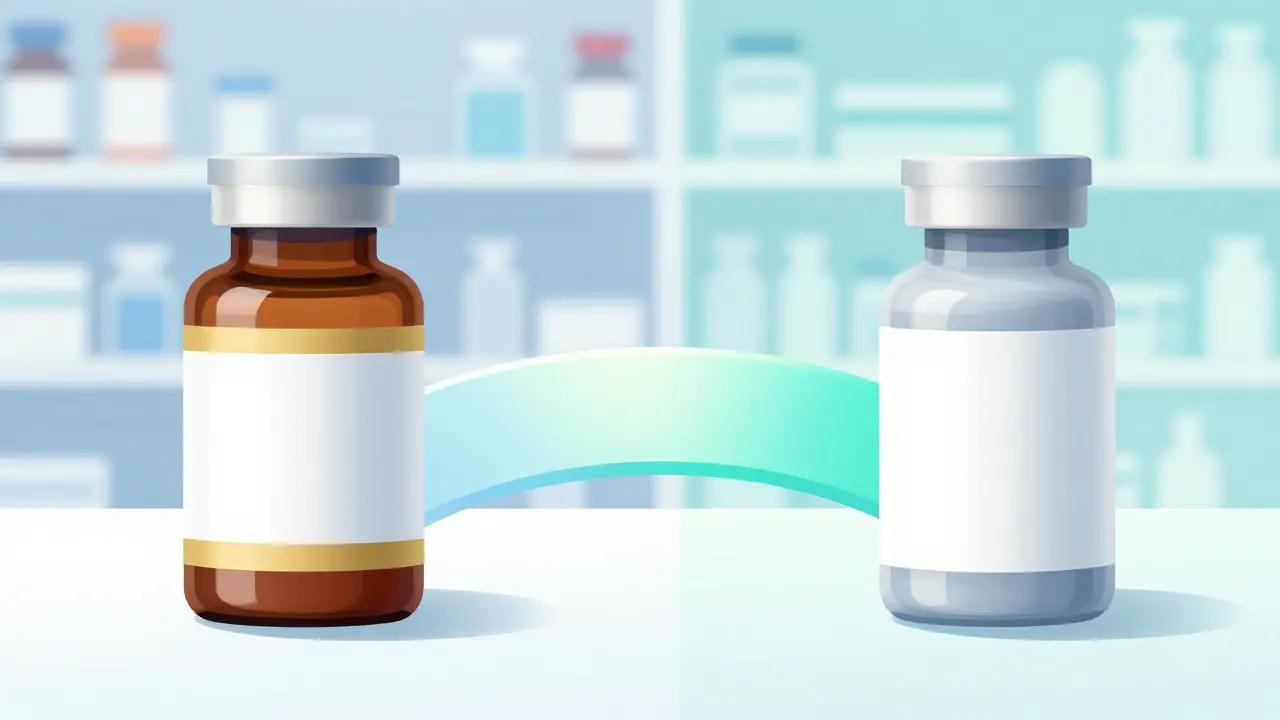
Imagine walking into your pharmacy and finding a medication that is exactly the same as the brand-name version-same ingredients, same factory, same quality-but with a different label and a lower price. This isn't a typical generic; it's an authorized generic. While they might sound like a contradiction, these drugs are a strategic middle ground in the pharmaceutical world, designed to give patients the peace of mind of a brand-name product without the full brand-name cost.
The problem is that identifying these drugs is surprisingly hard. Most people, and even some pharmacists, can't tell the difference between an authorized generic and a standard one just by looking at the bottle. With the market shifting toward biosimilars and increased regulatory scrutiny, knowing what your current options are and how they differ from regular generics is key to managing your healthcare budget and medication safety.
What Exactly Is an Authorized Generic?
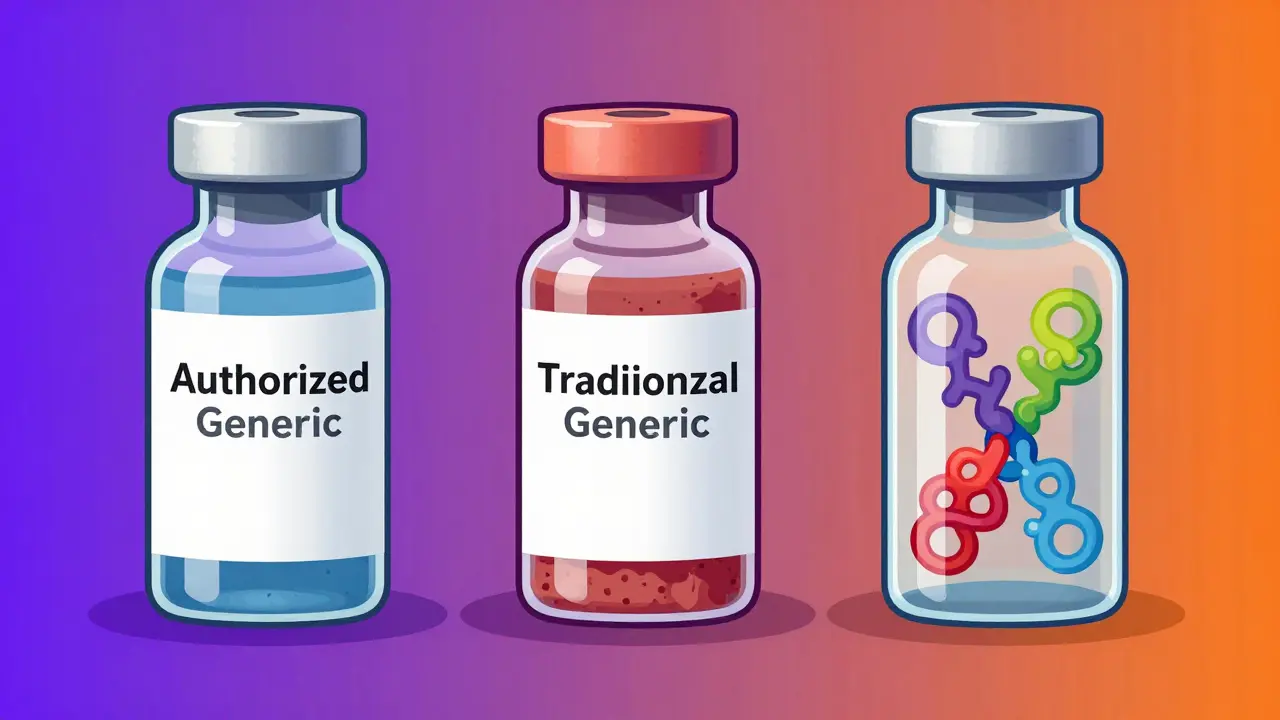
To put it simply, Authorized Generics is a listed drug approved by the FDA that is marketed as a generic but is identical in formulation to the brand-name version, typically sold by the original manufacturer or an affiliate. Unlike traditional generics, which are created by other companies that must prove their version works the same way as the original, authorized generics are the original drug in a different package.
If you look at the FDA Orange Book, these drugs usually hold an "A" rating for therapeutic equivalence. This means they contain the exact same active and inactive ingredients. In a traditional generic, the "fillers" or inactive ingredients can change, which occasionally causes mild side effects for sensitive patients. Because authorized generics don't change the recipe, that risk disappears.
Authorized Generics vs. Traditional Generics vs. Biosimilars
It is easy to lump all non-brand drugs into one category, but the differences are significant, especially when you're dealing with complex medications. While a traditional generic requires an Abbreviated New Drug Application (ANDA), an authorized generic skips this because it's already approved under the brand's New Drug Application (NDA).
Then there are biosimilars. You'll see these often with high-cost biologics. For example, in 2025, several biosimilars for Stelara (ustekinumab) like Otulfi and Selarsdi hit the market. These are not authorized generics; they are "highly similar" but not identical, requiring a much more rigorous clinical trial process because biological drugs are too complex to copy exactly.
| Feature | Authorized Generic | Traditional Generic | Biosimilar |
|---|---|---|---|
| Formulation | Identical to Brand | Bioequivalent (May vary) | Highly Similar |
| Manufacturer | Brand Company/Affiliate | Third-party Company | Third-party Company |
| FDA Pathway | NDA (Existing) | ANDA | 351(k) BLA |
| Price Point | Mid-range (10-15% off brand) | Lowest (up to 80% off) | Varies by rebate |
Current Options and Recent Approvals
If you're looking for the latest additions, the landscape has been relatively quiet. The FDA's most recent comprehensive update in late 2025 showed a declining trend in new authorized generic launches. While 2022 saw 37 new entries, 2025 only added about 12. This is largely due to the Federal Trade Commission (FTC) cracking down on "pay-for-delay" deals, where brand companies pay generic makers to stay out of the market.
Two of the most recent additions to the authorized generic list include a version of Xyrem (sodium oxybate) distributed by Jazz Pharmaceuticals and a version of Trulance (plecanatide) via Ironwood Pharmaceuticals. Many other recent "generics" you might see, such as the denosumab products (Ospomyv or Xbryk), are traditional generics, not authorized ones.
Currently, there are about 1,247 authorized generic products available. If you take medication for the following areas, you're most likely to find an authorized generic option:
- Cardiovascular Health: Makes up about 22% of the available options.
- Central Nervous System (CNS): Represents 18% of the market.
- Metabolic Disorders: Accounts for 15% of the listings.
The Trade-Off: Quality vs. Cost
Why would anyone choose an authorized generic over a traditional one? It usually comes down to stability. Some patients find that switching to a traditional generic causes issues because of different dyes or binders. A pharmacist on Reddit recently shared that while some patients struggled with different fillers in generic sertraline, those using the authorized version from Pfizer had no such issues.
However, the cost is the catch. Traditional generics often slash the price by 80% or more. Authorized generics are often priced much closer to the brand-sometimes only 10% to 15% cheaper. For example, users reviewing the authorized version of Lyrica noted it was only a few dollars cheaper than the brand name, which makes the "savings" feel negligible for many.
Furthermore, insurance companies are getting pickier. Some Pharmacy Benefit Managers (PBMs) have started removing coverage for authorized generics because they can get better rebates from traditional generic manufacturers. This means you might be forced into a traditional generic even if you prefer the authorized version.
How to Identify and Request Authorized Generics
Finding these drugs is tricky because they aren't usually labeled as "Authorized Generic" on the box. To find out if an option exists for your medication, follow these steps:
- Check the Orange Book: This is the gold standard. Look for the therapeutic equivalence rating.
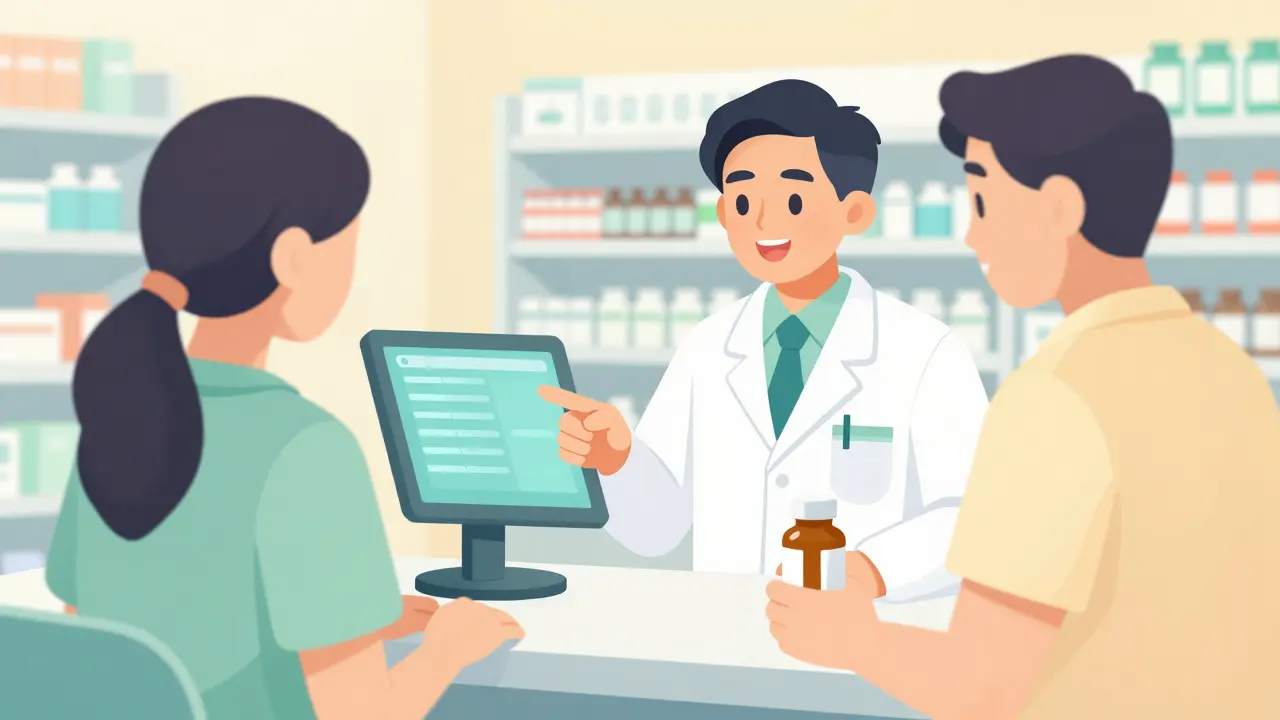
- Ask Your Pharmacist Specifically: Don't just ask for "the generic." Ask, "Is there an authorized generic available for this drug?"
- Verify the Manufacturer: If the generic is being produced by the same company that makes the brand, it's likely an authorized generic.
- Compare the Price: If the generic is only slightly cheaper than the brand, it's a strong signal it might be an authorized version.
Be aware that some pharmacists may not be able to distinguish them without checking the database. A survey of over 2,000 pharmacists found that 63% struggled to identify them quickly. If you have a narrow therapeutic index drug-where a tiny change in dose or formulation can be dangerous-the authorized generic is a vital safety tool that ensures you get the exact same formula every time.
Are authorized generics safer than regular generics?
They aren't necessarily "safer" in terms of efficacy, as both are FDA-approved. However, they are more consistent. Because they use the exact same inactive ingredients as the brand name, there is no risk of a reaction to a different filler or binder, which can happen with traditional generics.
Why are authorized generics more expensive than traditional generics?
Brand-name companies launch authorized generics as a strategy to keep a share of the market. Since they control the production, they don't need to drop the price as aggressively as a third-party generic company would to attract customers.
Can my insurance company refuse to cover an authorized generic?
Yes. Insurance companies and PBMs negotiate contracts with manufacturers. If a traditional generic manufacturer offers a bigger rebate to the insurance company, the insurer may exclude the authorized generic from their formulary.
How do I know if my medication is an authorized generic?
Check the manufacturer's name on the packaging. If the company listing the generic is the same as the one that owns the brand-name patent, it is an authorized generic. You can also verify this through the FDA's official Listing of Authorized Generics.
Will authorized generics disappear in the future?
They are becoming less common. Due to FTC scrutiny on "pay-for-delay" settlements and the rise of biosimilars for biologics, brand companies are moving away from this strategy. Some analysts predict they will make up less than 5% of generic entries by 2027.
What's Next for Patients
If you're currently on a brand-name drug and your patent is expiring, keep an eye on the news, but don't expect an authorized generic to be the only option. Most likely, a wave of traditional generics and biosimilars will arrive first. If you've had bad reactions to generics in the past, specifically request an authorized version to maintain formulation consistency.
For those managing high-cost biologics, the focus is shifting toward interchangeable biosimilars. These allow pharmacists to switch your medication without a new prescription from your doctor, providing a different but similarly effective path to lowering costs.