

More than 1 in 3 adults in the U.S. take medications that can turn a simple drink into a medical emergency. It’s not just about getting drunk faster-it’s about your heart stopping, your liver failing, or your brain shutting down without warning. And most people have no idea.
Why Alcohol and Medications Don’t Mix
Your liver doesn’t treat alcohol and pills the same way. Both are processed by the same enzymes, especially CYP2E1, CYP3A4, and CYP1A2. When you drink while on medication, these enzymes get overwhelmed. Think of it like two cars trying to use the same narrow highway at the same time. One car (alcohol) blocks the other (medication), or worse, forces it to speed up dangerously. There are two main ways this goes wrong. First, alcohol can make your medication build up in your blood. If you take a painkiller or antidepressant and have a beer, your body can’t break it down fast enough. That means you get twice the effect-drowsiness, dizziness, or worse. Second, alcohol can make your medication useless. If you drink regularly, your liver starts producing more enzymes to handle the alcohol. That means it breaks down your meds too fast, and they stop working.High-Risk Medications You Should Avoid with Alcohol
Some drugs are deadly with alcohol. These aren’t just "be careful" warnings-they’re life-or-death situations.- Metronidazole (Flagyl): Even one drink can trigger a violent reaction-flushing, vomiting, heart racing at 180 beats per minute. In 92% of cases, this happens within minutes. ER visits from this combo are common.
- Benzodiazepines (Xanax, Valium): These calm your brain. Alcohol does the same. Together, they can slow your breathing to a stop. The CDC says this combo causes 32% of all alcohol-medication deaths.
- Opioids (morphine, oxycodone): Alcohol makes these 8 times more likely to cause fatal breathing problems. It’s not rare-it’s predictable.
- Antidepressants (SSRIs like Prozac): You might feel more drunk, more nauseous, and more dizzy. Studies show alcohol stays in your system 3.2 hours longer when mixed with these drugs.
- Antihistamines (Benadryl): They already make you sleepy. Add alcohol, and you’re three times more likely to pass out, fall, or choke on your own vomit.
Over-the-Counter Pills Are Just as Dangerous
You think OTC means safe? Think again.- Acetaminophen (Tylenol): Taking more than three drinks a day while using this painkiller can cause sudden liver failure. A 2023 study found 18% of people who combined even moderate drinking with Tylenol showed signs of liver stress-even if they took the right dose.
- NSAIDs (ibuprofen, naproxen): These hurt your stomach lining. Alcohol does too. Together, they can cause internal bleeding. One study found the risk jumps by 300% to 500%.
- Aspirin: It increases bleeding risk, especially if you drink regularly. Even a small glass of wine can make you bruise easily or bleed longer from cuts.
Who’s at the Highest Risk?
It’s not just older people. But they’re the most vulnerable. As you age, your liver processes alcohol slower. By age 75, blood flow to your liver drops by 35%. That means even one drink can linger in your system for hours. The American Geriatrics Society lists 17 medications that are especially dangerous for seniors when mixed with alcohol. But the biggest group at risk? People between 40 and 59. A 2021 study found 7.2% of this group regularly take high-risk meds and drink. They’re not reckless-they’re unaware. Many think "moderate" drinking (one or two drinks) is fine with most meds. It’s not.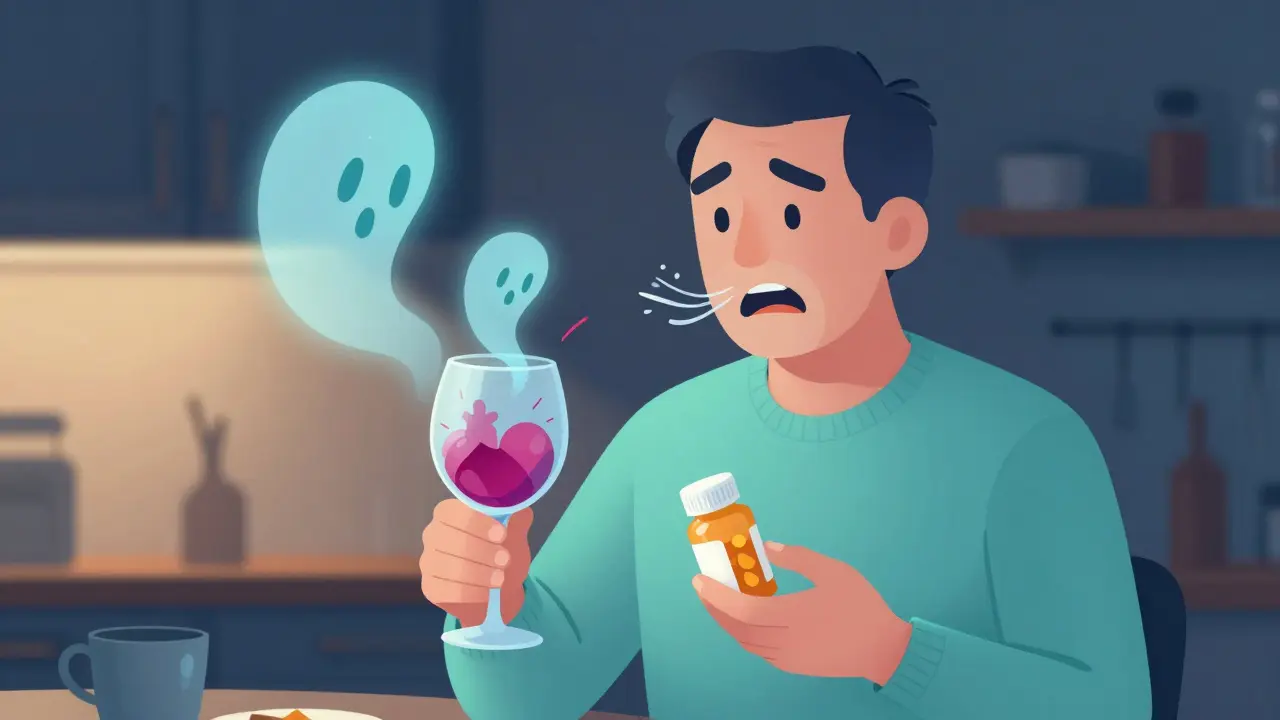
What "Moderate" Really Means (And Why It’s Not Safe)
The government says moderate drinking is one drink a day for women, two for men. But that’s a public health guideline, not a medical one. A "standard drink" is:- 12 oz of beer (5% alcohol)
- 5 oz of wine (12% alcohol)
- 1.5 oz of spirits (40% alcohol)
What to Do If You’re on Medication
You don’t have to quit drinking forever. But you need a plan.- Ask your pharmacist. They see your full prescription list. A 2022 Walgreens study showed 89% of patients changed their drinking habits after a pharmacist warned them.
- Check your bottle. Only 42% of prescription labels mention alcohol risks. Don’t rely on it.
- Wait 72 hours before starting high-risk meds like metronidazole. Australian data shows this cuts reaction risk from 92% to just 8%.
- If you drink, wait 2-3 hours after taking your pill. Eat food first-it slows alcohol absorption by 25-30%.
- Stick to one drink max. Even that might be too much. When in doubt, skip it.
What No One Tells You About Warning Labels
Most medication guides are written in tiny print, full of jargon. A 2022 study found only 48% of patients understood them. That’s why visual tools work better. The Injury Matters Foundation created a color-coded chart: red = don’t drink, yellow = be careful, green = probably safe. When patients used it, understanding jumped from 48% to 82%. New FDA rules starting January 2024 require pictograms on high-risk meds-like a beer glass with a red slash. That’s progress. But it’s still not enough.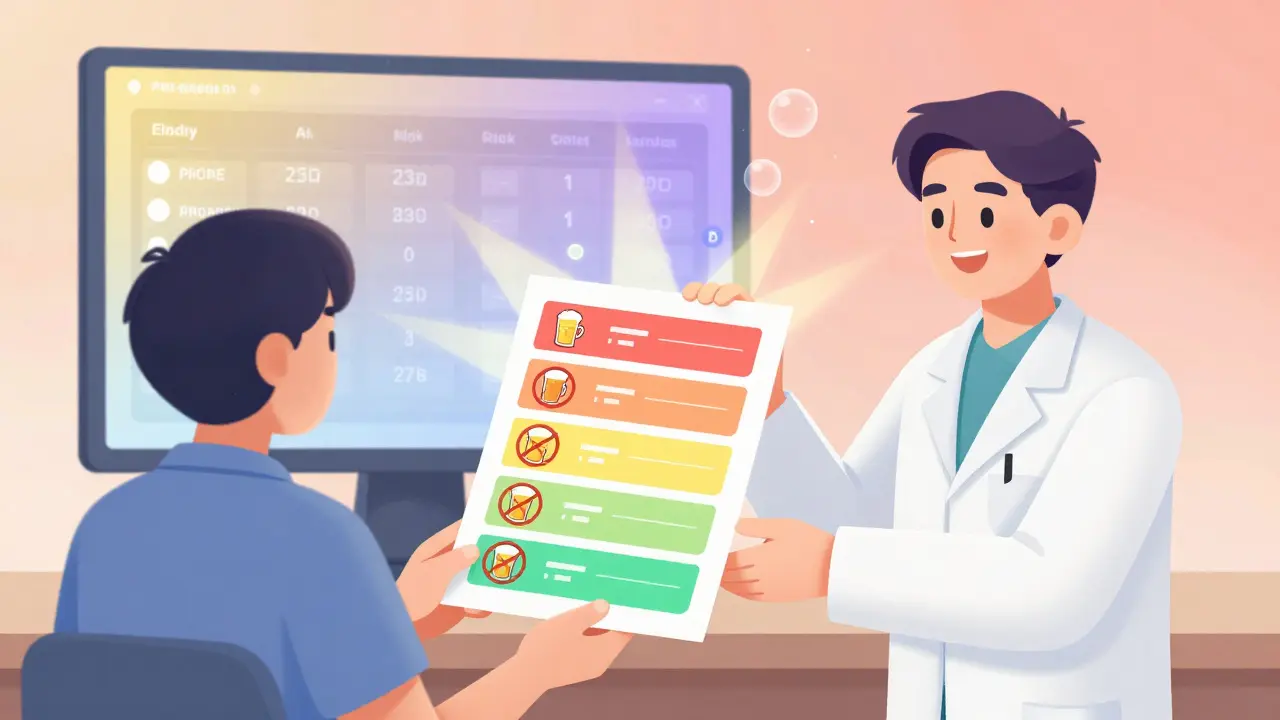




Eileen Reilly
January 10, 2026 AT 22:37