
ACE Inhibitor vs. ARB Comparison Tool
Select a medication class to see its characteristics, or select both to see the cumulative risks of dual RAS blockade.
ACE Inhibitors
e.g., Lisinopril, Ramipril
ARBs
e.g., Losartan, Valsartan
Danger: Dual RAS Blockade
Combining both an ACE Inhibitor and an ARB significantly increases the risk of Acute Kidney Injury and lethal Hyperkalemia without providing additional cardiovascular benefit. Consult your doctor immediately if you are taking both.
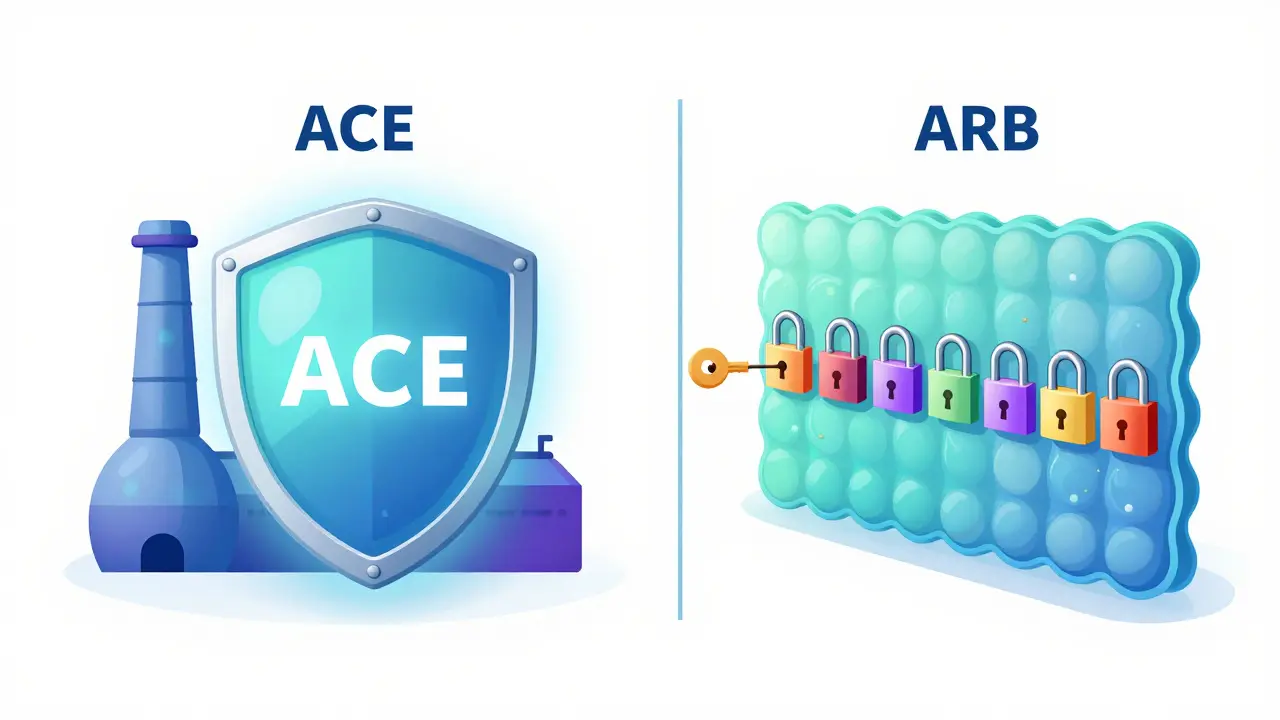
If you've ever looked at your prescription bottle for blood pressure medication, you might have seen names like Lisinopril or Losartan. These belong to two of the most common families of heart medications: ACE Inhibitors is a class of drugs that prevents the body from producing angiotensin II, a substance that narrows blood vessels and ARBs is a group of medications known as Angiotensin II Receptor Blockers that prevent angiotensin II from binding to its receptors. While they both aim to lower blood pressure and protect your organs, they do it in slightly different ways. The big question for many patients and caregivers is: can you take both? The short answer is that for the vast majority of people, doing so is not just unnecessary, but potentially dangerous.
How They Actually Work
To understand why mixing these two is a bad idea, you first have to understand the Renin-Angiotensin System is a hormone system that regulates blood pressure and fluid balance in the body (RAS). Think of the RAS as a series of dominoes. When one falls, it triggers the next, eventually leading to the production of Angiotensin II. This substance is the "bad guy" here-it squeezes your blood vessels tight and tells your body to hold onto salt and water, which drives your blood pressure up.
ACE inhibitors step in early in the chain. They stop the Angiotensin-Converting Enzyme is the enzyme responsible for converting Angiotensin I into the potent vasoconstrictor Angiotensin II from doing its job. No enzyme, no Angiotensin II, and your vessels stay relaxed. However, the body is clever. Over time, some patients experience "partial escape," where the body finds alternative pathways to create Angiotensin II anyway. Research shows this happens in about 68% of long-term users, which is why some people find their blood pressure creeps back up after a few months.
ARBs take a different approach. They don't care how much Angiotensin II is floating around in your blood; they simply block the "locks" (the AT1 receptors) that the hormone tries to open. Because they only block one type of receptor, they may allow some Angiotensin II to bind to other receptors (AT2), which some experts believe provides an extra layer of protection for the heart and kidneys.
The Side Effect Trade-Off
Most people start with an ACE inhibitor because they have a massive amount of data proving they save lives, especially in heart failure. But they come with a notorious side effect: the "ACE cough." About 10-15% of people develop a dry, hacking cough because these drugs cause a buildup of bradykinin in the lungs. If you can't stop coughing, your doctor will usually switch you to an ARB. ARBs are generally better tolerated, with a much lower rate of cough (only 3-5%) and a lower risk of angioedema-a rare but scary swelling of the face and throat.
| Feature | ACE Inhibitors (e.g., Ramipril) | ARBs (e.g., Valsartan) |
|---|---|---|
| Mechanism | Blocks production of Angiotensin II | Blocks Angiotensin II receptors |
| Dry Cough Risk | High (10-15%) | Low (3-5%) |
| Mortality Benefit | Stronger evidence in HFrEF | Significant, but slightly lower |
| Common Examples | Lisinopril, Enalapril | Losartan, Candesartan |
The Danger of Dual RAS Blockade
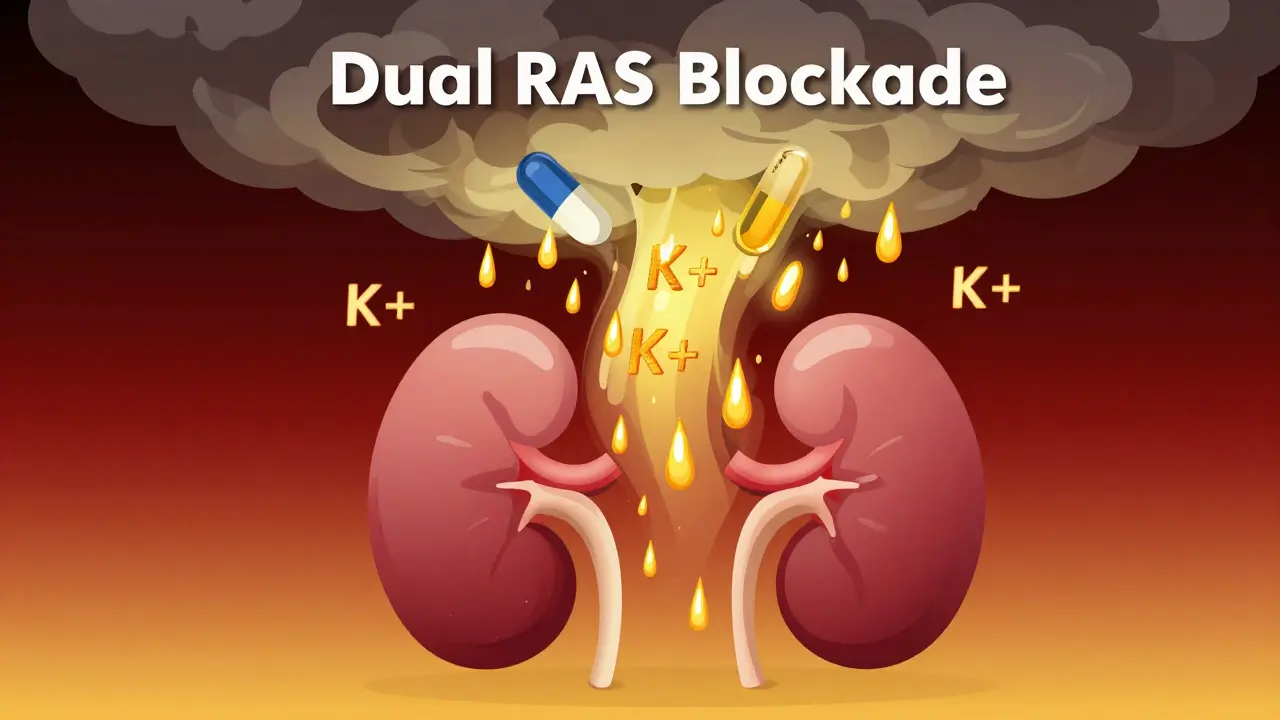
You might think that if one drug is good, two would be better. In medicine, this is called "dual RAS blockade," and it is generally avoided. When you combine an ACE inhibitor and an ARB, you aren't just doubling the benefit; you're doubling the risk of severe complications without adding much real value. The ONTARGET trial, a massive study involving high-risk patients, found that this combination didn't actually lower the risk of death or heart attack more than using an ACE inhibitor alone.
Instead, the combination led to a spike in Hyperkalemia is a medical condition characterized by abnormally high levels of potassium in the blood. Potassium is vital for heart rhythm, but too much of it can be lethal. Combination therapy has been shown to double the risk of hyperkalemia. Even worse, it increases the risk of Acute Kidney Injury is a sudden episode of kidney failure or kidney damage that happens within a few hours or a few days. In some cases, the risk of needing dialysis jumped from 1% to 2.3% when these two classes were used together.
Real-world data backs this up. Nephrologists have reported having to stop combination therapy in nearly 90% of their patients with diabetic kidney disease because the kidneys simply couldn't handle the double hit. While a tiny minority of non-diabetic patients with severe protein in their urine might benefit, they require weekly blood tests to ensure their potassium levels don't reach dangerous heights.
Safe Switching and Alternatives
If you are moving from one of these medications to another, don't just swap them overnight without a plan. Some clinical guidelines suggest a 4-week washout period to prevent additive effects, although this varies by patient. The key is to have your doctor check your serum potassium and creatinine levels about one to two weeks after any change in dose or medication. This ensures your kidneys are adapting well to the new chemistry.
If your blood pressure is still too high or you're still leaking protein into your urine despite a max dose of an ACE inhibitor, your doctor won't reach for an ARB. Instead, they might suggest a Mineralocorticoid Receptor Antagonist is a class of diuretic drugs that block the effects of aldosterone, such as spironolactone. Using something like spironolactone (often starting at a low dose of 12.5 mg) can reduce proteinuria by 30-40% with a much safer profile than dual RAS blockade.
Looking forward, the medical community is moving toward ARNIs is Angiotensin Receptor-Neprilysin Inhibitors, a newer class of drugs that combine an ARB with a neprilysin inhibitor for superior heart failure outcomes. These newer agents provide the protection we want without the extreme risks associated with mixing old-school ACE inhibitors and ARBs.
Why can't I take both an ACE inhibitor and an ARB?
Taking both is called dual RAS blockade. Clinical trials, such as the ONTARGET study, have shown that this doesn't provide extra cardiovascular protection but significantly increases the risk of kidney failure and dangerously high potassium levels (hyperkalemia).
What is the "ACE cough" and how is it different from an ARB?
The ACE cough is a dry, persistent tickle caused by the buildup of bradykinin in the lungs, affecting 10-15% of ACE inhibitor users. ARBs do not affect bradykinin levels, so they rarely cause this cough, making them a preferred alternative for those who can't tolerate ACE inhibitors.
How often should I get my blood tested on these meds?
Generally, you should have your potassium and creatinine levels checked 1-2 weeks after starting the medication or changing the dose. Once stable, most guidelines recommend maintenance checks every 3 months.
Are there any exceptions where combining them is okay?
In very rare cases, such as non-diabetic patients with extreme protein in their urine who don't respond to other treatments, a doctor might consider it. However, this requires incredibly close monitoring (sometimes weekly) and is a minority viewpoint in modern medicine.
What happens if my potassium gets too high?
Hyperkalemia can cause muscle weakness, nausea, and in severe cases, dangerous heart arrhythmias. This is why monitoring is so critical when using any RAS blocker, especially if you also take potassium supplements or have existing kidney disease.